
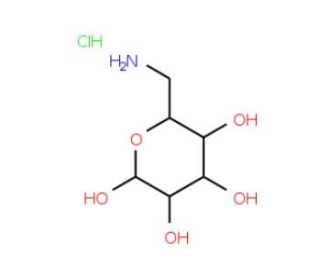

6-Amino-6-deoxy-D-glucose Hydrochloride (CAS 55324-97-5)
QUICK LINKS
Protein Tyrosine Phosphatase Receptor (PTPR) signaling encompasses a critical aspect of cellular communication, involving a group of enzymes that specifically dephosphorylate tyrosine residues on proteins. These enzymes play a pivotal role in regulating various cellular processes, including cell growth, differentiation, and metabolic control. PTPRs are characterized by their ability to transduce signals across the cell membrane, with a receptor-like structure that includes an extracellular domain, a single transmembrane segment, and an intracellular phosphatase domain. They function by counteracting the activity of protein tyrosine kinases, thereby maintaining a balance in cellular signaling pathways. The signaling mediated by PTPRs is essential for normal physiological functions and, when dysregulated, can contribute to the pathogenesis of diseases such as cancer, diabetes, and autoimmune disorders. PTPR receptor class possess an extracellular region containing fibronectin type III repeats, a transmembrane region, and a intracytoplasmic catalytic domain. Targeting Protein Tyrosine Phosphatase Receptors (PTPRs) for disruption or inhibition involves selectively modulating the activity of these enzymes to influence their role in cellular signaling pathways. Since PTPRs act as critical regulators of tyrosine phosphorylation, their inhibition can lead to increased phosphorylation levels on specific substrates, thereby affecting downstream signaling cascades. This is particularly relevant in contexts where PTPRs negatively regulate pathways that promote cell growth, survival, and differentiation. The development of inhibitors for PTPRs often focuses on molecules that can bind to the phosphatase active site, blocking its ability to dephosphorylate substrates.
6-Amino-6-deoxy-D-glucose Hydrochloride (CAS 55324-97-5) References
- Diversity of Streptococcus salivarius ptsH mutants that can be isolated in the presence of 2-deoxyglucose and galactose and characterization of two mutants synthesizing reduced levels of HPr, a phosphocarrier of the phosphoenolpyruvate:sugar phosphotransferase system. | Thomas, S., et al. 2001. J Bacteriol. 183: 5145-54. PMID: 11489868
- Immunochemical significance of L- and D-fucose derivatives. | SPRINGER, GF. and WILLIAMSON, P. 1962. Biochem J. 85: 282-91. PMID: 13978547
- After-rinsing hair growth promotion of minoxidil-containing amino alpha-cyclodextrins. | Kim, JC. and Kim, MD. 2007. J Microbiol Biotechnol. 17: 1965-9. PMID: 18167443
- Studies on antiviral glycosides, 4. Inhibition of the multiplication of paramyxoviruses by phenyl-6-chloro-6-deoxy-beta-D-glucopyranoside. | Sugita, K., et al. 1979. J Gen Virol. 45: 249-51. PMID: 230307
- Effect of 60amino-6-deoxy-D-glucose hydrochloride on influenza infection in mice. | Hrusková, J., et al. 1975. Acta Virol. 19: 47-51. PMID: 235197
- Evaluation of interferon and interferon inducers as antiviral agents: animal studies. | Kern, ER. and Glasgow, LA. 1981. Pharmacol Ther. 13: 1-38. PMID: 6167996
- Synthesis of new aminopolysaccharides by polymerization of 6-amino-6-deoxy-D-glucose and 2,6-diamino-2,6-dideoxy-D-glucose | J Kadokawa, D Hino, M Karasu, H Tagaya. 2000. European Polymer Journal. 36, 2: 225-230.
Ordering Information
| Product Name | Catalog # | UNIT | Price | Qty | FAVORITES | |
6-Amino-6-deoxy-D-glucose Hydrochloride, 25 mg | sc-221081 | 25 mg | $439.00 |