
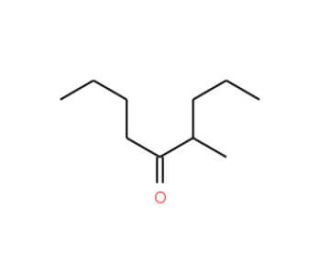

4-Methyl-5-nonanone (CAS 35900-26-6)
QUICK LINKS
4-Methyl-5-nonanone is an organic compound known for its fruity fragrance. Traditionally, it has found widespread use as a flavoring agent in the food and beverage industries. In scientific research, 4-Methyl-5-nonanone has been extensively explored for its promising uses. It has demonstrated efficacy as an insect attractant, captivating a variety of insects such as fruit flies, mosquitoes, and beetles. This characteristic has been harnessed in the development of insect traps and monitoring systems, serving valuable purposes in agriculture and environmental studies. The precise mechanism by which 4-Methyl-5-nonanone acts as an insect attractant remains somewhat elusive. Nevertheless, it is believed to stimulate the olfactory receptors located in the antennae of insects. This stimulation triggers a response that entices the insects towards the source of the compound, thereby aiding in their capture or monitoring.
4-Methyl-5-nonanone (CAS 35900-26-6) References
- Pheromone chirality of asian palm weevils,Rhynchophorus ferrugineus (Oliv.) andR. vulneratus (Panz.) (Coleoptera: Curculionidae). | Perez, AL., et al. 1996. J Chem Ecol. 22: 357-68. PMID: 24227415
- Identification of the genes involved in odorant reception and detection in the palm weevil Rhynchophorus ferrugineus, an important quarantine pest, by antennal transcriptome analysis. | Antony, B., et al. 2016. BMC Genomics. 17: 69. PMID: 26800671
- Silencing the Olfactory Co-Receptor RferOrco Reduces the Response to Pheromones in the Red Palm Weevil, Rhynchophorus ferrugineus. | Soffan, A., et al. 2016. PLoS One. 11: e0162203. PMID: 27606688
- Silencing the Odorant Binding Protein RferOBP1768 Reduces the Strong Preference of Palm Weevil for the Major Aggregation Pheromone Compound Ferrugineol. | Antony, B., et al. 2018. Front Physiol. 9: 252. PMID: 29618982
- Molecular and Functional Characterization of Odorant Binding Protein 7 From the Oriental Fruit Moth Grapholita molesta (Busck) (Lepidoptera: Tortricidae). | Chen, XL., et al. 2018. Front Physiol. 9: 1762. PMID: 30618787
- Dataset on the influence of relative humidity on the pathogenicity of Metarhizium anisopliae isolates from Thailand and Malaysia against red palm weevil (Rhynchophorus ferrugineus, Olivier) adult. | Cheong, JL. and Azmi, WA. 2020. Data Brief. 30: 105482. PMID: 32368576
- Antennal transcriptome sequencing and identification of candidate chemoreceptor proteins from an invasive pest, the American palm weevil, Rhynchophorus palmarum. | Gonzalez, F., et al. 2021. Sci Rep. 11: 8334. PMID: 33859212
- The Dissemination of Metarhizium brunneum Conidia by Females of the Red Palm Weevil, Rhynchophorus ferrugineus, Suggests a New Mechanism for Prevention Practices. | Matveev, S., et al. 2023. J Fungi (Basel). 9: PMID: 37108912
- Bioefficacy of an Oil-Emulsion Formulation of Entomopathogenic Fungus, Metarhizium anisopliae against Adult Red Palm Weevil, Rhynchophorus ferrugineus. | Lei, CJ., et al. 2023. Insects. 14: PMID: 37233110
Ordering Information
| Product Name | Catalog # | UNIT | Price | Qty | FAVORITES | |
4-Methyl-5-nonanone, 5 g | sc-267644 | 5 g | $115.00 |