
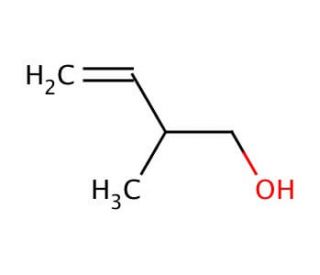

2-Methyl-3-buten-1-ol (CAS 4516-90-9)
QUICK LINKS
2-Methyl-3-buten-1-ol is a clear liquid that is soluble in water, ethanol, and ether. Its delightful aroma has earned it a significant role in the fragrance and flavor industries. This compound occurs naturally in a variety of essential oils, including rose, citrus fruits, and lemongrass. 2-Methyl-3-buten-1-ol possesses reactivity, enabling it to engage in diverse chemical reactions like oxidation, hydrogenation, and esterification. Moreover, this compound exhibits the capacity to interact with an array of cellular targets, such as enzymes, receptors, and signaling pathways, thereby manifesting various biological effects. Given its versatility, 2-Methyl-3-buten-1-ol can serve as a valuable reference standard or positive control in a range of assays, such as those pertaining to antimicrobial and antioxidant activities. 2-methyl-3-buten-2-ol (MBO) was studied in the formation of secondary organic aerosol (SOA).
2-Methyl-3-buten-1-ol (CAS 4516-90-9) References
- Development of a stable isotope dilution assay for the quantification of 5-methyl-(E)-2-hepten-4-one: application to hazelnut oils and hazelnuts. | Pfnuer, P., et al. 1999. J Agric Food Chem. 47: 2044-7. PMID: 10552493
- Effect of wild strains of Lactococcus lactis on the volatile profile and the sensory characteristics of ewes' raw milk cheese. | Centeno, JA., et al. 2002. J Dairy Sci. 85: 3164-72. PMID: 12512589
- Processing of small molecule databases for automated docking. | Cummings, MD., et al. 2007. Med Chem. 3: 107-13. PMID: 17266630
- Identification of isopentenol biosynthetic genes from Bacillus subtilis by a screening method based on isoprenoid precursor toxicity. | Withers, ST., et al. 2007. Appl Environ Microbiol. 73: 6277-83. PMID: 17693564
- Palladium-catalyzed mono-N-allylation of unprotected anthranilic acids with allylic alcohols in aqueous media. | Hikawa, H. and Yokoyama, Y. 2011. J Org Chem. 76: 8433-9. PMID: 21919524
- Isoprene hydrocarbons production upon heterologous transformation of Saccharomyces cerevisiae. | Hong, SY., et al. 2012. J Appl Microbiol. 113: 52-65. PMID: 22519412
- New insights into the formation of aroma-active strecker aldehydes from 3-oxazolines as transient intermediates. | Granvogl, M., et al. 2012. J Agric Food Chem. 60: 6312-22. PMID: 22656242
- Estimation of the thermal and photochemical stabilities of pheromones. | Tomilin, FN., et al. 2018. J Mol Model. 24: 323. PMID: 30357483
- Odor Emissions from Raw Meat of Freshly Slaughtered Cattle during Inspection. | Conte, F., et al. 2021. Foods. 10: PMID: 34681460
- Linoleic Acid Promotes Emission of Bark Beetle Semiochemicals by Fungal Symbionts. | Unelius, CR., et al. 2023. J Chem Ecol. 49: 59-66. PMID: 36585598
Ordering Information
| Product Name | Catalog # | UNIT | Price | Qty | FAVORITES | |
2-Methyl-3-buten-1-ol, 1 g | sc-230511 | 1 g | $99.00 |