
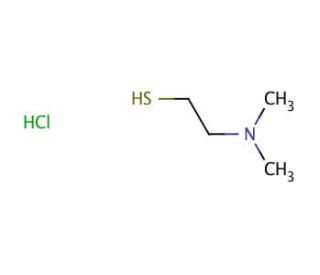

2-(Dimethylamino)ethanethiol hydrochloride (CAS 13242-44-9)
QUICK LINKS
Latent Transforming Growth Factor Beta Binding Proteins (LTBPs) are essential components in the cellular matrix and have significant roles in the signaling pathways that regulate cell growth, differentiation, and function. They are best known for their function in regulating the bioavailability and activation of Transforming Growth Factor-Beta (TGF-β). LTBPs form a complex with TGF-β, holding it in a latent (inactive) form until activated by various stimuli such as mechanical force or specific proteolytic enzymes. This sequestering and subsequent release mechanism is an important aspect of modulating TGF-β signaling pathways. Aside from their interaction with TGF-β, LTBPs are involved in the organization of extracellular matrix (ECM) through their interactions with other matrix components like fibronectin and fibrillins. Latent Transforming Growth Factor Beta Binding Protein (LTBP) Inhibitors focus on the disruption or modulation of LTBP functions and interactions. These molecules can operate through various mechanisms, such as disrupting the LTBP-TGF-β complex, inhibiting LTBP-fibronectin or LTBP-fibrillin interactions, or interfering with the processes that lead to the activation of the latent TGF-β. Some inhibitors target pathways that are upstream or downstream of LTBP, thus having an indirect effect on its activity. Additionally, some LTBP inhibitors act by affecting substrate availability for LTBP or through complex signaling cascades that ultimately influence LTBP function. This category of chemicals is particularly nuanced given the multifaceted roles that LTBPs play in cellular signaling and ECM organization.
2-(Dimethylamino)ethanethiol hydrochloride (CAS 13242-44-9) References
- Surfactant-free synthesis and functionalization of gold nanoparticles. | Schulz-Dobrick, M., et al. 2005. J Am Chem Soc. 127: 12816-7. PMID: 16159272
- 2-(Diethylamino)ethanethiol, a new reagent for the odorless deprotection of aromatic methyl ethers. | Magano, J., et al. 2006. J Org Chem. 71: 7103-5. PMID: 16930076
- Conjugating luminescent CdTe quantum dots with biomolecules. | Gerhards, C., et al. 2008. J Phys Chem B. 112: 14482-91. PMID: 18717546
- Preparation and in vitro photodynamic activity of amphiphilic zinc(II) phthalocyanines substituted with 2-(dimethylamino)ethylthio moieties and their N-alkylated derivatives. | Duan, W., et al. 2010. Bioorg Med Chem. 18: 2672-7. PMID: 20223676
- Characterization of attractive interaction-driven carbon nanotube composites with Cd-based nanoparticles. | Rabbani, MM., et al. 2011. J Nanosci Nanotechnol. 11: 6453-8. PMID: 22121734
- Stimuli-responsive nanoparticles from ionic cellulose derivatives. | Wang, Y., et al. 2016. Nanoscale. 8: 648-57. PMID: 26645347
- Modification of a SERS-active Ag surface to promote adsorption of charged analytes: effect of Cu2+ ions. | Ranishenka, BV., et al. 2021. Beilstein J Nanotechnol. 12: 902-912. PMID: 34497738
Ordering Information
| Product Name | Catalog # | UNIT | Price | Qty | FAVORITES | |
2-(Dimethylamino)ethanethiol hydrochloride, 25 g | sc-213685 | 25 g | $247.00 | |||
2-(Dimethylamino)ethanethiol hydrochloride, 100 g | sc-213685A | 100 g | $646.00 |