
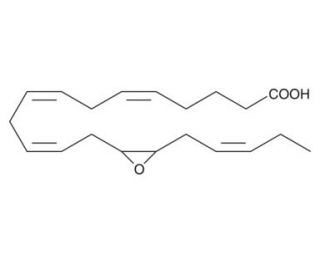

14(15)-EpETE (CAS 131339-24-7)
QUICK LINKS
14(15)-EpETE, cataloged under the CAS number 131339-24-7, is a biochemical entity known as an epoxyeicosatrienoic acid, a type of eicosanoid derived from the metabolism of arachidonic acid via the cytochrome P450 epoxygenase pathway. This compound is particularly compelling in the realm of biochemical research because of its involvement in modulating various cellular processes, including those associated with the regulation of vascular tone and inflammatory responses. Its mechanism of action is predominantly characterized by its activity as an epoxide, which can interact with specific cellular targets to influence signaling pathways. In research environments, 14(15)-EpETE has been employed to study its effects on intracellular signaling cascades that govern cellular responses to environmental stimuli. The role of such eicosanoids in cellular signaling is crucial for understanding how cells adapt to changes in their environment, especially in terms of inflammatory and vascular responses. By examining the actions of 14(15)-EpETE, researchers gain valuable insights into the complex interactions between different signaling molecules and the pathways they influence. This knowledge is pivotal for mapping the complex networks of cell communication and understanding how specific molecular interventions can impact cellular function and behavior in various physiological contexts.
14(15)-EpETE (CAS 131339-24-7) References
- Oxylipins at intermediate larval stages of damselfly Coenagrion hastulatum as biochemical biomarkers for anthropogenic pollution. | Späth, J., et al. 2021. Environ Sci Pollut Res Int. 28: 27629-27638. PMID: 33515146
- Effects of inflammation and soluble epoxide hydrolase inhibition on oxylipin composition of very low-density lipoproteins in isolated perfused rat livers. | Walker, RE., et al. 2021. Physiol Rep. 9: e14480. PMID: 33625776
- Free fatty acid receptor 4 responds to endogenous fatty acids to protect the heart from pressure overload. | Murphy, KA., et al. 2022. Cardiovasc Res. 118: 1061-1073. PMID: 33752243
- Ibuprofen alters epoxide hydrolase activity and epoxy-oxylipin metabolites associated with different metabolic pathways in murine livers. | Tiwari, S., et al. 2021. Sci Rep. 11: 7042. PMID: 33782432
- Vital Carbohydrate and Lipid Metabolites in Serum Involved in Energy Metabolism during Pubertal Molt of Mud Crab (Scylla paramamosain). | Li, WF., et al. 2021. Metabolites. 11: PMID: 34677366
- Serum Oxylipin Profiles Identify Potential Biomarkers in Patients with Acute Aortic Dissection. | Jiang, Y., et al. 2022. Metabolites. 12: PMID: 35888709
- Probing changes in brain esterified oxylipin concentrations during the early stages of pathogenesis in Alzheimer's Disease transgenic rats. | Shen, Q., et al. 2022. Neurosci Lett. 791: 136921. PMID: 36270451
- Sex-Specific Response of the Brain Free Oxylipin Profile to Soluble Epoxide Hydrolase Inhibition. | Norman, JE., et al. 2023. Nutrients. 15: PMID: 36904213
- Effects of Individual Circulating FFAs on Plasma and Hepatic FFA Epoxides, Diols, and Epoxide-Diol Ratios as Indices of Soluble Epoxide Hydrolase Activity. | Oh, YT., et al. 2023. Int J Mol Sci. 24: PMID: 37445935
- The Effects of Dietary n-3 Highly Unsaturated Fatty Acids on Growth, Antioxidant Capacity, Immunity, and Oxylipin Profiles in Acipenser dabryanus. | Wu, J., et al. 2024. Antioxidants (Basel). 13: PMID: 38671869
Ordering Information
| Product Name | Catalog # | UNIT | Price | Qty | FAVORITES | |
14(15)-EpETE, 25 µg | sc-205015 | 25 µg | $76.00 | |||
14(15)-EpETE, 100 µg | sc-205015A | 100 µg | $275.00 |