
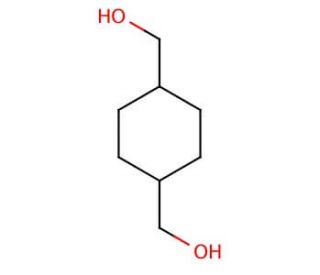

1,4-Cyclohexanedimethanol (CAS 105-08-8)
QUICK LINKS
1,4-Cyclohexanedimethanol is a compound in biochemistry. It is a colorless, odorless solid that is soluble in water and has a molecular weight of 146.19 g/mol. 1,4-Cyclohexanedimethanol is for its ability to act as a crosslinking agent in the production of polymers, particularly in the synthesis of polyesters and polyurethanes. In biochemistry, 1,4-Cyclohexanedimethanol is utilized for its role in the formation of biocompatible materials, such as hydrogels and biomaterials. Its unique chemical structure allows for the creation of strong and flexible polymers, making it useful in the development of various biomedical applications. Ultimately, 1,4-Cyclohexanedimethanol plays a role in the field of biochemistry, contributing to the advancement of materials science and biomedical engineering.
1,4-Cyclohexanedimethanol (CAS 105-08-8) References
- Polyketal microparticles: a new delivery vehicle for superoxide dismutase. | Lee, S., et al. 2007. Bioconjug Chem. 18: 4-7. PMID: 17226951
- Polyoxalate nanoparticles as a biodegradable and biocompatible drug delivery vehicle. | Kim, S., et al. 2010. Biomacromolecules. 11: 555-60. PMID: 20112991
- A biodegradable and biocompatible drug-delivery system based on polyoxalate microparticles. | Lee, E., et al. 2011. J Biomater Sci Polym Ed. 22: 1683-94. PMID: 20699060
- Lack of androgenicity and estrogenicity of the three monomers used in Eastman's Tritan™ copolyesters. | Osimitz, TG., et al. 2012. Food Chem Toxicol. 50: 2196-205. PMID: 22343188
- Effect of chronic exposure to two components of Tritan copolyester on Daphnia magna, Moina macrocopa, and Oryzias latipes, and potential mechanisms of endocrine disruption using H295R cells. | Jang, S. and Ji, K. 2015. Ecotoxicology. 24: 1906-14. PMID: 26289545
- The toxicity of crude 4-methylcyclohexanemethanol (MCHM): review of experimental data and results of predictive models for its constituents and a putative metabolite. | Paustenbach, DJ., et al. 2015. Crit Rev Toxicol. 45 Suppl 2: 1-55. PMID: 26509789
- Selective Release System for Antioxidative and Anti-Inflammatory Activities Using H2O2-Responsive Therapeutic Nanoparticles. | Kim, AY., et al. 2017. Biomacromolecules. 18: 3197-3206. PMID: 28806055
- Synthesis of 1,4-Cyclohexanedimethanol, 1,4-Cyclohexanedicarboxylic Acid and 1,2-Cyclohexanedicarboxylates from Formaldehyde, Crotonaldehyde and Acrylate/Fumarate. | Hu, Y., et al. 2018. Angew Chem Int Ed Engl. 57: 6901-6905. PMID: 29673054
- Bisphenol A and its substitutes regulate human B cell survival via Nrf2 expression. | Jang, JW., et al. 2020. Environ Pollut. 259: 113907. PMID: 32023790
- Developing chemoselective and biodegradable polyester elastomers for bioscaffold application. | Barrett, DG., et al. 2015. J Mater Chem B. 3: 1405-1414. PMID: 32264491
- Thermosensitive Micellar Hydrogels as Vehicles to Deliver Drugs With Different Wettability. | Laurano, R. and Boffito, M. 2020. Front Bioeng Biotechnol. 8: 708. PMID: 32766216
- Transesterification of Ethyl-10-undecenoate Using a Cu-Deposited V2O5 Catalyst as a Model Reaction for Efficient Conversion of Plant Oils to Monomers and Fine Chemicals. | Sudhakaran, S., et al. 2022. ACS Omega. 7: 4372-4380. PMID: 35155930
- Copolycarbonates Based on a Bicyclic Diol Derived from Citric Acid and Flexible 1,4-Cyclohexanedimethanol: From Synthesis to Properties. | Yu, Y., et al. 2019. ACS Macro Lett. 8: 454-459. PMID: 35651131
- Bio-Based Degradable Poly(ether-ester)s from Melt-Polymerization of Aromatic Ester and Ether Diols. | Djouonkep, LDW., et al. 2022. Int J Mol Sci. 23: PMID: 36012244
- A Rapid Thermal Absorption Rate and High Latent Heat Enthalpy Phase Change Fiber Derived from Bio-Based Low Melting Point Copolyesters. | Lan, TY., et al. 2022. Polymers (Basel). 14: PMID: 36015555
Ordering Information
| Product Name | Catalog # | UNIT | Price | Qty | FAVORITES | |
1,4-Cyclohexanedimethanol, 100 g | sc-229829 | 100 g | $20.00 | |||
1,4-Cyclohexanedimethanol, 500 g | sc-229829A | 500 g | $39.00 |