
α-KGD Plasmide di attivazione CRISPR (h): sc-402915-ACT
- Specie Target: human
- 20 µg di DNA plasmidico purificato, pronto per trasfezione; sufficiente fino a 20 trasfezioni
- α-KGD Plasmide di attivazione CRISPR (h) è un mediatore sinergico di attivazione (SAM) del sistema di attivazione trascrizionale disegnato per upregolare specificatamente l'espressione genica
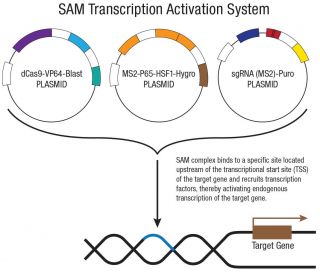
- α-KGD CRISPR Activation Plasmid (h) consiste di tre plasmidi in proporzione 1:1:1 : un plasmide che codifica la nucleasi (D10A and N863A) Cas9 (dCas9) deattivata fusa al dominio di transattivazione VP64, ed un gene di resistenza alla blasticina; un plasmide che codifica per la proteina di fusione MS2-p65-HSF1, ed un gene di resistenza all'igromicina;un plasmide che codifica un RNA guida di 20 nt target specifico, e un gene di resistenza alla puromicina.
- Il complesso SAM legae una regione sito-specifica circa 200-250 nt a monte del sito di start trascrizionale e fornisce un robusto reclutamento di fattori trascrizionali per un'attivazione altamente efficiente del gene target
- I gRNA codificati dal α-KGD CRISPR Activation Plasmid (h) e dal α-KGD CRISPR Activation Plasmid (h2) prendono di mira regioni regolatorie distinte a monte del sito di inizio della trascrizione di OGDH. Uno o entrambi i modelli potrebbero essere disponibili

Informazioni ordini
| Nome del prodotto | Codice del prodotto | UNITÀ | Prezzo | Quantità | Preferiti | |
α-KGD Plasmide di attivazione CRISPR (h) | sc-402915-ACT | 20 µg | $397.00 | |||
α-KGD Plasmide di attivazione CRISPR (h2) | sc-402915-ACT-2 | 20 µg | $397.00 |
OGDH codifica la componente E1 del complesso mitocondriale della 2‑ossoglutarato deidrogenasi (α‑KGD), un enzima limitante della velocità nel ciclo dell’acido tricarbossilico (TCA) che converte l’α‑cheto(glutarato) in succinil‑CoA, generando al contempo NADH per la fosforilazione ossidativa. Attraverso il controllo del flusso di α‑chetoglutarato, OGDH collega il metabolismo centrale del carbonio al catabolismo degli amminoacidi, all’equilibrio redox e alla gestione delle specie reattive dell’ossigeno mitocondriali. Variazioni dell’attività di OGDH possono modificare i livelli di α‑chetoglutarato e di metaboliti correlati che influenzano la regolazione epigenetica tramite diossigenasi, connettendo il metabolismo mitocondriale allo stato della cromatina. La disregolazione di questo nodo è stata associata a disfunzione metabolica mitocondriale ed è stata studiata in contesti che includono la neurodegenerazione e il metabolismo tumorale.
α-KGD Il plasmide di attivazione CRISPR (h) fornisce un approccio mirato e non distruttivo per sovraregolare l'espressione endogena di OGDH senza alterare la sequenza di DNA sottostante.
α-KGD Il plasmide di attivazione CRISPR (h) è un sistema SAM (mediatore di attivazione sinergico) a tre plasmidi progettato per la sovraregolazione trascrizionale altamente efficiente e sito-specifica del locus OGDH nelle linee cellulari umane. Il sistema è costruito attorno a una Cas9 cataliticamente inattiva (dCas9) che porta due mutazioni inattivanti (D10A e N863A) che eliminano l'attività nucleasica preservando al contempo il legame con il DNA. Questa dCas9 è fusa con VP64, un potente attivatore trascrizionale, ed è coespressa con un gene di resistenza alla blasticidina per la selezione. Il secondo plasmide codifica la proteina di fusione MS2-p65-HSF1, un complesso attivatore secondario che agisce in sinergia con dCas9-VP64, insieme a un gene di resistenza all'igromicina. Il terzo plasmide codifica un sgRNA specifico per il bersaglio di 20 nt fuso a due aptameri di RNA MS2 che reclutano il complesso MS2-p65-HSF1 nel sito di attivazione, accompagnato da un gene di resistenza alla puromicina. I tre plasmidi vengono somministrati in un rapporto di massa 1:1:1 per un'espressione bilanciata di tutti i componenti del sistema.
Una volta assemblato nel locus bersaglio, il complesso SAM si lega a circa 200 bp a monte del sito di inizio della trascrizione OGDH, dove VP64, p65 e HSF1 agiscono in modo concertato per reclutare il machinery trascrizionale e guidare la sovraregolazione dell'espressione endogena di α-KGD. A differenza della Cas9 con attività nucleasica, dCas9 non introduce rotture a doppio filamento né modifica la sequenza genomica, preservando il locus OGDH nativo e consentendo lo studio delle risposte trascrizionali dipendenti da α-KGD nel locus endogeno, rendendolo uno strumento prezioso per studi funzionali, l'identificazione di geni bersaglio e la modellizzazione del ripristino della via α-KGD nelle cellule tumorali con espressione di OGDH silenziata o ridotta.
Solo per uso di ricerca. Non destinato a uso diagnostico o terapeutico.