
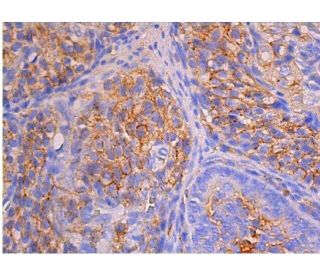
Anticorpo ZO-1 (R40.76): sc-33725
- ZO-1 Antibody R40.76 è un monoclonale di ratto IgG2a ZO-1 antibody, citato in 221 pubblicazioni, fornito in 200 µg/ml
- sensibilizzato contro i nastri giunzionali insolubili in DOC isolati dal fegato di ratto
- ZO-1 Antibody (R40.76) é raccomandato per il rilevamento di ZO-1 di origine mouse, rat e human in WB, IP, IF e IHC(P)
- ZO-1 Antibody (R40.76) é disponibile coniugato con agarose per IP; HRP per WB, IHC(P) ed ELISA; sia con phycoerythrin o FITC per IF, IHC(P) e FCM
- disponibile anche coniugato con Alexa Fluor® 488, Alexa Fluor® 546; Alexa Fluor® 594 o Alexa Fluor® 647 per IF, IHC (P) e FCM
- disponibile anche coniugato con Alexa Fluor® 680 o Alexa Fluor® 790 per WB (NIR), IF e FCM
- Al momento non abbiamo ancora completato l'identificazione dei reagenti secondari di rilevazione preferiti per ZO-1 l'anticorpo (R40.76). Questo lavoro è in corso.

LINK RAPIDI
L'anticorpo ZO-1 (R40.76) è un anticorpo monoclonale IgG2a di ratto, progettato per rilevare la proteina Zonula Occludens-1, nota anche come Tight Junction Protein 1 (TJP1), in campioni di topo, ratto e uomo mediante western blotting (WB), immunoprecipitazione (IP) e saggi PAR. L'anticorpo anti-ZO-1 (R40.76) è stato raccolto contro i nastri giunzionali insolubili in DOC isolati dal fegato di ratto, garantendo un riconoscimento affidabile dell'epitopo ZO-1. ZO-1 è un componente critico delle giunzioni strette, che sono essenziali per mantenere l'integrità e la permeabilità selettiva degli strati cellulari epiteliali ed endoteliali. Come membro della famiglia delle guanilato chinasi associate alla membrana (MAGUK), ZO-1 interagisce con altre proteine della giunzione stretta, come occludina, claudine, ZO-2 e ZO-3, attraverso i suoi domini PDZ, SH3 e guanilato chinasi, facilitando la stabilità strutturale e la trasduzione del segnale. Queste interazioni collegano i complessi della giunzione stretta al citoscheletro di actina, svolgendo un ruolo vitale nella regolazione della polarità cellulare, della funzione barriera e della comunicazione cellulare. La disregolazione di ZO-1 è stata associata a diverse condizioni patologiche, tra cui la metastasi del cancro, dove l'espressione di ZO-1 è notevolmente ridotta in molte linee cellulari di cancro al seno, così come nei disturbi cardiovascolari e neurologici. L'anticorpo anti-ZO-1 (R40.76) è disponibile sia in forme non coniugate che in forme coniugate multiple, come agarosio, perossidasi di rafano (HRP), ficoeritrina (PE), isotiocianato di fluoresceina (FITC) e coniugati Alexa Fluor®, offrendo opzioni versatili per diverse applicazioni sperimentali. L'anticorpo monoclonale ZO-1 (R40.76) consente ai ricercatori di studiare l'espressione, la localizzazione e la dinamica funzionale di ZO-1, facendo così progredire la nostra comprensione delle giunzioni cellulari e del loro ruolo nella salute e nella malattia.
Alexa Fluor® è un marchio registrato di Molecular Probes Inc., OR., USA
LI-COR® e Odyssey® sono marchi registrati di LI-COR Biosciences
Anticorpo ZO-1 (R40.76) Riferimenti:
- Caratterizzazione di ZO-2 come membro della famiglia MAGUK associato alle giunzioni strette e alle giunzioni di aderenza con un'affinità di legame con occludina e alfa catenina. | Itoh, M., et al. 1999. J Biol Chem. 274: 5981-6. PMID: 10026224
- Modalità di interazione di specie eterogenee di claudina all'interno e tra i filamenti della giunzione stretta. | Furuse, M., et al. 1999. J Cell Biol. 147: 891-903. PMID: 10562289
- Interazioni proteiche nella giunzione stretta. L'actina ha diversi partner di legame e ZO-1 forma complessi indipendenti con ZO-2 e ZO-3. | Wittchen, ES., et al. 1999. J Biol Chem. 274: 35179-85. PMID: 10575001
- Legame diretto di tre MAGUK associati alla giunzione stretta, ZO-1, ZO-2 e ZO-3, con i termini COOH delle claudine. | Itoh, M., et al. 1999. J Cell Biol. 147: 1351-63. PMID: 10601346
- Associazione diretta di occludina con ZO-1 e suo possibile coinvolgimento nella localizzazione di occludina nelle giunzioni strette. | Furuse, M., et al. 1994. J Cell Biol. 127: 1617-26. PMID: 7798316
- Segnalazione cellulare: Magia di MAGUK. | Anderson, JM. 1996. Curr Biol. 6: 382-4. PMID: 8723338
- ZO-3, un nuovo membro della famiglia di proteine MAGUK presenti nella giunzione stretta, interagisce con ZO-1 e occludina. | Haskins, J., et al. 1998. J Cell Biol. 141: 199-208. PMID: 9531559
- Perdita della giunzione stretta MAGUK ZO-1 nel cancro al seno: relazione con la differenziazione ghiandolare e perdita di eterozigosi. | Hoover, KB., et al. 1998. Am J Pathol. 153: 1767-73. PMID: 9846967
Informazioni ordini
| Nome del prodotto | Codice del prodotto | UNITÀ | Prezzo | Quantità | Preferiti | |
ZO-1 Anticorpo (R40.76) | sc-33725 | 200 µg/ml | $322.00 | |||
ZO-1 Anticorpo (R40.76) AC | sc-33725 AC | 500 µg/ml, 25% agarose | $424.00 | |||
ZO-1 Anticorpo (R40.76) HRP | sc-33725 HRP | 200 µg/ml | $322.00 | |||
ZO-1 Anticorpo (R40.76) FITC | sc-33725 FITC | 200 µg/ml | $336.00 | |||
ZO-1 Anticorpo (R40.76) PE | sc-33725 PE | 200 µg/ml | $349.00 | |||
ZO-1 Anticorpo (R40.76) Alexa Fluor® 488 | sc-33725 AF488 | 200 µg/ml | $364.00 | |||
ZO-1 Anticorpo (R40.76) Alexa Fluor® 546 | sc-33725 AF546 | 200 µg/ml | $364.00 | |||
ZO-1 Anticorpo (R40.76) Alexa Fluor® 594 | sc-33725 AF594 | 200 µg/ml | $364.00 | |||
ZO-1 Anticorpo (R40.76) Alexa Fluor® 647 | sc-33725 AF647 | 200 µg/ml | $364.00 | |||
ZO-1 Anticorpo (R40.76) Alexa Fluor® 680 | sc-33725 AF680 | 200 µg/ml | $364.00 | |||
ZO-1 Anticorpo (R40.76) Alexa Fluor® 790 | sc-33725 AF790 | 200 µg/ml | $364.00 |