
PP2A-B56-γ CRISPR Activationプラスミド (h): sc-402726-ACT
- 対象生物種: human
- 20 µg のトランスフェクション準備済み、精製したプラスミドDNA、~20回トランスフェクション
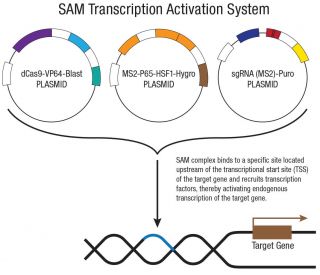
- PP2A-B56-γ CRISPR Activationプラスミド (h)は、特異的に遺伝子の発現量を増加させるため、相乗的活性化メディエーター(SAM)転写活性化システムです。
- PP2A-B56-γ CRISPR Activationプラスミド (h)は、1:1:1の質量比で以下の3つのプラスミドがら成る:トランス活性化ドメインVP64に溶解する非活性化されたCas9 (dCas9)ヌクレアーゼ(D10A と H840A)をコード化したのプラスミド(ブラストサイジン耐性遺伝子を含めて)、MS2-p65-HSF1融合蛋白質をコード化したのプラスミド(ハイグロマイシン耐性遺伝子を含めて)、2つのMS2 RNAアプタマーに溶解する目標特異的な20ntガイドRNAをコード化したのプラスミド(ピューロマイシン耐性遺伝子を含めて)。
- 得られたSAM複合体は、部位特異的な約200-250nt転写開始点の上流の領域に結合し、転写因子の強いリクルートメントを提供し、遺伝子の高い活性化効果が得られます。
- PP2A-B56-γ CRISPR活性化プラスミド(h)およびPP2A-B56-γ CRISPR活性化プラスミド(h2)によってコードされるgRNAは、PPP2R5C転写開始点の上流にある異なる調節領域を標的としています。いずれか一方、または両方のデザインが利用可能である可能性があります
- トランスフェクションの後、遺伝子ノックアウト効果は、抗体を用いたWB、IFまたはIHCによって検定されることができます: PP2A-B56-γ 抗体 (E-6): sc-374380

注文情報
| 製品名 | カタログ # | 単位 | 価格 | 数量 | お気に入り | |
PP2A-B56-γ CRISPR Activationプラスミド (h) | sc-402726-ACT | 20 µg | $397.00 | |||
PP2A-B56-γ CRISPR Activationプラスミド (h2) | sc-402726-ACT-2 | 20 µg | $397.00 |
PPP2R5Cは、主要なセリン/スレオニン脱リン酸化酵素であるプロテインホスファターゼ2A(PP2A)のB56γ制御サブユニットをコードしており、触媒活性を特定の基質や細胞内局在へと誘導します。PP2A-B56γは、重要な制御因子の脱リン酸化を調整することにより、細胞周期進行、DNA損傷シグナル伝達、有糸分裂チェックポイントの忠実性、ならびにPI3K–AKT、MAPK、Wnt/β-カテニンなどの経路を介したシグナル伝達の制御に寄与します。PPP2R5Cの発現変化やPP2Aホロ酵素の構成の変動は、増殖、ゲノム安定性、ストレス応答に影響するリン酸化ネットワークを変化させ得ます。これらの特性により、PP2A-B56γは、ホスファターゼによって導かれる経路の絶縁(インスレーション)や、脱リン酸化の破綻が疾患関連表現型へと結び付く機序を研究するうえで有用な結節点となります。
PP2A-B56-γ CRISPR活性化プラスミド(h)は、基盤となるDNA配列を変更することなく、内因性PPP2R5Cの発現を標的化し、非破壊的にアップレギュレートするアプローチを提供します。
PP2A-B56-γ CRISPR 活性化プラスミド (h) は、ヒト細胞株における PPP2R5C 遺伝子座の高効率かつ部位特異的な転写アップレギュレーションのために設計された、3 つのプラスミドからなる相乗的活性化メディエーター (SAM) システムです。このシステムは、DNA結合能を維持しつつヌクレアーゼ活性を失わせる2つの不活性化変異(D10AおよびN863A)を有する、触媒活性のないCas9(dCas9)を中核としています。このdCas9は、強力な転写活性化因子であるVP64と融合しており、選別用のブラスティシジン耐性遺伝子と共に共発現します。2番目のプラスミドは、dCas9-VP64と協調して機能する二次活性化複合体であるMS2-p65-HSF1融合タンパク質をコードしており、ヒグロマイシン耐性遺伝子と共に発現する。3番目のプラスミドは、標的特異的な20塩基対のsgRNAをコードしており、これはMS2-p65-HSF1複合体を活性化部位に誘導する2つのMS2 RNAアプタマーと融合しており、さらにピューロマイシン耐性遺伝子が付随している。これら3つのプラスミドは、システム構成要素すべてが均等に発現するよう、質量比1:1:1で導入される。
標的遺伝子座に集合すると、SAM複合体はPPP2R5C転写開始点の上流約200 bpの領域に結合し、そこでVP64、p65、およびHSF1が協調して転写装置を動員し、内因性PP2A-B56-γの発現上昇を促進する。ヌクレアーゼ活性を持つCas9とは異なり、 dCas9は二本鎖切断を導入したりゲノム配列を改変したりしないため、天然のPPP2R5C遺伝子座が保持され、内因性遺伝子座におけるPP2A-B56-γ依存性の転写応答の研究が可能となります。これにより、機能解析、標的遺伝子の同定、およびPPP2R5C発現が沈黙または低下した腫瘍細胞におけるPP2A-B56-γ経路の回復のモデル化を行う上で、貴重なツールとなります。
研究用のみ。診断用または治療用ではありません。