
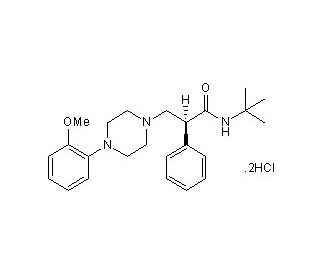

(S)-WAY 100135 dihydrochloride (CAS 149007-54-5)
QUICK LINKS
(S)-WAY 100135 dihydrochloride is a selective 5-HT1A receptor antagonist. It functions by binding to the 5-HT1A receptor and blocking its activation by serotonin. (S)-Way 100135 Dihydrochloride′s mechanism of action involves inhibiting the inhibitory effects of serotonin on neuronal firing, leading to an increase in neuronal activity. By antagonizing the 5-HT1A receptor, (S)-WAY 100135 dihydrochloride can modulate the release of neurotransmitters such as dopamine, norepinephrine, and acetylcholine. (S)-Way 100135 Dihydrochloride′s functional role involves studying the effects of 5-HT1A receptor antagonism on neuronal activity and neurotransmitter release. Its mechanism of action at the molecular level involves interfering with the binding of serotonin to the 5-HT1A receptor, thereby altering neuronal signaling pathways. (S)-Way 100135 Dihydrochloride′s role in experimental applications includes investigating the impact of 5-HT1A receptor antagonism on behavior, cognition, and mood regulation.
(S)-WAY 100135 dihydrochloride (CAS 149007-54-5) References
- Autocrine/paracrine regulation of the growth of the biliary tree by the neuroendocrine hormone serotonin. | Marzioni, M., et al. 2005. Gastroenterology. 128: 121-37. PMID: 15633129
- Interplay between glutamate and serotonin within the dorsal periaqueductal gray modulates anxiety-related behavior of rats exposed to the elevated plus-maze. | Moraes, CL., et al. 2008. Behav Brain Res. 194: 181-6. PMID: 18675851
- Subtype-specific changes in 5-HT receptor-mediated modulation of C fibre-evoked spinal field potentials are triggered by peripheral nerve injury. | Aira, Z., et al. 2010. Neuroscience. 168: 831-41. PMID: 20412834
- The role of 5-HT₁A receptors in fish oil-mediated increased BDNF expression in the rat hippocampus and cortex: a possible antidepressant mechanism. | Vines, A., et al. 2012. Neuropharmacology. 62: 184-91. PMID: 21740919
- Serotonin directly stimulates cortisol secretion from the interrenals in goldfish. | Lim, JE., et al. 2013. Gen Comp Endocrinol. 192: 246-55. PMID: 24013027
- Central amygdala nicotinic and 5-HT1A receptors mediate the reversal effect of nicotine and MDMA on morphine-induced amnesia. | Tirgar, F., et al. 2014. Neuroscience. 277: 392-402. PMID: 25050820
- Interaction between anti-Alzheimer and antipsychotic drugs in modulating extrapyramidal motor disorders in mice. | Shimizu, S., et al. 2015. J Pharmacol Sci. 127: 439-45. PMID: 25850380
- Trazodone regulates neurotrophic/growth factors, mitogen-activated protein kinases and lactate release in human primary astrocytes. | Daniele, S., et al. 2015. J Neuroinflammation. 12: 225. PMID: 26627476
- Dual Alpha2C/5HT1A Receptor Agonist Allyphenyline Induces Gastroprotection and Inhibits Fundic and Colonic Contractility. | Zádori, ZS., et al. 2016. Dig Dis Sci. 61: 1512-23. PMID: 26860509
- Serotonergic modulation of nicotine-induced kinetic tremor in mice. | Kunisawa, N., et al. 2017. J Pharmacol Sci. 134: 131-138. PMID: 28647281
- Breathing stimulation mediated by 5-HT1A and 5-HT3 receptors within the preBötzinger complex of the adult rabbit. | Iovino, L., et al. 2019. Brain Res. 1704: 26-39. PMID: 30244021
- Key role of 5-HT1A receptors in the modulation of the neuronal network underlying the respiratory rhythm generation in lampreys. | Cinelli, E., et al. 2020. Eur J Neurosci. 52: 3903-3917. PMID: 32378271
- Ventral tegmental area serotonin 5-HT1A receptors and corticolimbic cFos/BDNF/GFAP signaling pathways mediate dextromethorphan/morphine anti-allodynia. | Ghasemzadeh, Z., et al. 2021. Physiol Behav. 239: 113522. PMID: 34242672
Ordering Information
| Product Name | Catalog # | UNIT | Price | Qty | FAVORITES | |
(S)-WAY 100135 dihydrochloride, 10 mg | sc-361330 | 10 mg | $109.00 | |||
(S)-WAY 100135 dihydrochloride, 50 mg | sc-361330A | 50 mg | $615.00 |