
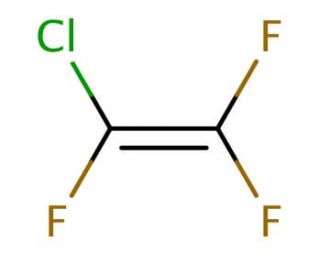

Halocarbon oil 0.8 (CAS 9002-83-9)
ACCÈS RAPIDE AUX LIENS
L'huile halocarbone 0.8 est un type spécialisé de lubrifiant inerte principalement utilisé dans le domaine de la physique expérimentale et de l'ingénierie. Elle est connue pour son excellente stabilité chimique, sa faible réactivité et sa large gamme de températures de fonctionnement, ce qui la rend adaptée aux environnements difficiles et aux applications sensibles. Dans le domaine de la recherche, l'huile Halocarbone 0.8 est souvent utilisée comme médium dans les systèmes à vide poussé et dans la préparation de mélanges gazeux à des fins d'étalonnage. Sa faible viscosité et ses propriétés non conductrices sont avantageuses pour le développement d'instruments de précision et la lubrification d'appareils où les huiles standard risquent de se dégrader ou de réagir. En outre, l'huile Halocarbone 0.8 est utilisée en cryogénie, par exemple comme liquide de refroidissement ou dans les bains de refroidissement, en raison de sa capacité à rester fluide à très basse température. Ses propriétés uniques sont également explorées en science des matériaux pour l'encapsulation d'échantillons afin de prévenir l'oxydation ou d'autres types de dégradation pendant l'analyse.
Halocarbon oil 0.8 (CAS 9002-83-9) Références
- Détermination des coefficients de transfert de chaleur le long du chemin d'écoulement d'un lyophilisateur à l'aide de l'approche de perturbation de la température du fluide de l'étagère. | Kuu, WY., et al. 2007. Pharm Dev Technol. 12: 485-94. PMID: 17963149
- Pourquoi une humidité relative élevée par rapport à la glace persiste-t-elle dans les cirrus ? | Bogdan, A. and Molina, MJ. 2009. J Phys Chem A. 113: 14123-30. PMID: 19925002
- Les aérosols aqueux peuvent accumuler une sursaturation en glace élevée dans la haute troposphère et former des particules en phase mixte après la congélation. | Bogdan, A. and Molina, MJ. 2010. J Phys Chem A. 114: 2821-9. PMID: 20136162
- Formulations stabilisantes pour les poudres inhalables d'un vaccin contre la tuberculose (TB) vectorisé par l'adénovirus 35 (AERAS-402). | Jin, TH., et al. 2010. Vaccine. 28: 4369-75. PMID: 20444437
- Formation de particules en phase mixte lors de la congélation de nuages de glace stratosphériques polaires. | Bogdan, A., et al. 2010. Nat Chem. 2: 197-201. PMID: 21124476
- Comportement de congélation différent des gouttelettes de (NH₄)₂SO₄/H₂O à l'échelle du millimètre et du micromètre. | Bogdan, A., et al. 2011. J Phys Condens Matter. 23: 035103. PMID: 21406858
- Congélation simple et triple fusion de gouttelettes micrométriques de (NH4)2SO4/H2O. | Bogdan, A., et al. 2011. Phys Chem Chem Phys. 13: 19704-6. PMID: 21842051
- Particules électrophorétiques luminescentes par polymérisation en mini-mulsion pour les écrans électrophorétiques de vision nocturne. | Meng, X., et al. 2013. ACS Appl Mater Interfaces. 5: 3638-42. PMID: 23547950
- Données de visualisation sur le processus de congélation de gouttes aqueuses d'acide citrique à l'échelle du micromètre. | Bogdan, A., et al. 2017. Data Brief. 10: 144-146. PMID: 27981204
- La procédure d'émulsification influence-t-elle la congélation et la décongélation des gouttelettes aqueuses ? | Hauptmann, A., et al. 2016. J Chem Phys. 145: 211923. PMID: 28799359
Informations pour la commande
| Nom du produit | Ref. Catalogue | COND. | Prix HT | QTÉ | Favoris | |
Halocarbon oil 0.8, 100 g | sc-362051 | 100 g | $310.00 | |||
Halocarbon oil 0.8, 1.8 kg | sc-362051B | 1.8 kg | $2715.00 | |||
Halocarbon oil 0.8, 10 kg | sc-362051C | 10 kg | $12495.00 |