
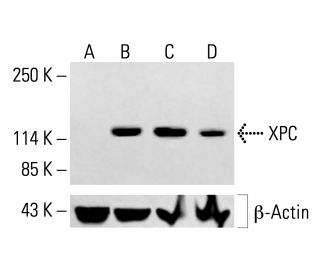
Non dati CRISPR: l'immagine illustra la qualità degli anticorpi per la visualizzazione dei risultati degli esperimenti CRISPR.
Non dati CRISPR: l'immagine illustra la qualità degli anticorpi per la visualizzazione dei risultati degli esperimenti CRISPR.
XPC Plasmide di attivazione CRISPR (h): sc-401499-ACT
- Specie Target: human
- 20 µg di DNA plasmidico purificato, pronto per trasfezione; sufficiente fino a 20 trasfezioni
- XPC Plasmide di attivazione CRISPR (h) è un mediatore sinergico di attivazione (SAM) del sistema di attivazione trascrizionale disegnato per upregolare specificatamente l'espressione genica
- XPC CRISPR Activation Plasmid (h) consiste di tre plasmidi in proporzione 1:1:1 : un plasmide che codifica la nucleasi (D10A and N863A) Cas9 (dCas9) deattivata fusa al dominio di transattivazione VP64, ed un gene di resistenza alla blasticina; un plasmide che codifica per la proteina di fusione MS2-p65-HSF1, ed un gene di resistenza all'igromicina;un plasmide che codifica un RNA guida di 20 nt target specifico, e un gene di resistenza alla puromicina.
- Il complesso SAM legae una regione sito-specifica circa 200-250 nt a monte del sito di start trascrizionale e fornisce un robusto reclutamento di fattori trascrizionali per un'attivazione altamente efficiente del gene target
- I gRNA codificati dal XPC CRISPR Activation Plasmid (h) e dal XPC CRISPR Activation Plasmid (h2) prendono di mira regioni regolatorie distinte a monte del sito di inizio della trascrizione di XPC. Uno o entrambi i modelli potrebbero essere disponibili
- In seguito alla trasfezione, l'efficienza dll'attivazione genica può essere testata con WB, IF o IHC utilizzando l'anticorpo: XPC Antibody (D-10): sc-74410

Informazioni ordini
| Nome del prodotto | Codice del prodotto | UNITÀ | Prezzo | Quantità | Preferiti | |
XPC Plasmide di attivazione CRISPR (h) | sc-401499-ACT | 20 µg | $397.00 | |||
XPC Plasmide di attivazione CRISPR (h2) | sc-401499-ACT-2 | 20 µg | $397.00 |
L’XPC umano codifica un fattore di riconoscimento del danno al DNA che avvia la riparazione per escissione di nucleotidi dell’intero genoma (GG-NER) rilevando lesioni che distorcono la doppia elica, come i fotoprodotti indotti dai raggi UV e gli addotti chimici voluminosi. XPC agisce insieme a RAD23B e CETN2 per favorire la verifica della lesione e il reclutamento dei componenti NER a valle, sostenendo la stabilità del genoma, l’integrità delle forche di replicazione e la segnalazione dei checkpoint del ciclo cellulare. L’alterazione della riparazione dipendente da XPC aumenta il carico mutazionale e modifica le risposte cellulari allo stress genotossico, collegando la disfunzione di XPC alla predisposizione al cancro e a fenotipi di fotosensibilità. In quanto nodo centrale nelle reti di riparazione del DNA, l’espressione di XPC è spesso analizzata in studi su mutagenesi, cancerogenesi ambientale e crosstalk tra vie di riparazione.
XPC Il plasmide di attivazione CRISPR (h) fornisce un approccio mirato e non distruttivo per sovraregolare l'espressione endogena di XPC senza alterare la sequenza di DNA sottostante.
XPC Il plasmide di attivazione CRISPR (h) è un sistema SAM (mediatore di attivazione sinergico) a tre plasmidi progettato per la sovraregolazione trascrizionale altamente efficiente e sito-specifica del locus XPC nelle linee cellulari umane. Il sistema è costruito attorno a una Cas9 cataliticamente inattiva (dCas9) che porta due mutazioni inattivanti (D10A e N863A) che eliminano l'attività nucleasica preservando al contempo il legame con il DNA. Questa dCas9 è fusa con VP64, un potente attivatore trascrizionale, ed è coespressa con un gene di resistenza alla blasticidina per la selezione. Il secondo plasmide codifica la proteina di fusione MS2-p65-HSF1, un complesso attivatore secondario che agisce in sinergia con dCas9-VP64, insieme a un gene di resistenza all'igromicina. Il terzo plasmide codifica un sgRNA specifico per il bersaglio di 20 nt fuso a due aptameri di RNA MS2 che reclutano il complesso MS2-p65-HSF1 nel sito di attivazione, accompagnato da un gene di resistenza alla puromicina. I tre plasmidi vengono somministrati in un rapporto di massa 1:1:1 per un'espressione bilanciata di tutti i componenti del sistema.
Una volta assemblato nel locus bersaglio, il complesso SAM si lega a circa 200 bp a monte del sito di inizio della trascrizione XPC, dove VP64, p65 e HSF1 agiscono in modo concertato per reclutare il machinery trascrizionale e guidare la sovraregolazione dell'espressione endogena di XPC. A differenza della Cas9 con attività nucleasica, dCas9 non introduce rotture a doppio filamento né modifica la sequenza genomica, preservando il locus XPC nativo e consentendo lo studio delle risposte trascrizionali dipendenti da XPC nel locus endogeno, rendendolo uno strumento prezioso per studi funzionali, l'identificazione di geni bersaglio e la modellizzazione del ripristino della via XPC nelle cellule tumorali con espressione di XPC silenziata o ridotta.
Solo per uso di ricerca. Non destinato a uso diagnostico o terapeutico.