
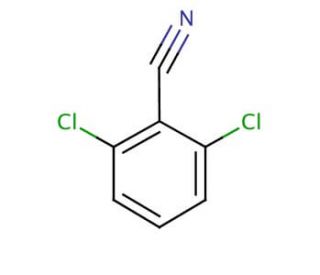

2,6-Dichlorobenzonitrile (CAS 1194-65-6)
QUICK LINKS
2,6-Dichlorobenzonitrile is a chemical compound that functions as a herbicide by inhibiting photosynthesis in plants. It disrupts the electron transport chain in photosystem II, leading to the production of reactive oxygen species and ultimately causing damage to the plant′s cellular membranes. This disruption of photosynthesis results in the depletion of energy reserves within the plant, leading to its eventual death. At the molecular level, 2,6-Dichlorobenzonitrile binds to the QB-binding niche of the D1 protein in photosystem II, preventing the transfer of electrons and ultimately disrupting the normal flow of energy. 2,6-Dichlorobenzonitrile′s mechanism of action involves targeting the photosynthesis of plants, making it an effective function for weed control in agricultural and experimental applications.
2,6-Dichlorobenzonitrile (CAS 1194-65-6) References
- 2,6-Dichlorobenzonitrile: a new herbicide. | KOOPMAN, H. and DAAMS, J. 1960. Nature. 186: 89-90. PMID: 14410928
- The formation of 2,6-dichlorobenzonitrile from related compounds in plants. | Milborrow, BV. 1963. Biochem J. 87: 255-8. PMID: 16749003
- Mechanisms of olfactory toxicity of the herbicide 2,6-dichlorobenzonitrile: essential roles of CYP2A5 and target-tissue metabolic activation. | Xie, F., et al. 2010. Toxicol Appl Pharmacol. 249: 101-6. PMID: 20840855
- 1,3-Dipolar cycloaddition of 2,6-dichlorobenzonitrile oxide to 2-methyl-N-confused porphyrin. Regio- and stereoselective synthesis and structural characterization of 2-aza-21-carbabacteriochlorin and resolution of 2-aza-21-carbachlorin enantiomers. | Li, X., et al. 2012. J Org Chem. 77: 2431-40. PMID: 22324296
- Disruption of cellulose synthesis by 2,6-dichlorobenzonitrile affects the structure of the cytoskeleton and cell wall construction in Arabidopsis. | Peng, L., et al. 2013. Plant Biol (Stuttg). 15: 405-14. PMID: 22759307
- Bioactivation of the nasal toxicant 2,6-dichlorobenzonitrile: an assessment of metabolic activity in human nasal mucosa and identification of indicators of exposure and potential toxicity. | Xie, F., et al. 2013. Chem Res Toxicol. 26: 388-98. PMID: 23360412
- Mechanisms of permanent loss of olfactory receptor neurons induced by the herbicide 2,6-dichlorobenzonitrile: effects on stem cells and noninvolvement of acute induction of the inflammatory cytokine IL-6. | Xie, F., et al. 2013. Toxicol Appl Pharmacol. 272: 598-607. PMID: 23921153
- 2, 6-Dichlorobenzonitrile causes multiple effects on pollen tube growth beyond altering cellulose synthesis in Pinus bungeana Zucc. | Hao, H., et al. 2013. PLoS One. 8: e76660. PMID: 24146903
- Early habituation of maize (Zea mays) suspension-cultured cells to 2,6-dichlorobenzonitrile is associated with the enhancement of antioxidant status. | Largo-Gosens, A., et al. 2016. Physiol Plant. 157: 193-204. PMID: 26612685
- Effect of 2, 6-Dichlorobenzonitrile on Amoebicidal Activity of Multipurpose Contact Lens Disinfecting Solutions. | Moon, EK., et al. 2018. Korean J Parasitol. 56: 491-494. PMID: 30419735
- Metabolism of 2,6-dichlorobenzonitrile, 2,6-dichlorothiobenzamide in rodents and goats. | Bakke, JE., et al. 1988. Xenobiotica. 18: 1063-75. PMID: 3067458
- Intermediary metabolism of 2,6-dichlorobenzonitrile (dichlobenil) in chickens and growth of chickens fed dichlobenil. | Davison, KL. and Bakke, JE. 1988. Xenobiotica. 18: 941-8. PMID: 3188573
- The comparative metabolism of 2,6-dichlorothiobenzamide (Prefix) and 2,6-dichlorobenzonitrile in the dog and rat. | Griffiths, MH., et al. 1966. Biochem J. 98: 770-81. PMID: 5911525
- Metabolic activation of 2,6-dichlorobenzonitrile, an olfactory-specific toxicant, by rat, rabbit, and human cytochromes P450. | Ding, X., et al. 1996. Mol Pharmacol. 49: 1113-21. PMID: 8649351
- Production of cellulose II by Acetobacter xylinum in the presence of 2,6-dichlorobenzonitrile. | Yu, X. and Atalla, RH. 1996. Int J Biol Macromol. 19: 145-6. PMID: 8842778
Ordering Information
| Product Name | Catalog # | UNIT | Price | Qty | FAVORITES | |
2,6-Dichlorobenzonitrile, 25 g | sc-254376 | 25 g | $40.00 |