
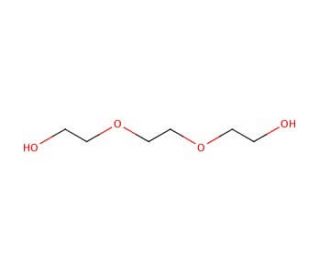

Triethylene glycol (CAS 112-27-6)
QUICK LINKS
Triethylene glycol (TEG) is a highly versatile chemical compound extensively utilized in numerous industrial and scientific applications. It is characterized by its colorless and odorless nature, as well as its non-flammability. Triethylene glycol exhibits excellent solubility in both water and most organic solvents, and it possesses hygroscopic properties, enabling it to absorb moisture from the surrounding air. Moreover, Triethylene glycol plays a role in scientific research, finding applications in various biological and biochemical studies. In vitro investigations examine its effects on cell cultures, enzymes, and proteins. Although the precise mechanism of action of Triethylene glycol remains incompletely understood, it is believed to exert its effects through multiple pathways. Triethylene glycol may function as a chelating agent, binding to metal ions and impeding their involvement in biochemical reactions. Additionally, it can act as a surfactant, reducing surface tension and enhancing the solubility of other compounds in water.
Triethylene glycol (CAS 112-27-6) References
- Triethylene glycol poisoning treated with intravenous ethanol infusion. | Vassiliadis, J., et al. 1999. J Toxicol Clin Toxicol. 37: 773-6. PMID: 10584590
- Final report on the safety assessment of Triethylene Glycol and PEG-4. | . 2006. Int J Toxicol. 25 Suppl 2: 121-38. PMID: 17090481
- Priming effects of triethylene glycol and triethylene glycol monomethacrylate on dentin bonding. | Kusunoki, M., et al. 2007. Dent Mater J. 26: 474-80. PMID: 17886449
- Phytoremediation of Mono-, Di-, and Triethylene Glycol by Echinodorus cordifolius L. Griseb. | Teamkao, P. and Thiravetyan, P. 2015. Int J Phytoremediation. 17: 93-100. PMID: 25174429
- Triethylene Glycol Up-Regulates Virulence-Associated Genes and Proteins in Streptococcus mutans. | Sadeghinejad, L., et al. 2016. PLoS One. 11: e0165760. PMID: 27820867
- Triethylene glycol, an active component of Ashwagandha (Withania somnifera) leaves, is responsible for sleep induction. | Kaushik, MK., et al. 2017. PLoS One. 12: e0172508. PMID: 28207892
- Inhalation toxicity of benzalkonium chloride and triethylene glycol mixture in rats. | Kwon, D., et al. 2019. Toxicol Appl Pharmacol. 378: 114609. PMID: 31173787
- Triethylene glycol-like effects of Ashwagandha (Withania somnifera (L.) Dunal) root extract devoid of withanolides in stressed mice. | Dey, A., et al. 2018. Ayu. 39: 230-238. PMID: 31367146
- The migration of propylene glycol, mono-, di-, and triethylene glycols from regenerated cellulose film into food. | Castle, L., et al. 1988. Z Lebensm Unters Forsch. 187: 463-7. PMID: 3206944
- Study of ink aging: Targeting triethylene glycol in carbon-based black gel ink strokes on paper. | Ni, Y., et al. 2020. Forensic Sci Int. 311: 110296. PMID: 32344206
- Molecular-Level Overhaul of γ-Aminopropyl Aminosilicone/Triethylene Glycol Post-Combustion CO2 -Capture Solvents. | Cantu, DC., et al. 2020. ChemSusChem. 13: 3429-3438. PMID: 32369677
- Synergistic effects of sodium adipate/triethylene glycol on the plasticization and retrogradation of corn starch. | Zhang, K., et al. 2020. Carbohydr Res. 496: 108112. PMID: 32798980
- Terminal Structure of Triethylene Glycol-Tethered Chains on β-Cyclodextrin-Threaded Polyrotaxanes Dominates Temperature Responsivity and Biointeractions. | Ohashi, M., et al. 2021. Langmuir. 37: 11102-11114. PMID: 34478294
- Transport properties of n-ethylene glycol aqueous solutions with focus on triethylene glycol-water. | Santos, CIAV., et al. 2022. J Chem Phys. 156: 214501. PMID: 35676139
Ordering Information
| Product Name | Catalog # | UNIT | Price | Qty | FAVORITES | |
Triethylene glycol, 25 g | sc-251325 | 25 g | $45.00 | |||
Triethylene glycol, 1 kg | sc-251325A | 1 kg | $52.00 |