
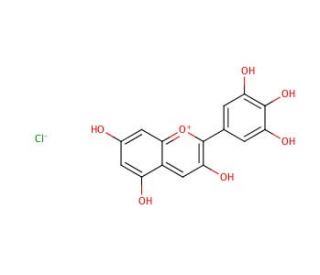

Delphinidin chloride (CAS 528-53-0)
See product citations (2)
QUICK LINKS
Delphinidin chloride is an anthocyanidin, a common plant pigment, found in pigmented fruits and vegetable. It displays antioxidant effect. It has been shown to induce nitric oxide production, regulating calcium homeostatis and thus inhibiting endothelial cell apoptosis and angiogenesis. It has been found to block solar radiation and UVB-mediated oxidative stress, resulting in a reduction of DNA damage. It has also been found to prevent the activation of c-Jun N-terminal kinase (JNK) and mitogen-activated protein kinase (MAPK) resulting in the inhibition of the release of platelet derived growth factor(AB) (PDGF(AB))-induced vascular endothelial growth factor (VEGF) in vascular smooth muscle cells.
Delphinidin chloride (CAS 528-53-0) References
- DNA interaction with naturally occurring antioxidant flavonoids quercetin, kaempferol, and delphinidin. | Kanakis, CD., et al. 2005. J Biomol Struct Dyn. 22: 719-24. PMID: 15842176
- Delphinidin, an anthocyanidin in pigmented fruits and vegetables, protects human HaCaT keratinocytes and mouse skin against UVB-mediated oxidative stress and apoptosis. | Afaq, F., et al. 2007. J Invest Dermatol. 127: 222-32. PMID: 16902416
- Delphinidin and cyanidin inhibit PDGF(AB)-induced VEGF release in vascular smooth muscle cells by preventing activation of p38 MAPK and JNK. | Oak, MH., et al. 2006. Br J Pharmacol. 149: 283-90. PMID: 16921400
- Instability of, and generation of hydrogen peroxide by, phenolic compounds in cell culture media. | Long, LH., et al. 2010. Arch Biochem Biophys. 501: 162-9. PMID: 20558131
- Growth inhibitory, antiandrogenic, and pro-apoptotic effects of punicic acid in LNCaP human prostate cancer cells. | Gasmi, J. and Sanderson, JT. 2010. J Agric Food Chem. 58: 12149-56. PMID: 21067181
- Treatment of diabetes in the mouse model by delphinidin and cyanidin hydrochloride in free and liposomal forms. | Gharib, A., et al. 2013. Planta Med. 79: 1599-604. PMID: 24108435
- Gastro-intestinal tract function in sheep infused with somatostatin. | Barry, TN., et al. 1985. Aust J Biol Sci. 38: 393-403. PMID: 2871827
- Delphinidin Chloride and Its Hydrolytic Metabolite Gallic Acid Promote Differentiation of Regulatory T cells and Have an Anti-inflammatory Effect on the Allograft Model. | Hyun, KH., et al. 2019. J Food Sci. 84: 920-930. PMID: 30977922
- Comparison of different drying pretreatment combined with ultrasonic-assisted enzymolysis extraction of anthocyanins from Lycium ruthenicum Murr. | Liu, Y., et al. 2024. Ultrason Sonochem. 107: 106933. PMID: 38865900
- Inhibition of lipid peroxidation and the active oxygen radical scavenging effect of anthocyanin pigments isolated from Phaseolus vulgaris L. | Tsuda, T., et al. 1996. Biochem Pharmacol. 52: 1033-9. PMID: 8831722
Ordering Information
| Product Name | Catalog # | UNIT | Price | Qty | FAVORITES | |
Delphinidin chloride, 10 mg | sc-202572 | 10 mg | $401.00 |