
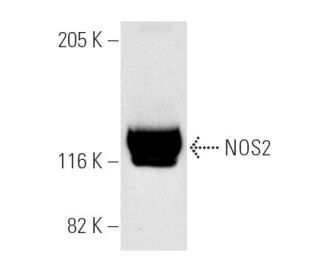
Non dati CRISPR: l'immagine illustra la qualità degli anticorpi per la visualizzazione dei risultati degli esperimenti CRISPR.
Non dati CRISPR: l'immagine illustra la qualità degli anticorpi per la visualizzazione dei risultati degli esperimenti CRISPR.
NOS2/iNOS Particelle di Attivazione Lentivirale (m): sc-421928-LAC
- Specie Target: mouse
- 200 µl di Particelle Lentivirali di Attivazione CRISPR/dCas9 ad alto titolo
- NOS2/iNOS Le particelle lentivirali di attivazione (m) sono un mediatore di attivazione sinergica (SAM) un sistema di attivazione trascrizionale disegnato per upregolare specificatamente ed efficientemente l'espressione genica attraverso la trasduzione delle cellule
- NOS2/iNOS Lentiviral Activation Particles (m) contengono i seguenti elementi di Attivazione SAM : una nucleasi Cas9 (dCas9) deattivata (D10A and N863A) fusa al dominio di transattivazione VP64, una proteina di fusione MS2-p65-HSF1 ed un RNA guida target specifico di 20 nt Contengono anche geni per la resistenza alla blasticidina, igromicina and puromicina
- Il complesso SAM lega e una regione sito-specifica circa 200-250 nt a monte del sito di start trascrizionale e fornisce un robusto reclutamento di fattori trascrizionali per un'attivazione altamente efficiente del gene target
- Gli gRNA codificati dal NOS2/iNOS Plasmide di attivazione lentivirale (m) e dal NOS2/iNOS Plasmide di attivazione lentivirale (m2) prendono di mira regioni regolatorie distinte del promotore Nos2. Uno o entrambi i modelli potrebbero essere disponibili
- In seguito alla trasfezione, l'efficienza dll'attivazione genica può essere testata con WB, IF o IHC utilizzando l'anticorpo: NOS2/iNOS Antibody (C-11): sc-7271

Informazioni ordini
| Nome del prodotto | Codice del prodotto | UNITÀ | Prezzo | Quantità | Preferiti | |
NOS2/iNOS Particelle di Attivazione Lentivirale (m) | sc-421928-LAC | 200 µl | $455.00 | |||
NOS2/iNOS Particelle di Attivazione Lentivirale (m2) | sc-421928-LAC-2 | 200 µl | $455.00 |
Nos2 codifica la sintasi dell’ossido nitrico inducibile (NOS2/iNOS), un enzima che durante le risposte infiammatorie e dell’immunità innata genera ossido nitrico a partire da L-arginina. L’ossido nitrico derivato da iNOS modula la segnalazione redox, la difesa antimicrobica e le reti citochiniche, intersecandosi con programmi trascrizionali regolati da NF-κB, JAK/STAT e MAPK nei macrofagi e in altri tipi cellulari attivati. Un’attività alterata di Nos2 è ampiamente utilizzata come indicatore meccanicistico in modelli di infiammazione, infezione e stress ossidativo, in cui l’ossido nitrico e le specie reattive dell’azoto influenzano il metabolismo cellulare, la funzione mitocondriale e il rimodellamento tissutale. Una segnalazione iNOS deregolata è stata implicata in sistemi sperimentali pertinenti ad autoimmunità, neuroinfiammazione, disfunzione cardiovascolare e modulazione immunitaria associata ai tumori.
Le particelle di attivazione lentivirale NOS2/iNOS (m) rispondono a questa esigenza incapsulando il sistema completo di attivazione trascrizionale del mediatore di attivazione sinergica (SAM) in particelle lentivirali ad alto titolo pronte per la trasduzione, consentendo un'efficiente sovraregolazione di Nos2 in una gamma più ampia di tipi di cellule umane.
Le particelle di attivazione lentivirale NOS2/iNOS (m) veicolano tutti i componenti funzionali del sistema del mediatore di attivazione sinergica (SAM) tramite trasduzione lentivirale. Il sistema comprende tre preparati di particelle co-trasdotti nelle cellule bersaglio: uno che codifica per dCas9 cataliticamente inattivo (mutazioni D10A e N863A) fuso al dominio di transattivazione VP64 con un gene di resistenza alla blasticidina; una che codifica la proteina di fusione MS2-p65-HSF1 con un gene di resistenza all'igromicina; e una che codifica un sgRNA di 20 nt specifico per il bersaglio fuso a due aptameri di RNA MS2 con un gene di resistenza alla puromicina. A seguito della trasduzione lentivirale e dell'integrazione genomica dei cassetti di espressione, i componenti del SAM vengono espressi in modo stabile e si assemblano nel locus bersaglio all'interno della regione promotrice prossimale a monte del sito di inizio della trascrizione Nos2, dove VP64, p65 e HSF1 agiscono in modo cooperativo per reclutare il machinery trascrizionale endogeno e guidare una sovraregolazione sostenuta dell'espressione endogena di NOS2/iNOS. L'uso di dCas9 inattivo nei confronti delle nucleasi evita l'introduzione di rotture del DNA a doppio filamento e preserva il locus genomico nativo Nos2 e l'architettura regolatoria.
Il formato lentivirale offre diversi vantaggi pratici: l'integrazione genomica stabile supporta l'attivazione ereditaria attraverso le divisioni cellulari; le preparazioni di particelle ad alto titolo eliminano la necessità di una produzione virale interna; e la compatibilità con tipi di cellule primarie, non in divisione e resistenti alla trasfezione amplia l'accessibilità sperimentale. Il successo della trasduzione può essere confermato e potenziato attraverso una selezione antibiotica tripla utilizzando puromicina, igromicina e blasticidina.
Solo per uso di ricerca. Non destinato a uso diagnostico o terapeutico.