
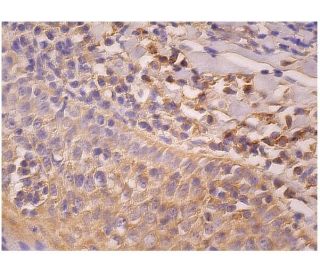


PIPK I alpha Antibody (E-3): sc-376195
- PIPK I α Antibody (E-3) is a mouse monoclonal IgG3 κ provided at 200 µg/ml
- specific for an epitope mapping between amino acids 481-519 near the C-terminus of PIPK I α of mouse origin
- recommended for detection of PIPK I α (designated PIPK I β in mouse) of mouse, rat and human origin by WB, IP, IF, IHC(P) and ELISA
- m-IgGκ BP-HRP is the preferred secondary detection reagent for PIPK I α Antibody (E-3) for WB and IHC(P) applications. This reagent is now offered in a bundle with PIPK I α Antibody (E-3) (see ordering information below). For additional m-IgGκ BP conjugates see our complete list of Mouse IgG Binding Proteins.

PIPK I α Antibody (E-3) is a mouse monoclonal IgG3 antibody that detects phosphatidylinositol-4-phosphate-5-kinase I α in mouse, rat, and human samples through various applications including western blotting (WB), immunoprecipitation (IP), immunofluorescence (IF), immunohistochemistry, and enzyme-linked immunosorbent assay (ELISA). PIPK I α plays a crucial role in synthesizing phosphatidylinositol-4,5-bisphosphate, a key lipid that regulates essential cellular processes such as cell proliferation, survival, and cytoskeletal organization. PIPK I α is primarily located in the brain, where PIPK I α is vital for neuronal signaling and function. The specific localization of PIPK I α in the brain underscores its importance in neurobiology, as PIPK I α contributes to the regulation of synaptic activity and plasticity, which are fundamental for learning and memory. Additionally, the PIPK family, which includes PIPK I α, is known for its distinct enzymatic specificity and subcellular targeting, facilitated by an activation loop that varies among its members. Anti-PIPK I α antibody (E-3) is an invaluable tool for researchers investigating the intricate roles of phosphatidylinositol signaling pathways in various physiological and pathological contexts.
Alexa Fluor® is a trademark of Molecular Probes Inc., OR., USA
LI-COR® and Odyssey® are registered trademarks of LI-COR Biosciences
PIPK I alpha Antibody (E-3) References:
- Phosphatidylinositol 4-phosphate 5-kinase is indispensable for mouse spermatogenesis. | Hasegawa, H., et al. 2012. Biol Reprod. 86: 136, 1-12. PMID: 22321832
- CLIC1 recruits PIP5K1A/C to induce cell-matrix adhesions for tumor metastasis. | Peng, JM., et al. 2021. J Clin Invest. 131: PMID: 33079727
- β2-Microglobulin Maintains Glioblastoma Stem Cells and Induces M2-like Polarization of Tumor-Associated Macrophages. | Li, D., et al. 2022. Cancer Res. 82: 3321-3334. PMID: 35841593
- The role of PIP5K1A in cancer development and progression. | Yin, M. and Wang, Y. 2022. Med Oncol. 39: 151. PMID: 35852640
- Chikungunya virus nsP1 induces migrasome formation. | Zhang, N., et al. 2022. J Infect. 85: e158-e161. PMID: 35933040
- Knockdown of circ-PIP5K1A overcomes resistance to cisplatin in ovarian cancer by miR-942-5p/NFIB axis. | Sheng, H. and Wang, X. 2023. Anticancer Drugs. 34: 214-226. PMID: 36730637
- The phosphatidylinositol (4,5)-bisphosphate-Rab35 axis regulates migrasome formation. | Ding, T., et al. 2023. Cell Res. 33: 617-627. PMID: 37142675
- Lipid kinase PIP5K1A regulates let-7 microRNA biogenesis through interacting with nuclear export protein XPO5. | Li, C., et al. 2023. Nucleic Acids Res. 51: 9849-9862. PMID: 37655623
- Nuclear phosphoinositide signaling promotes YAP/TAZ-TEAD transcriptional activity in breast cancer. | Jung, O., et al. 2024. EMBO J. 43: 1740-1769. PMID: 38565949
- Rupatadine inhibits colorectal cancer cell proliferation through the PIP5K1A/Akt/CDK2 pathway. | Jiang, L., et al. 2024. Biomed Pharmacother. 176: 116826. PMID: 38838507
Ordering Information
| Product Name | Catalog # | UNIT | Price | Qty | FAVORITES | |
PIPK I α Antibody (E-3) | sc-376195 | 200 µg/ml | $322.00 | |||
PIPK I α Antibody (E-3): m-IgGκ BP-HRP Bundle | sc-552408 | 200 µg Ab; 40 µg BP | $361.00 | |||
PIPK I α (E-3) Neutralizing Peptide | sc-376195 P | 100 µg/0.5 ml | $69.00 |