
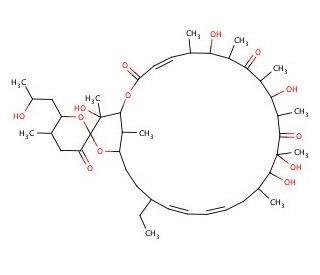

Oligomycin E (CAS 110231-34-0)
QUICK LINKS
Oligomycin E is a macrolide antibiotic known for its potent inhibitory effects on the mitochondrial ATP synthase (F0F1-ATPase). The primary mechanism of action of Oligomycin E involves binding to the F0 subunit of ATP synthase, which blocks the proton channel and inhibits the flow of protons across the mitochondrial membrane. This inhibition disrupts the proton gradient, essential for the synthesis of ATP from ADP and inorganic phosphate, leading to a cessation of ATP production. As ATP is the primary energy currency of the cell, this blockage effectively halts cellular energy metabolism. In research, Oligomycin E is extensively used to study mitochondrial function and bioenergetics. Its ability to specifically target and inhibit ATP synthase makes it a valuable tool for investigating the role of mitochondrial ATP production in various cellular processes. Researchers employ Oligomycin E to explore the effects of impaired ATP synthesis on cellular metabolism, apoptosis, and reactive oxygen species (ROS) production. Additionally, it is used in studies aimed at understanding the mechanisms of mitochondrial diseases and conditions characterized by altered energy metabolism. Furthermore, Oligomycin E is utilized in the investigation of metabolic pathways and the regulation of cellular energy homeostasis. By inhibiting ATP synthase, researchers can dissect the contributions of mitochondrial ATP production to overall cellular energy balance and explore compensatory metabolic pathways that cells activate in response to energy stress. These applications provide critical insights into mitochondrial biology and energy metabolism, contributing to the broader understanding of cellular function and regulation
Oligomycin E (CAS 110231-34-0) References
- X-ray structures of two forms of the antibiotic oligomycin A: an inhibitor of ATP synthase. | Palmer, RA., et al. 2013. Future Med Chem. 5: 881-93. PMID: 23682566
- Oligomycins as inhibitors of K-Ras plasma membrane localisation. | Salim, AA., et al. 2016. Org Biomol Chem. 14: 711-715. PMID: 26565618
- Glucose starvation greatly enhances antiproliferative and antiestrogenic potency of oligomycin A in MCF-7 breast cancer cells. | Scherbakov, AM., et al. 2021. Biochimie. 186: 51-58. PMID: 33872751
- Oligomycin E, a new antitumor antibiotic produced by Streptomyces sp. MCI-2225. | Kobayashi, K., et al. 1987. J Antibiot (Tokyo). 40: 1053-7. PMID: 3624067
- Structures, Biosynthesis, and Bioactivity of Oligomycins from the Marine-Derived Streptomyces sp. FXY-T5. | Feng, XY., et al. 2024. J Agric Food Chem. 72: 1082-1095. PMID: 38169320
- Oligomycin-producing Streptomyces sp. newly isolated from Swiss soils efficiently protect Arabidopsis thaliana against Botrytis cinerea. | Louviot, F., et al. 2024. mSphere. e0066723. PMID: 38864637
Ordering Information
| Product Name | Catalog # | UNIT | Price | Qty | FAVORITES | |
Oligomycin E, 1 mg | sc-391681 | 1 mg | $315.00 |