
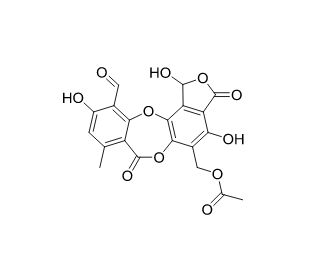

Galbinic acid (CAS 56691-88-4)
QUICK LINKS
Galbinic acid, a flavonoid derivative, is a naturally occurring compound found in several plant species, particularly those belonging to the Fabaceae family. It is characterized by a distinct structural framework that includes a phenolic hydroxyl group, which significantly contributes to its chemical properties and biological relevance in non-medical research settings. As a research chemical, galbinic acid has been extensively utilized in studies focused on plant biology and ecology, especially in understanding plant defense mechanisms against environmental stressors. Its mechanism of action primarily involves antioxidative activities, where it scavenges free radicals and protects plant tissues from oxidative damage caused by UV radiation and pathogenic attacks. This antioxidative property makes galbinic acid a valuable tool in plant physiological studies, helping to explain how plants cope with oxidative stress and adapt to their environments. Furthermore, galbinic acid′s role in signaling pathways that regulate plant growth and defense responses has been a subject of botanical research, providing insights into the complex interactions within plant cells and between plants and their environment. These studies contribute to a broader understanding of plant biology and aid in the development of strategies for crop improvement and sustainable agriculture practices.
Galbinic acid (CAS 56691-88-4) References
- A new depsidone and antibacterial activities of compounds from Usnea undulata Stirton. | Sultana, N. and Afolayan, AJ. 2011. J Asian Nat Prod Res. 13: 1158-64. PMID: 22115039
- A taxonomic study of the genus myelochroa in South Korea. | Jayalal, U., et al. 2012. Mycobiology. 40: 217-24. PMID: 23323045
- New insights into the Usnea cornuta aggregate (Parmeliaceae, lichenized Ascomycota): Molecular analysis reveals high genetic diversity correlated with chemistry. | Gerlach, ADCL., et al. 2019. Mol Phylogenet Evol. 131: 125-137. PMID: 30385309
- Antimicrobial Activity of Divaricatic Acid Isolated from the Lichen Evernia mesomorpha against Methicillin-Resistant Staphylococcus aureus. | Oh, JM., et al. 2018. Molecules. 23: PMID: 30477128
- Extracts of Flavoparmelia sp. Inhibit Receptor Activator of Nuclear Factor-κB Ligand-Mediated Osteoclast Differentiation. | Kim, KJ., et al. 2019. J Bone Metab. 26: 113-121. PMID: 31223608
- Salazinic Acid-Derived Depsidones and Diphenylethers with α-Glucosidase Inhibitory Activity from the Lichen Parmotrema dilatatum. | Devi, AP., et al. 2020. Planta Med. 86: 1216-1224. PMID: 32819010
- Screening of cryptogamic secondary metabolites as putative inhibitors of SARS-CoV-2 main protease and ribosomal binding domain of spike glycoprotein by molecular docking and molecular dynamics approaches. | Prateeksha, G., et al. 2021. J Mol Struct. 1240: 130506. PMID: 33967344
- A sustainable application for the extraction of lichen metabolites from Usnea cornuta: nontargeted metabolomics and antioxidant activity. | Castañeta, G., et al. 2023. Nat Prod Res. 37: 2076-2082. PMID: 36008873
- Comparative Study on the Antimicrobial Activities and Metabolic Profiles of Five Usnea Species from the Philippines. | Dela Cruz, TEE., et al. 2023. J Fungi (Basel). 9: PMID: 37998922
- The structure of galbinic acid. A depsidone from the lichen Usnea undulata. | Elix, John A and Udomsri Engkaninan. 1975. Australian journal of chemistry. 28.8: 1793-1797.
Ordering Information
| Product Name | Catalog # | UNIT | Price | Qty | FAVORITES | |
Galbinic acid, 1 mg | sc-506579 | 1 mg | $163.00 |