

1-Palmitoyl-2-oleoyl-sn-glycero-3-phosphoethanolamine (CAS 26662-94-2)
QUICK LINKS
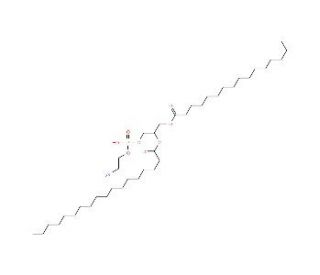
1-Palmitoyl-2-oleoyl-sn-glycero-3-phosphoethanolamine (POPE) is a phospholipid belonging to the lipid family, for the composition of cell membranes and involved in numerous physiological processes. Its structure comprises a glycerol backbone and two fatty acid tails. As a model molecule in scientific research, 1-Palmitoyl-2-oleoyl-sn-glycero-3-phosphoethanolamine allows for in-depth exploration of cell membrane structure and functionality. In scientific research, 1-Palmitoyl-2-oleoyl-sn-glycero-3-phosphoethanolamine serves as a valuable model to investigate the effects of diverse chemical and biological agents on cellular membranes. It enables the examination of interactions among membrane components and the dynamics of cell membranes, shedding light on the interplay between membrane proteins and other molecules. 1-Palmitoyl-2-oleoyl-sn-glycero-3-phosphoethanolamine actively participates in various biochemical and physiological processes. It contributes to the regulation of cell membrane fluidity, cell signaling pathways, cell growth, differentiation, and even cell death. Additionally, it plays a role in cellular metabolism and the facilitation of membrane transport. Being a phospholipid, 1-Palmitoyl-2-oleoyl-sn-glycero-3-phosphoethanolamine possesses a glycerol backbone and two hydrophobic fatty acid tails that repel water. This unique property enables interactions with other molecules in the cell membrane, including proteins and lipids. These interactions underlie the diverse physiological effects exerted by 1-Palmitoyl-2-oleoyl-sn-glycero-3-phosphoethanolamine. The multifaceted nature of 1-Palmitoyl-2-oleoyl-sn-glycero-3-phosphoethanolamine makes it a fundamental component of cell membranes and an invaluable model for exploring membrane structure, function, and interactions. Further research into its properties holds the potential for deeper insights into cellular processes and the development of innovative therapeutic approaches.
1-Palmitoyl-2-oleoyl-sn-glycero-3-phosphoethanolamine (CAS 26662-94-2) References
- Surface planar bilayers of phospholipids used in protein membrane reconstitution: an atomic force microscopy study. | Doménech, O., et al. 2006. Colloids Surf B Biointerfaces. 47: 102-6. PMID: 16406753
- [Determination of Jingzhaotoxin-I phospholipid membrane-binding activities by high performance liquid chromatography with fluorescence detection]. | Zeng, X., et al. 2007. Se Pu. 25: 825-9. PMID: 18257297
- Phase changes in supported planar bilayers of 1-palmitoyl-2-oleoyl-sn-glycero-3-phosphoethanolamine. | Picas, L., et al. 2008. J Phys Chem B. 112: 10181-7. PMID: 18651767
- Miscibility behavior and nanostructure of monolayers of the main phospholipids of Escherichia coli inner membrane. | Picas, L., et al. 2012. Langmuir. 28: 701-6. PMID: 22087507
- Phosphatidylethanolamine-lactose permease interaction: a comparative study based on FRET. | Suárez-Germà, C., et al. 2012. J Phys Chem B. 116: 14023-8. PMID: 23137163
- Relative ion yields in mammalian cell components using C60 SIMS. | Keskin, S., et al. 2014. Surf Interface Anal. 45: 244-247. PMID: 25140069
- α-Tocopherol's Location in Membranes Is Not Affected by Their Composition. | Marquardt, D., et al. 2015. Langmuir. 31: 4464-72. PMID: 25317847
- Effect of Supporting Polyelectrolyte Multilayers and Deposition Conditions on the Formation of 1-Palmitoyl-2-oleoyl-sn-glycero-3-phosphocholine/1-Palmitoyl-2-oleoyl-sn-glycero-3-phosphoethanolamine Lipid Bilayers. | Wlodek, M., et al. 2015. Langmuir. 31: 10484-92. PMID: 26334376
- Comparative study of stability and transport of molecules through cyclic peptide nanotube and aquaporin: a molecular dynamics simulation approach. | Maroli, N. and Kolandaivel, P. 2020. J Biomol Struct Dyn. 38: 186-199. PMID: 30678549
- Lipid selectivity in detergent extraction from bilayers. | Azouz, M., et al. 2020. Biochem Biophys Res Commun. 531: 140-143. PMID: 32782150
- An Antimicrobial Peptide-Mimetic Methacrylate Random Copolymer Induces Domain Formation in a Model Bacterial Membrane. | Yasuhara, K., et al. 2022. J Membr Biol. 255: 513-521. PMID: 35182193
- Antibacterial mechanism of the Asp-Asp-Asp-Tyr peptide. | Zhuang, S., et al. 2022. Food Chem X. 13: 100229. PMID: 35499031
- Atomic force microscopy of cholera toxin B-oligomers bound to bilayers of biologically relevant lipids. | Mou, J., et al. 1995. J Mol Biol. 248: 507-12. PMID: 7752220
Ordering Information
| Product Name | Catalog # | UNIT | Price | Qty | FAVORITES | |
1-Palmitoyl-2-oleoyl-sn-glycero-3-phosphoethanolamine, 100 mg | sc-220498 | 100 mg | $317.00 |