
Date published: 2026-10-18

1-800-457-3801

SCBT Portrait Logo
Seach Input

Neurofibromin 항체 (McNFn27a): sc-20017

3.8(4)
리뷰 쓰기질문하기
데이터 시트
  • Neurofibromin 항체(McNFn27a) 는 마우스 monoclonal IgG1κ, 4간행물에 인용, 이며 200 µg/ml으로 제공합니다.
  • human의 Neurofibromin에서 27-41 아미노산에 해당하는 N-terminal 영역을 대상으로 생성됨
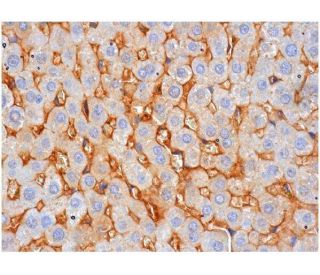
  • WB, IP, IF와 IHC(P)으로 mouse, rat와 human origin의 Neurofibromin을 검출할것을 권장합니다.
  • See Neurofibromin (H-12): sc-376886 for additional antibody conjugates, including AC, HRP, FITC, PE, Alexa Fluor® 488, 594, 647, 680 and 790.
  • m-IgG Fc BP-HRP, 1 BP-HRP">m-IgG1 BP-HRP 및 m-IgGκ BP-HRP는 Neurofibromin 항체(McNFn27a) WB 및 IHC(P) 애플리케이션용입니다. 이 시약은 이제 Neurofibromin 항체(McNFn27a)와 함께 번들로 제공됩니다(아래 주문 정보 참조).

Gene Editing Promo Banner

빠른 링크

더보기

신경섬유종증 제1형 (NF1) 또는 폰 레킹하우젠 신경섬유종증은 인간의 가장 흔한 상염색체 우성 질환 중 하나이다. 초기 연계 분석은 NF1 유전자를 17번 염색체에 매핑했다. 예측된 NF1 전사체는 NF1-GAP 관련 단백질 (NF1GRP)로도 명명된 2,818개의 아미노산 단백질 뉴로피브로민을 인코딩한다. 시퀀스 분석에 의해, 뉴로피브로민과 Ras GAP 유전자 계열의 구성원들의 작은 영역 내에서 유사성이 입증되었다. 기능적으로, 뉴로피브로민은 GAP 단백질과 더욱 유사하도록 효모의 RAS-GAP 가수분해 및 기능적 보완을 포함하는 생화학적 분석에 의해 보여졌다. 뉴로피브로민 단백질은 뇌, 폐, 간, 신장, 비장, 근육 및 결장을 포함한 광범위한 세포주 및 조직에서 비교적 일정한 수준으로 발현된다. 뉴로피브로민의 기능에 대해서는 거의 알려져 있지 않지만, GTPase 활성을 갖는 단백질의 촉매 도메인과의 상동성은 뉴로피브로민이 Ras 단백질과도 생체 내에서 상호작용할 수 있음을 시사한다.

연구용으로만 사용가능합니다. 진단이나 치료용으로 사용불가합니다.

Alexa Fluor®는 미국 오리건주 Molecular Probes Inc.의 상표입니다.

LI-COR®와 Odyssey®는 LI-COR Biosciences의 등록 상표입니다.

Neurofibromin 항체 (McNFn27a) 참고문헌:

  1. 신경 발달에서 신경 퇴행까지: 신경섬유종과 발로신 함유 단백질/p97의 상호 작용에 의한 수지상 돌기 형성 조절.  |  Hsueh, YP. 2012. J Biomed Sci. 19: 33. PMID: 22449146
  2. 신경섬유종증 1형에서 신경섬유종 - NF1 유전자의 돌연변이가 질병의 원인.  |  Abramowicz, A. and Gos, M. 2014. Dev Period Med. 18: 297-306. PMID: 25182393
  3. 신경섬유종은 디티오스티엘륨에서 거대포식작용과 식세포 작용을 조절합니다.  |  Bloomfield, G., et al. 2015. Elife. 4: PMID: 25815683
  4. NF1과 신경섬유종: 유전적 풍경의 새로운 플레이어, 육종성 흑색종.  |  Mahalingam, M. 2017. Adv Anat Pathol. 24: 1-14. PMID: 27941538
  5. 전체 길이 마우스 cDNA를 이용한 신경섬유종(NF1) 유전자 변이 구조-기능 분석.  |  Wallis, D., et al. 2018. Hum Mutat. 39: 816-821. PMID: 29522274
  6. 신경섬유종 결핍은 내피 세포 증식과 망막 신생 혈관 형성을 유도합니다.  |  Zhang, H., et al. 2018. Invest Ophthalmol Vis Sci. 59: 2520-2528. PMID: 29847659
  7. 신경섬유종에 의한 GTP 가수분해에 대한 KRAS G13D 민감도.  |  Rabara, D., et al. 2019. Proc Natl Acad Sci U S A. 116: 22122-22131. PMID: 31611389
  8. NF1 변이체의 불안정화는 신경섬유종 이합체를 통해 지배적 부정적 방식으로 작용합니다.  |  Young, LC., et al. 2023. Proc Natl Acad Sci U S A. 120: e2208960120. PMID: 36689660
  9. 신경섬유종증 1형 유전자와 그 단백질 생성물, 신경섬유종.  |  Gutmann, DH. and Collins, FS. 1993. Neuron. 10: 335-43. PMID: 8461130
  10. 정상적인 인간 상처 치유에서 종양 억제 단백질 신경섬유종의 상향 조절 및 혈소판 유래 성장 인자(PDGF)와 변형 성장 인자-베타1(TGF-베타1)이 진피 섬유 아세포에서 신경섬유종 mRNA 정상 상태 수준을 증가시킨다는 체외 증거.  |  Ylä-Outinen, H., et al. 1998. J Invest Dermatol. 110: 232-7. PMID: 9506441

주문정보

제품명카탈로그 번호 단위가격수량관심품목

Neurofibromin 항체 (McNFn27a)

sc-20017
200 µg/ml
$322.00

Neurofibromin (McNFn27a): m-IgG Fc BP-HRP 번들

sc-536640
200 µg Ab; 10 µg BP
$361.00

Neurofibromin (McNFn27a): m-IgGκ BP-HRP 번들

sc-533797
200 µg Ab; 40 µg BP
$361.00

Neurofibromin (McNFn27a): m-IgG1 BP-HRP 번들

sc-544725
200 µg Ab; 20 µg BP
$361.00

I am using Neurofibromin (McNFn27a): sc-20017 monoclonal antibody to stain paraffin embedded tissue. Do you recommend antigen retrieval when using this antibody?

Asked by: TinTin
We recommend performing antigen retrieval with sodium citrate buffer (pH 6) and heat. The full protocol can be found here: https://www.scbt.com/scbt/resources/protocols/immunoperoxidase-staining
Answered by: Technical Support
Date published: 2017-02-24
  • y_2026, m_10, d_17, h_10CST
  • bvseo_bulk, prod_bvqa, vn_bulk_3.0.48
  • cp_1, bvpage1
  • co_hasquestionsanswers, tq_1
  • loc_ko_KR, sid_20017, prod, sort_[SortEntry(order=LAST_APPROVED_ANSWER_SUBMISSION_TIME, direction=DESCENDING)]
  • clientName_scbt
  • bvseo_sdk, java_sdk, bvseo-4.0.0
  • CLOUD, getContent, 113ms
  • QUESTIONS, PRODUCT
Rated 5 out of 5 by ekahen from This antibody genuinely *does* work (even on WB)Hi. I am first author of one of the cited publications for this antibody (at least my pub still listed as 08/2025; Kahen, E. et al.) and I noticed someone else said they could not get signal on WB in their hands. I want to reassure that you really can get great WB's with this antibody for any human cell line, but it is a labor of love. Neurofibromin is a fairly large protein as you likely know, (typically considered 240 kd) often running somewhere around 210-240 kda range on a gel per MW markers. As I wrote in my methods, I had to use a tris-acetate gradient gel of 3-8% to capture NF1 and its putative isoform explicitly (Very painful gel to deal with; many gels were broken during troubleshooting). Getting the loading control was tricky because tubulin would run around the same range as a non-specific band. Alpha-actinin ran *very close* to a non-specific band so was not "publication worthy" but was good for testing, and was used, and others might benefit from this using alpha-actinin for loading control for NF1 if new antibodies more specific. I had to find perfect timing to be able to capture proper *actin* right at the bottom of the gel, which has far more specific WB antibodies for pub-worthy images. Note: Wet transfer 100% necessary to get all the NF1. Dry transfer would either over-transfer the actin or (most often) under-transfer the NF1. Very difficult to get sufficient NF1 on a membrane via dry-transfer without losing other bands for controls (and I was also really trying to get RAS on same gel). Honestly I think I legit tried dry transfer for a hilarious amount of time once and when I stained the gel out of curiosity, there was *still* so much protein in the NF1 region. I really tried many times with dry transfer- wet transfer only way to get anything useful. Then, I actually blocked membranes *overnight* in Odyssey blocking buffer. This Santa-Cruz NF1 antibody was then used at highest concentration recommended by manufacturer, again in Odyssey blocking buffer *overnight* (4degC on shaker). Very thorough washing in TBST (and I think I actually preferred lower tween 20 % but 10 min washes). I really wanted clean crisp neurofibromin showing two bands, as I did. And ultimately, I was able to get the result I wanted and reproduce it (though actin could really have looked a little prettier, but quantified accurately overall.) I suppose we should really be this detailed in our methods, explaining these sorts of things, but we tend not to be. Nonetheless, what I've described might help someone working with this antibody. Feel free to reach out via email and I will try to remember my best other than what I've written here.
Date published: 2025-08-02
Rated 1 out of 5 by Yan Cui from Not working for WB in our handsessentially no specific bands, nor non-specific bands.
Date published: 2019-05-29
Rated 4 out of 5 by HC from WB: Worked well in mouse spleen samplesWB: Worked well in mouse spleen samples. -SCBT Publication Review
Date published: 2015-06-18
Rated 5 out of 5 by SH from Published data for IF in human Schwann cellsPublished data for IF in human Schwann cells and CCF cells. -SCBT Publication Review
Date published: 2013-05-05
  • y_2026, m_10, d_17, h_10
  • bvseo_bulk, prod_bvrr, vn_bulk_3.0.48
  • cp_1, bvpage1
  • co_hasreviews, tv_0, tr_4
  • loc_ko_KR, sid_20017, prod, sort_[SortEntry(order=SUBMISSION_TIME, direction=DESCENDING)]
  • clientName_scbt
  • bvseo_sdk, java_sdk, bvseo-4.0.0
  • CLOUD, getReviews, 15ms
  • REVIEWS, PRODUCT
Neurofibromin 항체 (McNFn27a) is rated 3.8 out of 5 by 4.
  • y_2026, m_10, d_17, h_10
  • bvseo_bulk, prod_bvrr, vn_bulk_3.0.48
  • cp_1, bvpage1
  • co_hasreviews, tv_0, tr_4
  • loc_ko_KR, sid_20017, prod, sort_[SortEntry(order=SUBMISSION_TIME, direction=DESCENDING)]
  • clientName_scbt
  • bvseo_sdk, java_sdk, bvseo-4.0.0
  • CLOUD, getAggregateRating, 103ms
  • REVIEWS, PRODUCT