
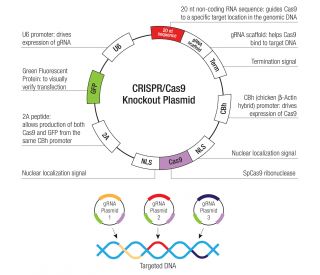
PCDH2 CRISPR/Cas9 KOプラスミド (h2): sc-406270-KO-2
- 対象生物種: human
- 20 µg のトランスフェクション準備済み、精製したプラスミドDNA、~20回トランスフェクション
- PCDH2 CRISPR/Cas9 ノックアウト(KO)プラスミド(h2)は、GeCKO v2ライブラリ由来の配列を用いて最大のノックアウト効率を実現するよう設計された、Cas9ヌクレアーゼおよび標的特異的な20塩基対のガイドRNA(gRNA)をそれぞれコードするプラスミドのプールです
- gRNA配列は、Cas9を誘導してPCDH2ゲノム座において部位特異的な二本鎖切断(DSBs)を引き起こし、非相同末端結合(NHEJ)を介して遺伝子ノックアウトをもたらします
- PCDH2 HDRプラスミド(h2)()(sc-406270-HDR-2)は、PCDH2 CRISPR/Cas9 KOプラスミド(h2)との共トランスフェクションに推奨されます。これにより、HDRを介したプテロマイシン耐性カセットおよびRFPレポーター遺伝子の組み込みを通じて、編集に成功した細胞の選別が可能になります
- PCDH2 HDRプラスミド(h2)は、PCDH2 CRISPR/Cas9 KOプラスミド(h2)内のgRNA標的部位に対応する相同性依存修復(HDR)テンプレートをそれぞれ含むプラスミドのプールです
- 各HDRプラスミドには、プテロマイシン耐性カセットおよびRFPカセットを挟む2つの約800 bpのホモロジーアームが含まれており、Cas9によって誘導された二本鎖切断部位周辺のゲノムDNA配列に結合し、HDRを介した正確な組み込みを促進するように設計されている
- ピューロマイシン耐性遺伝子とRFP遺伝子はLoxP部位で挟まれているため、安定したノックアウト細胞株を樹立した後、Creリコンビナーゼ(Creベクター:sc-418923)を用いて選択マーカーを除去することができる。
- トランスフェクションの後、遺伝子ノックアウト効果は、抗体を用いたWB、IFまたはIHCによって検定されることができます: PCDH2 抗体 (D-11): sc-376885

注文情報
| 製品名 | カタログ # | 単位 | 価格 | 数量 | お気に入り | |
PCDH2 CRISPR/Cas9 KOプラスミド (h2) | sc-406270-KO-2 | 20 µg | $397.00 | |||
PCDH2 HDRプラスミド (h2) | sc-406270-HDR-2 | 20 µg | $445.00 |
概要
PCDHGC3はプロトカドヘリンγ-C3(PCDH2)をコードしており、これはカルシウム依存性の細胞間接着分子です。クラスター型プロトカドヘリンは神経組織で主に研究されており、ニューロンのアイデンティティの規定やシナプス結合の安定化に関与します。PCDH2は、同種結合(ホモフィリック接着)や細胞骨格・シグナル伝達複合体との連結を介して、接着部位の組織化、神経突起のパターニング、活動依存的な回路形成に寄与します。プロトカドヘリンの発現異常やプロトカドヘリンクラスター領域のゲノム不安定性は、細胞接着や分化プログラムの制御破綻と関連し、神経発達の表現型や腫瘍生物学に関わる可能性が示されています。膜接着の決定因子として、PCDH2は接触依存性シグナル伝達、組織構築、細胞集団内の不均一性における役割の観点から、しばしば研究対象となっています。
PCDH2 CRISPR/Cas9 KOプラスミド(h2)は、human細胞株におけるPCDHGC3遺伝子の標的破壊のために設計されたプラスミドのプールです。このプールに含まれる各プラスミドは、Streptococcus pyogenes Cas9 ヌクレアーゼとともに、PCDHGC3 遺伝子座内の異なる部位を標的とする固有の sgRNA を共発現し、蛍光による同定と、トランスフェクションに成功した細胞の濃縮を可能にする GFP をコードしています。このマルチガイド戦略は、機能的なノックアウトをもたらすフレームシフトや欠失を誘導する可能性を高め、シングルガイドアプローチに代わる、より堅牢な選択肢を提供します。複数の部位で誘導された二本鎖切断(DSB)は、非相同末端結合(NHEJ)によって修復されるか、または同梱のHDRドナーテンプレートと併用した場合、遺伝子座内の定義された標的部位で相同性依存修復(HDR)によって修復されます。
RFP発現HDRドナーと併用する場合、GFPとRFPの蛍光を併用して、トランスフェクトされた細胞集団と編集された細胞集団を区別できるため、フローサイトメトリーに基づく選別およびクローン選択のワークフローが効率化されます。
相同性依存修復(HDR)ドナー — RFPレポーター付きプロマイシンカセット
確認済みで選択可能なノックアウトクローンを必要とする用途向けに、PCDH2 HDRプラスミド(h2)には、定義されたPCDHGC3ターゲット部位に特異的なホモロジーアームに挟まれた、プロマイシン耐性カセット(PuroR)および赤色蛍光タンパク質(RFP)レポーターを含むHDRドナー構築体が含まれています。
PCDH2 CRISPR/Cas9 KOプラスミド(h2)と共トランスフェクションした場合:
- PuroR-RFPカセットはHDRを介してCas9切断部位に組み込まれ、PCDHGC3のオープンリーディングフレームを破壊します。
RFP蛍光は、組み込みの成功を即座に視覚的に示す指標となり、プテロマイシン選別前または選別と並行して、蛍光に基づく編集細胞の同定や選別を可能にします。
編集に成功した細胞はプテロマイシン耐性によって確認されるため、クローンスクリーニングの負担を大幅に軽減します。
この選別戦略は、下流の機能解析、薬剤スクリーニング、またはモデル開発のための安定したクローン性KO細胞株の作製に最適です。
Cre-loxカセット除去システム
このHDRドナー構築体には、PuroR-RFP選択カセットを挟むloxPサイトが組み込まれており、クローンの確認後にマーカーをきれいに除去することが可能です。同梱のCreベクター:sc-418923によるCreリコンビナーゼの一過性発現により、カセットが切除され、PCDHGC3遺伝子座内に最小限の残留loxPサイトが残るだけで、下流のアッセイに対する潜在的な交絡効果が排除されます。
この2段階のアプローチ:
- 局所的なクロマチン構造および近隣の調節要素への影響を最小限に抑えます
編集された遺伝子座において、ほぼ天然の状態に近いゲノム環境を回復させます
同じ細胞株において、さらなる編集のためにプロマイシン選別戦略を再利用可能にします
主な特徴
- PCDH2の機能に不可欠なPCDHGC3エクソンを標的とするgRNA
デリバリーを簡素化するため、SpCas9とsgRNAを単一のプラスミドから共発現
陽性クローン選別用のプロマイシン耐性HDRドナー
シームレスなマーカー除去のためのCreリコンビナーゼベクターを備えたloxPで挟まれたPuroRカセット
トランスフェクションによる導入用に即使用可能な状態で提供
研究用のみ。診断用または治療用ではありません。