
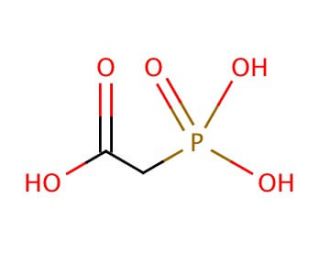

Phosphonoacetic acid (CAS 4408-78-0)
QUICK LINKS
Phosphonoacetic acid (PAA) holds significant importance as an organic acid extensively utilized in diverse scientific research applications. While the precise mechanism of action of Phosphonoacetic acid remains elusive, research suggests that it operates as an inhibitor of several enzymes for DNA replication and transcription. Moreover, it is believed to bind to specific proteins, including those involved in cell cycle regulation and apoptosis, thereby inhibiting their activity. Phosphonoacetic acid has demonstrated a broad array of biochemical effects. These effects encompass the inhibition of enzymes involved in DNA replication and transcription, as well as the inhibition of protein synthesis and enzyme activity. Additionally, it exerts influence on cell cycle regulation and apoptosis. Furthermore, Phosphonoacetic acid exhibits immunomodulatory properties, such as the inhibition of inflammation and the stimulation of cytokine production.
Phosphonoacetic acid (CAS 4408-78-0) References
- Phosphonoacetic acid in the treatment of experimental herpes simplex keratitis. | Gerstein, DD., et al. 1975. Antimicrob Agents Chemother. 7: 285-8. PMID: 1137379
- Phosphonoacetic acid in the treatment of experimental ocular herpes simplex infections. | Meyer, RF., et al. 1976. Antimicrob Agents Chemother. 9: 308-11. PMID: 1267429
- Adenosine phosphonoacetic acid is slowly metabolized by NDP kinase. | Chen, Y., et al. 2005. Med Chem. 1: 529-36. PMID: 16787337
- Phosphonoacetic acid utilization by fungal isolates: occurrence and properties of a phosphonoacetate hydrolase in some penicillia. | Forlani, G., et al. 2006. Mycol Res. 110: 1455-63. PMID: 17123811
- Effects of phosphonoacetic acid on subacute myeloopticoneuropathy virus in vitro and in vivo. | Nishibe, Y. and Inoue, YK. 1978. J Med Virol. 2: 225-9. PMID: 212527
- Antiviral potential of phosphonoacetic acid. | Overby, LR., et al. 1977. Ann N Y Acad Sci. 284: 310-20. PMID: 212978
- Phosphate-independent utilization of phosphonoacetic acid as sole phosphorus source by a psychrophilic strain of Geomyces pannorum P15. | Klimek-Ochab, M. 2014. Folia Microbiol (Praha). 59: 375-80. PMID: 24570323
- Phosphonoacetic acid inhibits replication of human herpesvirus-6. | Shiraki, K., et al. 1989. Antiviral Res. 12: 311-8. PMID: 2561336
- A Salmonella Regulator Modulates Intestinal Colonization and Use of Phosphonoacetic Acid. | Elfenbein, JR., et al. 2017. Front Cell Infect Microbiol. 7: 69. PMID: 28361036
- Conjugation of phosphonoacetic acid to nucleobase promotes a mechanism-based inhibition. | Mikalkėnas, A., et al. 2018. J Enzyme Inhib Med Chem. 33: 384-389. PMID: 29372656
- Phosphonoacetic acid-resistant RNA of Epstein-Barr virus in productively infected cells. | Shin, S., et al. 1983. Virology. 124: 196-200. PMID: 6130649
- A comparison of phosphonoacetic acid and phosphonoformic acid activity in genital herpes simplex virus type 1 and type 2 infections of mice. | Kern, ER., et al. 1981. Antiviral Res. 1: 225-35. PMID: 6280607
- Inhibition of activities of DNA polymerase alpha, beta, gamma, and reverse transcriptase of L1210 cells by phosphonoacetic acid. | Allaudeen, HS. and Bertino, JR. 1978. Biochim Biophys Acta. 520: 490-7. PMID: 82450
Ordering Information
| Product Name | Catalog # | UNIT | Price | Qty | FAVORITES | |
Phosphonoacetic acid, 10 g | sc-215712 | 10 g | $82.00 | |||
Phosphonoacetic acid, 50 g | sc-215712A | 50 g | $327.00 |