
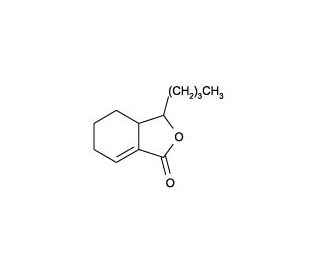

Sedanolide (CAS 6415-59-4)
QUICK LINKS
Sedanolide, a natural phthalide derived from celery seeds, is extensively studied in the field of agricultural and food science research due to its intriguing chemical properties. As a component contributing to the distinctive aroma and flavor of celery, sedanolide has been investigated for its role in plant chemistry and as a potential natural additive in food industries. Its mechanism of action is primarily associated with its capacity as a natural insecticidal and fungicidal agent, offering an alternative to synthetic chemicals in managing crop pests and diseases. In research settings, sedanolide is examined for its effectiveness in repelling insects and protecting plants against fungal pathogens, which can enhance crop yield and reduce spoilage. Studies have also explored sedanolide′s role in modulating plant growth and development, including its potential influence on germination and root growth. This makes it valuable for understanding plant-environment interactions and developing sustainable agricultural practices. Furthermore, sedanolide is researched for its antioxidant properties, contributing insights into its potential benefits in food preservation and extending the shelf life of perishable products.
Sedanolide (CAS 6415-59-4) References
- Mosquitocidal, nematicidal, and antifungal compounds from Apium graveolens L. seeds. | Momin, RA. and Nair, MG. 2001. J Agric Food Chem. 49: 142-5. PMID: 11305251
- Sedanolide, a natural phthalide from celery seed oil: effect on hydrogen peroxide and tert-butyl hydroperoxide-induced toxicity in HepG2 and CaCo-2 human cell lines. | Woods, JA., et al. 2001. In Vitr Mol Toxicol. 14: 233-40. PMID: 11846995
- Antioxidant, cyclooxygenase and topoisomerase inhibitory compounds from Apium graveolens Linn. seeds. | Momin, RA. and Nair, MG. 2002. Phytomedicine. 9: 312-8. PMID: 12120812
- Chemistry, technology, and nutraceutical functions of celery (Apium graveolens L.): an overview. | Sowbhagya, HB. 2014. Crit Rev Food Sci Nutr. 54: 389-98. PMID: 24188309
- Sedanolide induces autophagy through the PI3K, p53 and NF-κB signaling pathways in human liver cancer cells. | Hsieh, SL., et al. 2015. Int J Oncol. 47: 2240-6. PMID: 26500073
- Antibacterial activity of endosymbiotic bacterial compound from Pheretima sp. earthworms inhibit the growth of Salmonella Typhi and Staphylococcus aureus: in vitro and in silico approach. | Husain, DR. and Wardhani, R. 2021. Iran J Microbiol. 13: 537-543. PMID: 34557283
- Bifidobacterium longum R0175 protects mice against APAP-induced liver injury by modulating the Nrf2 pathway. | Li, S., et al. 2023. Free Radic Biol Med. 203: 11-23. PMID: 37003500
- Sedanolide Activates KEAP1-NRF2 Pathway and Ameliorates Hydrogen Peroxide-Induced Apoptotic Cell Death. | Tabei, Y., et al. 2023. Int J Mol Sci. 24: PMID: 38003720
- Sedanolide alleviates DSS-induced colitis by modulating the intestinal FXR-SMPD3 pathway in mice. | Li, S., et al. 2024. J Adv Res.. PMID: 38582300
- Chemoprevention of benzo[a]pyrene-induced forestomach cancer in mice by natural phthalides from celery seed oil. | Zheng, GQ., et al. 1993. Nutr Cancer. 19: 77-86. PMID: 8446516
Ordering Information
| Product Name | Catalog # | UNIT | Price | Qty | FAVORITES | |
Sedanolide, 100 mg | sc-205972 | 100 mg | $154.00 |