
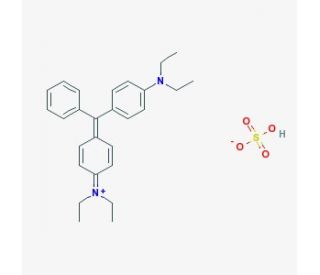

Brilliant Green (CAS 633-03-4)
See product citations (2)
QUICK LINKS
Amantadine hydrochloride, a synthetic compound initially developed as an antiviral agent, has found diverse applications in scientific research, particularly in neuroscience and pharmacology. One of its primary mechanisms of action is the inhibition of the N-methyl-D-aspartate (NMDA) receptor, a subtype of glutamate receptor crucial for synaptic transmission and plasticity in the central nervous system. By blocking the ion channel of the NMDA receptor, amantadine hydrochloride modulates glutamate-mediated neurotransmission, leading to downstream effects on neuronal excitability, synaptic plasticity, and neuroprotection. In research settings, amantadine hydrochloride is commonly employed as a pharmacological tool to investigate the role of NMDA receptors in various physiological and pathological processes, including learning and memory, neurodevelopmental disorders, neurodegenerative diseases, and psychiatric conditions. Furthermore, its ability to modulate dopamine neurotransmission through inhibition of dopamine reuptake and stimulation of dopamine release adds another dimension to its research applications, particularly in studies related to Parkinson′s disease, drug addiction, and mood disorders. Additionally, recent studies have explored the potential neuroprotective effects of amantadine hydrochloride in mitigating neuronal damage and inflammation associated with acute brain injuries, stroke, and neuroinflammatory disorders. Ongoing research continues to explain the precise mechanisms of action and potential of amantadine hydrochloride, offering valuable insights into neurobiology and pharmacology, with implications for the development of novel treatments for neurological and psychiatric disorders.
Brilliant Green (CAS 633-03-4) References
- The Removal of Brilliant Green Dye from Aqueous Solution Using Nano Hydroxyapatite/Chitosan Composite as a Sorbent. | Ragab, A., et al. 2019. Molecules. 24: PMID: 30823358
- Brilliant green staining of the fingernails. | Chelidze, K. and Lipner, SR. 2020. Cutis. 105: 317-318. PMID: 32716986
- Sorption of brilliant green dye using soybean straw-derived biochar: characterization, kinetics, thermodynamics and toxicity studies. | Vyavahare, G., et al. 2021. Environ Geochem Health. 43: 2913-2926. PMID: 33433782
- Photodegradation of Brilliant Green Dye by a Zinc bioMOF and Crystallographic Visualization of Resulting CO2. | Escamilla, P., et al. 2021. Molecules. 26: PMID: 34279437
- Adsorption of brilliant green dye onto activated carbon prepared from cashew nut shell by KOH activation: Studies on equilibrium isotherm. | Samiyammal, P., et al. 2022. Environ Res. 212: 113497. PMID: 35618006
- Dynamic Interactions Between Brilliant Green and MscL Investigated by Solid-State NMR Spectroscopy and Molecular Dynamics Simulations. | Ma, S., et al. 2023. Chemistry. 29: e202202106. PMID: 36251739
- Removal of Brilliant Green Dye from Water Using Ficus benghalensis Tree Leaves as an Efficient Biosorbent. | Gul, S., et al. 2023. Materials (Basel). 16: PMID: 36676258
- A Histogram-Based Technique for Simultaneous Colorimetric Determination of Malachite Green and Brilliant Green Using Triton X-100 Micelle. | Qashqai, N. and Heidari, T. 2023. J AOAC Int. 106: 1098-1108. PMID: 36744933
- Effective removal of brilliant green with magnetic barium phosphate composites: factor analysis and mechanism study. | Tao, D., et al. 2023. Environ Sci Pollut Res Int. 30: 50364-50375. PMID: 36795211
- Adsorption of Brilliant Green Dye onto a Mercerized Biosorbent: Kinetic, Thermodynamic, and Molecular Docking Studies. | Enache, AC., et al. 2023. Molecules. 28: PMID: 37241872
- Effect of brilliant green on the motility of Salmonellae and other selected microorganisms. | Sessoms, AR. and Banwart, GJ. 1969. Appl Microbiol. 18: 542-6. PMID: 4983955
Ordering Information
| Product Name | Catalog # | UNIT | Price | Qty | FAVORITES | |
Brilliant Green, 100 g | sc-206038 | 100 g | $88.00 |