
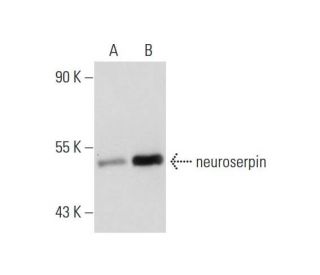

neuroserpin (C-9): sc-48360. Western blot analysis of neuroserpin expression in non-transfected: sc-110760 (A) and human neuroserpin transfected: sc-158761 (B) 293 whole cell lysates.
neuroserpin (h): 293溶解物: sc-158761
- ヒトneuroserpinトランスフェクトされた293ライセート
- 200 µl のSDS-PAGEバッファに100 µgのタンパク質;neuroserpin抗体のウェスタンブロッティングコントロールとして適合
- 適したコントロール抗体: neuroserpin 抗体 (C-9): sc-48360 は免疫蛍光またはウエスタンブロットによってneuroserpin発現ノックダウンのモニタリング用のコントロール抗体に推奨
- -20° Cで保存する必要があり、凍結融解の繰り返しが最小化されることが必要です
- 使用直前にサンプルバイアルを煮沸する必要があります
- 非トランスフェクトしたコントロール293ライセート (sc-110760)

クイックリンク
説明
Gene情報
データシートとプロトコル
Neuroserpin (h):293ライセートは、HEK 293細胞株由来で、主に神経細胞の成長とシナプス可塑性の調節に関与するセリンプロテアーゼ阻害剤であるニューロセルピンを研究するための重要なリソースである。HEK293細胞はヒト胚性腎臓細胞に由来し、高いトランスフェクション効率と強固なタンパク質発現のために広く利用されており、ニューロセルピンを豊富に含む溶解液の生産に適している。研究者らはこの溶解液を利用して、神経系におけるニューロセルピンの制御機構、特に組織プラスミノーゲンアクチベーター(tPA)を阻害し、細胞外マトリックスのリモデリングに影響を及ぼすニューロセルピンの役割を探求している。ニューロセルピン(h)を利用した研究:293 Lysateを用いた研究では、ニューロセルピンが細胞外マトリックスの分解に関与するタンパク質分解酵素を阻害することによって、シナプス可塑性と神経細胞移動をどのように制御しているのかを理解することに焦点を当てている。免疫沈降、ウェスタンブロッティング、酵素活性アッセイなどの技術を用いて、ニューロセルピンとtPAとの相互作用や、下流のシグナル伝達経路への影響を解析する。さらに、標的プロテアーゼとの結合に伴う構造変化を説明するために、ニューロセルピンの構造ダイナミクスを研究している。この溶解液は、神経発生と可塑性におけるニューロセルピンの機能についての知識を深めるのに役立っており、神経結合と安定性の根底にある分子メカニズムの理解を深めることに貢献している。
注文情報
| 製品名 | カタログ # | 単位 | 価格 | 数量 | お気に入り | |
neuroserpin (h): 293 Lysate | sc-158761 | 100 µg/200 µl | $236.00 |