
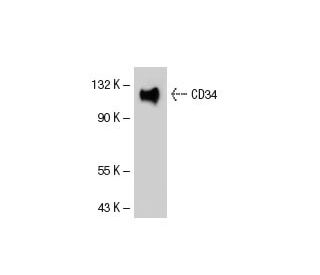


TF-1 Cell Lysate: sc-2412
- 500 µg protein in 200 µl SDS-PAGE Western blotting buffer
- human whole cell lysate; erythroleukemia cells
- whole cell lysate provided as Western blotting positive control
- should be stored at -20°C and repeated freezing and thawing should be minimized
- sample vial should be placed at 95° C for up to 5 minutes, once prior to use

QUICK LINKS
SEE ALSO...
TF-1 Cell Lysate is derived from TF-1 cells, a cell line established from the bone marrow of a patient with erythroleukemia. This lysate is extensively used in hematological research to investigate erythropoiesis, signal transduction, and the molecular mechanisms underlying leukemia. TF-1 cells are dependent on granulocyte-macrophage colony-stimulating factor (GM-CSF) or interleukin-3 (IL-3) for growth, making the lysate valuable for studying cytokine signaling pathways. Researchers utilize TF-1 Cell Lysate to analyze the expression, phosphorylation, and interaction of key proteins involved in pathways such as JAK/STAT, PI3K/AKT, and MAPK/ERK using techniques like western blotting, immunoprecipitation, and mass spectrometry. This lysate is particularly useful for examining the effects of cytokine stimulation on cell proliferation, differentiation, and survival. It aids in exploring the molecular basis of erythroid differentiation by analyzing the expression of hemoglobin and other erythroid-specific markers. Additionally, TF-1 Cell Lysate is employed to study the impact of various chemical compounds on these signaling pathways, providing insights into the cellular processes driving erythroleukemia progression. By comparing TF-1 lysates with those from normal erythroid progenitor cells, scientists can identify specific molecular alterations associated with leukemia, advancing research in hematopoiesis and cancer biology.
TF-1 Cell Lysate References:
- Modulation of integrin function in hematopoietic progenitor cells by CD43 engagement: possible involvement of protein tyrosine kinase and phospholipase C-gamma. | Anzai, N., et al. 1999. Blood. 93: 3317-26. PMID: 10233884
- Insulin receptor substrate-2-dependent interleukin-4 signaling in macrophages is impaired in two models of type 2 diabetes mellitus. | Hartman, ME., et al. 2004. J Biol Chem. 279: 28045-50. PMID: 15123681
- Effect of cell lysates on retroviral transduction efficiency of cells in suspension culture. | Beauchesne, PR., et al. 2010. Biotechnol Bioeng. 105: 1168-77. PMID: 20014140
- Single amino acid resolution of proteolytic fragments generated in individual cells. | Brown, RB., et al. 2010. Cytometry A. 77: 347-55. PMID: 20187109
- DCNL1 functions as a substrate sensor and activator of cullin 2-RING ligase. | Heir, P., et al. 2013. Mol Cell Biol. 33: 1621-31. PMID: 23401859
- Src-like-adaptor protein (SLAP) differentially regulates normal and oncogenic c-Kit signaling. | Kazi, JU., et al. 2014. J Cell Sci. 127: 653-62. PMID: 24284075
- Novel monoclonal antibody against beta 1 integrin enhances cisplatin efficacy in human lung adenocarcinoma cells. | Kim, MY., et al. 2016. J Biomed Res. 30: 217-24. PMID: 27533932
- Erythropoietin regulates the expression of dimeric form of acetylcholinesterase during differentiation of erythroblast. | Xu, ML., et al. 2018. J Neurochem. 146: 390-402. PMID: 29675901
- Oct-4 and CD44 in epithelial stem cells like of benign odontogenic lesions. | Monroy, EAC., et al. 2018. Histochem Cell Biol. 150: 371-377. PMID: 29971493
- A membrane proximal domain of the human interleukin-3 receptor beta c subunit that signals DNA synthesis in NIH 3T3 cells specifically binds a complex of Src and Janus family tyrosine kinases and phosphatidylinositol 3-kinase. | Rao, P. and Mufson, RA. 1995. J Biol Chem. 270: 6886-93. PMID: 7896837
- Effect of cell lysates on retroviral transduction efficiency of cells in suspension culture | Pascal R. Beauchesne, Katherine J. Bruce, Bruce D. Bowen, James M. Piret. 2010. Biotechnology and Bioengineering. 105: 1168-1177.
- [HTML] FLT3 Splice Variant (FLT3Va) as a potential immunotherapeutic target in patients with Acute Myeloid Leukemia (AML) | S Adamia, J Nemeth, S Bhatt, SR Walker, NI Voeks. 2016. Blood. 128: 1681.
Ordering Information
| Product Name | Catalog # | UNIT | Price | Qty | FAVORITES | |
TF-1 Cell Lysate | sc-2412 | 500 µg/200 µl | $120.00 |