
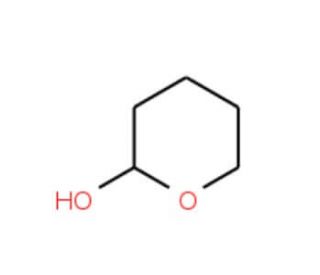

Tetrahydro-2H-pyran-2-ol (CAS 694-54-2)
QUICK LINKS
Tetrahydro-2H-pyran-2-ol is a valuable compound in organic synthesis and chemical research, known for its role as an intermediate in the synthesis of various organic molecules. Its structure, featuring a saturated six-membered ring with an alcohol functional group, makes it an ideal candidate for ring-opening polymerization reactions, which are pivotal in creating new polymeric materials with potential applications in industry. In catalysis research, Tetrahydro-2H-pyran-2-ol is used to study the mechanisms of hydrogen-bond donor catalysts due to its ability to form reversible hydrogen bonds, aiding in the development of more efficient catalytic systems. Additionally, the compound serves as a starting material for the preparation of flavor and fragrance chemicals, where researchers explore the synthesis of new aromatic compounds with desirable sensory properties.
Tetrahydro-2H-pyran-2-ol (CAS 694-54-2) References
- Air pollution particles activate NF-kappaB on contact with airway epithelial cell surfaces. | Churg, A., et al. 2005. Toxicol Appl Pharmacol. 208: 37-45. PMID: 16164960
- Determination of the thermodegradation of deoxyArbutin in aqueous solution by high performance liquid chromatography. | Yang, CH., et al. 2010. Int J Mol Sci. 11: 3977-87. PMID: 21152314
- Comparative study on the photostability of arbutin and deoxy arbutin: sensitivity to ultraviolet radiation and enhanced photostability by the water-soluble sunscreen, benzophenone-4. | Yang, CH., et al. 2013. Biosci Biotechnol Biochem. 77: 1127-30. PMID: 23649246
- The mechanism of 2-furaldehyde formation from D-xylose dehydration in the gas phase. A tandem mass spectrometric study. | Ricci, A., et al. 2013. J Am Soc Mass Spectrom. 24: 1082-9. PMID: 23690250
- Manganese-catalyzed selective oxidation of aliphatic C-H groups and secondary alcohols to ketones with hydrogen peroxide. | Dong, JJ., et al. 2013. ChemSusChem. 6: 1774-8. PMID: 24009102
- Kinetics and mechanism of the tropospheric reaction of 3-hydroxy-3-methyl-2-butanone with Cl atoms. | Sleiman, C., et al. 2014. J Phys Chem A. 118: 6163-70. PMID: 25069003
- Design, synthesis and biological evaluation of nitro oxide donating N-hydroxycinnamamide derivatives as histone deacetylase inhibitors. | Tu, S., et al. 2014. Chem Pharm Bull (Tokyo). 62: 1185-91. PMID: 25450627
- Optimization of Photoanodes for Photocatalytic Water Oxidation by Combining a Heterogenized Iridium Water-Oxidation Catalyst with a High-Potential Porphyrin Photosensitizer. | Materna, KL., et al. 2017. ChemSusChem. 10: 4526-4534. PMID: 28876510
- Understanding the Localization of Berylliosis: Interaction of Be2+ with Carbohydrates and Related Biomimetic Ligands. | Müller, M. and Buchner, MR. 2019. Chemistry. 25: 16257-16269. PMID: 31498482
- pH and Temperature Double-Switch Hybrid Micelles for Controllable Drug Release. | Lei, B., et al. 2021. Langmuir. 37: 14628-14637. PMID: 34882421
- Exploring Natural Product Activity and Species Source Candidates for Hunting ABCB1 Transporter Inhibitors: An In Silico Drug Discovery Study. | Ibrahim, MAA., et al. 2022. Molecules. 27: PMID: 35630581
- In silico drug repurposing and lipid bilayer molecular dynamics puzzled out potential breast cancer resistance protein (BCRP/ABCG2) inhibitors. | Almansour, NM., et al. 2022. J Biomol Struct Dyn. 1-14. PMID: 36120948
- Multienzyme Coimmobilization on Triheterofunctional Supports. | Santiago-Arcos, J., et al. 2023. Biomacromolecules. 24: 929-942. PMID: 36649203
Ordering Information
| Product Name | Catalog # | UNIT | Price | Qty | FAVORITES | |
Tetrahydro-2H-pyran-2-ol, 250 mg | sc-280125 | 250 mg | $101.00 |