
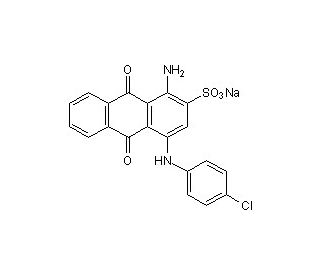

PSB 069 (CAS 78510-31-3)
Vedere citazioni di prodotto (1)
Available in US only.
LINK RAPIDI
PSB 069 è un composto chimico utilizzato come strumento di ricerca nello studio dei recettori purinergici, in particolare del sottotipo P2Y12. Questo composto è classificato come antagonista selettivo, il che consente ai ricercatori di studiare il ruolo fisiologico dei recettori P2Y12 nell'aggregazione piastrinica e nella formazione di trombi. Nei modelli sperimentali, il PSB 069 viene impiegato per bloccare l'azione degli agonisti endogeni dei recettori P2Y12, contribuendo in tal modo a dissotterrare le vie di segnalazione coinvolte nell'attivazione piastrinica. Inoltre, viene utilizzato per esplorare la funzione dei recettori P2Y12 nel sistema nervoso centrale, dove questi recettori sono implicati in processi quali la neurodegenerazione e l'infiammazione. La sua applicazione si estende all'esame dei recettori P2Y12 nello sviluppo di nuovi agenti antiaggreganti a scopo di ricerca.
PSB 069 (CAS 78510-31-3) Referenze
- Relazioni struttura-attività di derivati antrachinonici derivati dall'acido bromaminico come inibitori delle ectonucleoside trifosfato difosfoidrolasi (E-NTPDasi). | Baqi, Y., et al. 2009. Purinergic Signal. 5: 91-106. PMID: 18528783
- Inibitori dell'ecto-nucleotidasi: recenti sviluppi nella scoperta di farmaci. | Baqi, Y. 2015. Mini Rev Med Chem. 15: 21-33. PMID: 25694081
- La modulazione della sensibilità di P2X4/P2X7/Pannexin-1 all'ATP extracellulare tramite l'Ivermectina induce una forma non apoptotica e infiammatoria di morte delle cellule tumorali. | Draganov, D., et al. 2015. Sci Rep. 5: 16222. PMID: 26552848
- Vie di segnalazione purinergica distinte negli spermatogoni di topo prepuberi. | Fleck, D., et al. 2016. J Gen Physiol. 148: 253-71. PMID: 27574293
- Generazione e caratterizzazione di anticorpi policlonali e monoclonali contro la NTPDasi2 umana, compreso un anticorpo bloccante. | Pelletier, J., et al. 2017. Purinergic Signal. 13: 293-304. PMID: 28409324
- Studio di nuovi derivati chinolinici come promettenti inibitori delle NTPDasi: Sintesi, analisi SAR e studi di docking molecolare. | Hayat, K., et al. 2019. Bioorg Chem. 87: 218-226. PMID: 30903944
- L'inibizione dell'idrolisi dell'ATP ripristina la produzione di liquido superficiale delle vie aeree negli epiteli delle vie aeree della fibrosi cistica. | van Heusden, C., et al. 2020. Am J Physiol Lung Cell Mol Physiol. 318: L356-L365. PMID: 31800264
- Progressi nella comprensione dei meccanismi molecolari alla base degli effetti antitumorali dell'ivermectina. | Liu, J., et al. 2020. Drug Des Devel Ther. 14: 285-296. PMID: 32021111
- Riproposizione di composti bioattivi per il trattamento di patogeni multiresistenti ai farmaci. | Hummell, NA. and Kirienko, NV. 2020. J Med Microbiol. 69: 881-894. PMID: 32163353
- Metabolismo mirato dei nucleotidi extracellulari attraverso l'inibizione delle ectonucleotidasi CD73 e CD39. | Jeffrey, JL., et al. 2020. J Med Chem. 63: 13444-13465. PMID: 32786396
- Sviluppo di un saggio high-throughput per identificare gli inibitori di ENPP1. | Kumar, M. and Lowery, RG. 2021. SLAS Discov. 26: 740-746. PMID: 33402044
- L'aumento dell'ATP extracellulare sinergizza con la chemioterapia nel cancro al seno triplo negativo. | Manouchehri, JM., et al. 2022. Front Oncol. 12: 855032. PMID: 35515134
- Il riposizionamento del farmaco multitarget Ivermectina. | Atmakuri, S., et al. 2023. Curr Drug Deliv. 20: 1049-1066. PMID: 35578879
Informazioni ordini
| Nome del prodotto | Codice del prodotto | UNITÀ | Prezzo | Quantità | Preferiti | |
PSB 069, 5 mg | sc-204216 | 5 mg | $176.00 | |||
| USA: Disponibile solo negli Stati Uniti | ||||||
PSB 069, 10 mg | sc-204216A | 10 mg | $728.00 | |||
| USA: Disponibile solo negli Stati Uniti | ||||||