
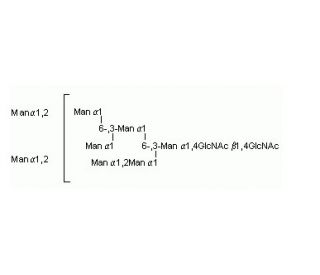

N-Linked Oligosaccharide, Man-8 Glycan
QUICK LINKS
N-Linked Oligosaccharide, Man-8 Glycan, plays a crucial role in cellular processes and has been extensively studied in various research areas, particularly in the field of glycobiology. This specific glycan structure consists of eight mannose (Man) residues and is commonly found attached to asparagine (N) residues of proteins, forming N-linked glycoproteins. Its mechanism of action primarily involves mediating protein folding, quality control, and cellular trafficking. Man-8 glycan serves as a recognition signal for lectins and chaperone proteins involved in glycoprotein folding within the endoplasmic reticulum (ER) and facilitates the proper folding of newly synthesized glycoproteins. Moreover, it acts as a substrate for glycan-processing enzymes, such as glycosidases and glycosyltransferases, which modify the glycan structure during protein maturation in the Golgi apparatus. In research, Man-8 glycan is utilized as a molecular probe to investigate glycoprotein biosynthesis, folding, and processing pathways. It is commonly employed in cell-based assays, in vitro enzymatic studies, and structural analyses to explain the roles of glycans in protein function, stability, and interactions. Furthermore, Man-8 glycan serves as a model glycan for studying glycan recognition by lectins and antibodies, contributing to our understanding of immune responses, cell-cell interactions, and disease mechanisms. Overall, N-Linked Oligosaccharide, Man-8 Glycan, serves as a valuable tool in glycobiology research, enabling scientists to unravel the complexities of glycoprotein biology and its implications in various cellular processes and diseases.
Ordering Information
| Product Name | Catalog # | UNIT | Price | Qty | FAVORITES | |
N-Linked Oligosaccharide, Man-8 Glycan, 20 µg | sc-222007 | 20 µg | $750.00 |