
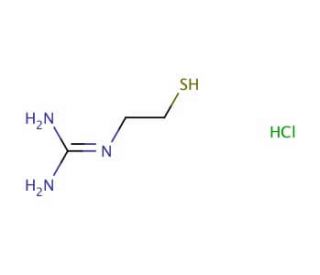

MEG, Hydrochloride (CAS 19767-44-3)
QUICK LINKS
MEG, Hydrochloride functions as a potent and selective inhibitor of a specific enzyme. It acts by binding to the active site of the enzyme, preventing its normal function and leading to the inhibition of a specific biochemical pathway. This inhibition results in the disruption of cellular processes that rely on the activity of the enzyme, ultimately affecting the regulation of certain physiological functions. MEG, Hydrochloride′s mechanism of action involves interfering with the enzyme′s ability to catalyze specific chemical reactions, thereby altering the cellular signaling pathways and metabolic processes. Meg, Hydrochloride′s interaction at the molecular level leads to the modulation of key cellular functions, making it useful for investigating the role of the targeted enzyme in various biological processes.
MEG, Hydrochloride (CAS 19767-44-3) References
- Efficacy of melatonin, mercaptoethylguanidine and 1400W in doxorubicin- and trastuzumab-induced cardiotoxicity. | Ozturk, M., et al. 2011. J Pineal Res. 50: 89-96. PMID: 21062350
- Mercaptoethylguanidine attenuates caustic esophageal injury in rats: a role for scavenging of peroxynitrite. | Guven, A., et al. 2011. J Pediatr Surg. 46: 1746-52. PMID: 21929984
- Neuroprotective effects of mercaptoethylleonurine and mercaptoethylguanidine analogs on hydrogen peroxide-induced apoptosis in human neuronal SH-SY5Y cells. | Que, ZL., et al. 2013. Bioorg Med Chem Lett. 23: 1793-6. PMID: 23403085
- Profiling drug-induced cell death pathways in the zebrafish lateral line. | Coffin, AB., et al. 2013. Apoptosis. 18: 393-408. PMID: 23413197
- Small aminothiol compounds improve the function of Arg to Cys variant proteins: effect on the human cystathionine β-synthase p.R336C. | Mendes, MI., et al. 2015. Hum Mol Genet. 24: 7339-48. PMID: 26464485
- Neuroprotective Efficacy of Mitochondrial Antioxidant MitoQ in Suppressing Peroxynitrite-Mediated Mitochondrial Dysfunction Inflicted by Lead Toxicity in the Rat Brain. | Maiti, AK., et al. 2017. Neurotox Res. 31: 358-372. PMID: 28050775
- Cysteamine revisited: repair of arginine to cysteine mutations. | Gallego-Villar, L., et al. 2017. J Inherit Metab Dis. 40: 555-567. PMID: 28643139
- Mitigating peroxynitrite mediated mitochondrial dysfunction in aged rat brain by mitochondria-targeted antioxidant MitoQ. | Maiti, AK., et al. 2018. Biogerontology. 19: 271-286. PMID: 29774505
- Glycation-mediated protein crosslinking and stiffening in mouse lenses are inhibited by carboxitin in vitro. | Nandi, SK., et al. 2021. Glycoconj J. 38: 347-359. PMID: 33245448
- Role of free radical scavenging activity of vasoactive intestinal peptide in the attenuation of mitochondrial dysfunction to ameliorate dextran sulphate sodium-induced colitis in mice: Implications in ulcerative colitis. | Spoorthi, BC., et al. 2020. J Dig Dis. 21: 711-723. PMID: 33405317
- Guanidino acid hydrolysis by the human enzyme annotated as agmatinase. | Sinn, M., et al. 2022. Sci Rep. 12: 22088. PMID: 36543883
- Revisiting Periodontal Disease in Dogs: How to Manage This New Old Problem? | Cunha, E., et al. 2022. Antibiotics (Basel). 11: PMID: 36551385
- Hesperetin treatment attenuates glycation of lens proteins and advanced‑glycation end products generation. | Doki, Y., et al. 2023. Mol Med Rep. 27: PMID: 36999595
Ordering Information
| Product Name | Catalog # | UNIT | Price | Qty | FAVORITES | |
MEG, Hydrochloride, 10 mg | sc-364694 | 10 mg | $225.00 |