
JMJD3 Plasmide KO CRISPR/Cas9 (m): sc-432132
- Specie Target: mouse
- 20 µg di DNA plasmidico purificato, pronto per trasfezione; sufficiente fino a 20 trasfezioni
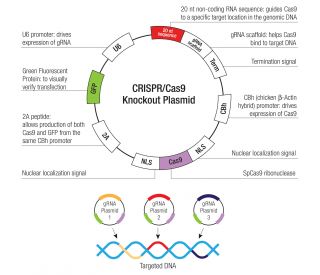
- JMJD3 Il plasmide CRISPR/Cas9 Knockout (KO) (m) è un pool di plasmidi, ciascuno dei quali codifica la nucleasi Cas9 e un RNA guida (gRNA) specifico per il bersaglio di 20 nt, progettato per la massima efficienza di knockout utilizzando sequenze derivate dalla libreria GeCKO v2
- Le sequenze gRNA indirizzano Cas9 a indurre rotture a doppio filamento (DSB) sito-specifiche nel locus genomico JMJD3, con conseguente knockout genico tramite giunzione non omologa (NHEJ)
- JMJD3 HDR Plasmid (m) (sc-432132-HDR) è raccomandato per la cotrasfezione con JMJD3 CRISPR/Cas9 KO Plasmid (m) per consentire la selezione delle cellule modificate con successo attraverso l'integrazione mediata da HDR di un cassetto di resistenza alla puromicina e del gene reporter RFP
- Il JMJD3 Plasmid HDR (m) è un pool di plasmidi, ciascuno contenente un modello di riparazione diretta dall'omologia (HDR) corrispondente ai siti bersaglio del gRNA nel JMJD3 Plasmid CRISPR/Cas9 KO (m)
- Ciascun plasmide HDR contiene due bracci di omologia di circa 800 bp che fiancheggiano i cassetti di resistenza alla puromicina e RFP, progettati per legarsi alle sequenze di DNA genomico che circondano il sito di rottura a doppio filamento indotto da Cas9 e facilitare l'integrazione precisa mediata da HDR
- I geni di resistenza alla puromicina e RFP sono fiancheggiati da siti LoxP, consentendo la rimozione dei marcatori di selezione tramite la ricombinasi Cre (Cre Vector: sc-418923) dopo aver stabilito linee cellulari knockout stabili

Informazioni ordini
| Nome del prodotto | Codice del prodotto | UNITÀ | Prezzo | Quantità | Preferiti | |
JMJD3 Plasmide KO CRISPR/Cas9 (m) | sc-432132 | 20 µg | $397.00 | |||
JMJD3 Plasmide HDR (m) | sc-432132-HDR | 20 µg | $445.00 |
Panoramica
Kdm6b codifica per la demetilasi istonica JMJD3, una diossigenasi dipendente da Fe(II)/2‑ossoglutarato che rimuove i segni repressivi H3K27me3 per promuovere l’attivazione della trascrizione. JMJD3 coordina programmi di rimodellamento della cromatina coinvolti nell’impegno di linea, nell’induzione di geni infiammatori, nella senescenza cellulare e nel rimodellamento tissutale, agendo spesso in opposizione alla repressione mediata da Polycomb. Nei sistemi murini, Kdm6b è stato implicato nella polarizzazione dei macrofagi e nella trascrizione responsiva alle citochine, oltre che nella regolazione di reti geniche dello sviluppo. Un’attività deregolata di JMJD3 è stata associata a stati epigenetici aberranti rilevanti per la biologia del cancro, per patologie immunomediate e per processi di neurosviluppo.
JMJD3 Il plasmide CRISPR/Cas9 KO (m) è un pool di plasmidi progettato per la distruzione mirata del gene Kdm6b in mouse linee cellulari. Ogni plasmide del pool co-esprime un sgRNA unico, mirato a un sito distinto all'interno del locus Kdm6b, insieme alla nucleasi Cas9 di Streptococcus pyogenes, e codifica per la GFP per consentire l'identificazione fluorescente e l'arricchimento delle cellule trasfettate con successo. Questa strategia multi-guida aumenta la probabilità di indurre spostamenti di lettura o delezioni che producono un knockout funzionale, offrendo un'alternativa più robusta agli approcci a guida singola. Le DSB indotte in più siti vengono risolte tramite giunzione non omologa (NHEJ) o, se utilizzate con il modello donatore HDR incluso, tramite riparazione diretta dall'omologia (HDR) in un sito bersaglio definito all'interno del locus.
Se utilizzato in combinazione con il donatore HDR che esprime RFP, la fluorescenza GFP e RFP può essere utilizzata insieme per distinguere le popolazioni cellulari trasfettate da quelle modificate, semplificando i flussi di lavoro di selezione e selezione dei cloni basati sulla citometria a flusso.
Donatore per riparazione diretta dall'omologia (HDR) — Cassetta puromicina con reporter RFP
Per applicazioni che richiedono cloni knockout confermati e selezionabili, il JMJD3 Plasmide HDR (m) include un costrutto donatore HDR contenente una cassetta di resistenza alla puromicina (PuroR) e un reporter proteina fluorescente rossa (RFP), affiancati da bracci di omologia specifici per un sito bersaglio definito Kdm6b.
Se cotrasfettato con il JMJD3 Plasmide CRISPR/Cas9 KO (m):
- La cassetta PuroR-RFP si integra nel sito di taglio di Cas9 tramite HDR, interrompendo il frame di lettura aperto Kdm6b.
La fluorescenza RFP fornisce un indicatore visivo immediato dell'integrazione riuscita, consentendo l'identificazione o la selezione basata sulla fluorescenza delle cellule modificate prima o parallelamente alla selezione con puromicina.
Le cellule modificate con successo vengono confermate attraverso la resistenza alla puromicina, riducendo sostanzialmente il carico di screening dei cloni.
Questa strategia di selezione è ideale per generare linee cellulari KO clonali stabili per studi funzionali a valle, screening farmacologico o sviluppo di modelli.
Sistema di rimozione della cassetta Cre-lox
Il costrutto donatore HDR presenta siti loxP che fiancheggiano la cassetta di selezione PuroR-RFP per consentire la rimozione pulita del marcatore dopo la conferma del clone. L'espressione transiente della ricombinasi Cre tramite il vettore Cre incluso : sc-418923 elimina la cassetta, lasciando un sito loxP residuo minimo all'interno del locus Kdm6b ed eliminando potenziali effetti confondenti sui saggi a valle.
Questo approccio in due fasi:
- Riduce al minimo la perturbazione dell'architettura cromatinica locale e degli elementi regolatori adiacenti
Ripristina un contesto genomico quasi nativo nel locus modificato
Consente il riutilizzo della strategia di selezione con puromicina nella stessa linea cellulare per ulteriori modifiche
Caratteristiche principali
- gRNA mirato agli esoni Kdm6b critici per la funzione JMJD3
Co-espressione di SpCas9 e sgRNA da un singolo plasmide per una somministrazione semplificata
Donore HDR con resistenza alla puromicina per la selezione positiva dei cloni
Cassetta PuroR fiancheggiata da loxP con vettore ricombinasi Cre per la rimozione senza soluzione di continuità del marcatore
Fornito pronto all'uso per la somministrazione tramite trasfezione
Solo per uso di ricerca. Non destinato a uso diagnostico o terapeutico.