
Date published: 2026-5-10

1-800-457-3801

SCBT Portrait Logo
Seach Input

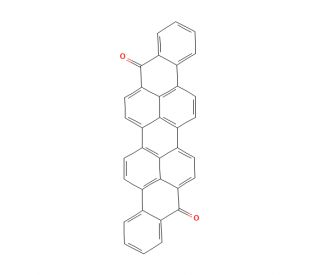
Isoviolanthrone (CAS 128-64-3)

0.0(0)
Write a reviewAsk a question

Alternate Names:
Isodibenzanthrone
CAS Number:
128-64-3
Molecular Weight:
456.50
Molecular Formula:
C34H16O2
For Research Use Only. Not Intended for Diagnostic or Therapeutic Use.
* Refer to Certificate of Analysis for lot specific data.

QUICK LINKS

Isoviolanthrone, a naturally occurring pigment present in select plants and fungi, belongs to the anthraquinone family of compounds. Its significance lies in being a intermediate in the synthesis of various other compounds. The scientific research field presents numerous potential applications for isoviolanthrone. It has proven utility as a fluorescent dye in cell imaging, a photodynamic therapy agent, and a marker for specific proteins. Furthermore, it has contributed to the examination of protein structures. While the precise mechanism of action of isoviolanthrone remains incompletely understood, current understanding suggests that the pigment binds to specific proteins like DNA and RNA, leading to structural modifications. These structural alterations are believed to underlie the diverse effects of isoviolanthrone on cells and organisms. Additionally, it is hypothesized that isoviolanthrone interacts with certain enzymes, thereby modulating their activity and impacting the biochemical pathways within cells. In summary, isoviolanthrone, a naturally occurring pigment from plants and fungi, is an anthraquinone compound of great significance. Its applications in scientific research encompass the roles of a fluorescent dye, photodynamic therapy agent, and protein marker.


Isoviolanthrone (CAS 128-64-3) References

  1. A new suggestion for a model representing the structure of carbon black.  |  AKAMATU, H. and NAGAMATSU, K. 1947. J Colloid Sci. 2: 593-8. PMID: 18921860
  2. Studies on molecular conductors: from organic semiconductors to molecular metals and superconductors.  |  Kobayashi, H., et al. 2011. Chem Asian J. 6: 1688-704. PMID: 21612013
  3. Reduction of isoviolanthrone by reaction with photogenerated radicals.  |  Gruen, H. and Görner, H. 2011. Photochem Photobiol Sci. 10: 1527-30. PMID: 21713275
  4. High-pressure study of isoviolanthrone by Raman spectroscopy.  |  Zhao, XM., et al. 2014. J Chem Phys. 140: 244314. PMID: 24985645
  5. Combined experimental and computational study of high-pressure behavior of triphenylene.  |  Zhao, XM., et al. 2016. Sci Rep. 6: 25600. PMID: 27161429
  6. From Textile Coloring to Light-emitting Electrochemical Devices: Upcycling of the Isoviolanthrone Vat Dye.  |  Ghanem, T., et al. 2023. Chem Asian J. 18: e202300014. PMID: 36752187

Ordering Information

Product NameCatalog #UNITPriceQtyFAVORITES

Isoviolanthrone, 10 g

sc-487366
10 g
$192.00