
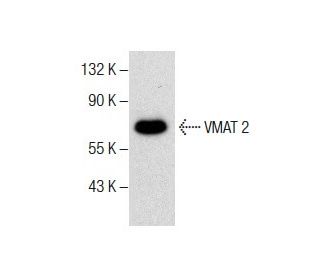


IMR-32 Cell Lysate: sc-2409
- 500 µg protein in 200 µl SDS-PAGE Western blotting buffer
- human whole cell lysate; neuroblastoma cells
- whole cell lysate provided as Western blotting positive control
- should be stored at -20°C and repeated freezing and thawing should be minimized
- sample vial should be placed at 95° C for up to 5 minutes, once prior to use

QUICK LINKS
SEE ALSO...
IMR-32 Cell Lysate is derived from the IMR-32 cell line, a well-studied human neuroblastoma cell line originally isolated from a metastatic site in the bone marrow of a young patient. This cell line has been extensively used in neurological and developmental biology research due to its origin from neural crest cells, making it particularly valuable for studies involving neuronal differentiation and neurobiology. The lysate is created by lysing IMR-32 cells, a process that breaks down the cell membranes to release a myriad of cellular components such as proteins, nucleic acids, and metabolites. These components provide a detailed profile of the cellular biochemistry, offering insights into the molecular mechanisms that govern neuronal behavior and neurodevelopment. Researchers utilize IMR-32 Cell Lysate to explore the cellular pathways involved in neuroblastoma progression, neuronal growth, and response to various biochemical cues. It has also been instrumental in studying the effects of genetic and environmental factors on neuronal cells, helping to explain complex signaling networks within neuroblastoma cells. By using this lysate, scientists can further understand the regulation of neurogenesis and the cellular dynamics in neuroblastoma, contributing to broader research fields such as developmental neurobiology and cellular signaling.
IMR-32 Cell Lysate References:
- Paraneoplastic cerebellar degeneration (PCD) associated with squamous cell carcinoma of the lung. | Konishi, J., et al. 2004. Intern Med. 43: 602-6. PMID: 15335190
- p53 is nuclear and functional in both undifferentiated and differentiated neuroblastoma. | Chen, L., et al. 2007. Cell Cycle. 6: 2685-96. PMID: 17912039
- Immunotherapy of human neuroblastoma using umbilical cord blood-derived effector cells. | Joshi, AD., et al. 2007. J Neuroimmune Pharmacol. 2: 202-12. PMID: 18040845
- Dual-specificity phosphatase 26 is a novel p53 phosphatase and inhibits p53 tumor suppressor functions in human neuroblastoma. | Shang, X., et al. 2010. Oncogene. 29: 4938-46. PMID: 20562916
- Ultrastructural basis of enhanced antitumor cytotoxicity of cord blood-derived CTLs: a comparative analysis with peripheral blood and bone marrow. | Clark, EM., et al. 2010. Int J Oncol. 37: 645-53. PMID: 20664933
- Absence of Thy-1 results in TGF-β induced MMP-9 expression and confers a profibrotic phenotype to human lung fibroblasts. | Ramírez, G., et al. 2011. Lab Invest. 91: 1206-18. PMID: 21577212
- Coexpression of high-voltage-activated ion channels Kv3.4 and Cav1.2 in pioneer axons during pathfinding in the developing rat forebrain. | Huang, CY., et al. 2012. J Comp Neurol. 520: 3650-72. PMID: 22473424
- Molecular cloning of a human protein that binds to the retinoblastoma protein and chromosomal mapping. | Saijo, M., et al. 1995. Genomics. 27: 511-9. PMID: 7558034
Ordering Information
| Product Name | Catalog # | UNIT | Price | Qty | FAVORITES | |
IMR-32 Cell Lysate | sc-2409 | 500 µg/200 µl | $120.00 |