
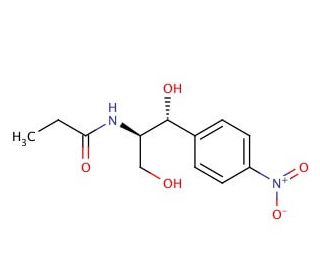

Corynecin II (CAS 35098-52-3)
QUICK LINKS
Corynecin II is an antibiotic compound known for its role as an inhibitor of protein synthesis in bacterial cells. It functions by binding to the bacterial ribosome, specifically targeting the peptidyl transferase center, thereby obstructing the elongation phase of protein synthesis. This action prevents the formation of peptide bonds between amino acids, effectively halting the production of essential proteins required for bacterial growth and survival. Corynecin II has been utilized extensively in microbiological and biochemical research to explore the mechanisms of protein synthesis and the effects of its inhibition on bacterial physiology. Research involving Corynecin II has provided significant insights into the intricacies of ribosomal function and the development of bacterial resistance mechanisms. Studies have employed this compound to dissect the molecular interactions within the ribosome, enhancing the understanding of how antibiotics can selectively target bacterial protein synthesis without affecting eukaryotic cells. Additionally, Corynecin II serves as a valuable tool in investigating the genetic and biochemical bases of antibiotic resistance, helping to identify mutations in ribosomal components that confer resistance. These investigations contribute to a broader understanding of bacterial adaptation and survival strategies under antibiotic pressure, which is crucial for the development of new strategies to combat bacterial infections. Corynecin II′s specific targeting of the ribosome underscores its importance in fundamental research on protein synthesis and antibiotic action.
Corynecin II (CAS 35098-52-3) References
- Metabolites of a blocked chloramphenicol producer. | Lewis, EA., et al. 2003. J Nat Prod. 66: 62-6. PMID: 12542347
- Biosynthesis of the dichloroacetyl component of chloramphenicol in Streptomyces venezuelae ISP5230: genes required for halogenation. | Piraee, M., et al. 2004. Microbiology (Reading). 150: 85-94. PMID: 14702400
- Biotechnological Key Genes of the Rhodococcus erythropolis MGMM8 Genome: Genes for Bioremediation, Antibiotics, Plant Protection, and Growth Stimulation. | Afordoanyi, DM., et al. 2023. Microorganisms. 12: PMID: 38257915
- Complete genome sequence of a novel Prescottella sp. R16 isolate from deep-sea sediments in the western Pacific. | Ma, L., et al. 2024. Front Genet. 15: 1356956. PMID: 38549861
- Physiological control of trophophase-idiophase separation in streptomycete cultures producing secondary metabolites. | Liao, X., et al. 1995. Can J Microbiol. 41: 309-15. PMID: 8590411
- Corynecin (chloramphenicol analogs) fermentation studies: selective production of Corynecin I by Corynebacterium hydrocarboclastus grown on acetate. | Nakano, H., et al. 1977. Biotechnol Bioeng. 19: 1009-18. PMID: 884230
- The Structures of Corynecins; Chloramphenicol Analogues Produced by a n-Paraffin-grown Bacterium | , et al. 1972. Agricultural and Biological Chemistry. 36: 2229-2232.
- Further Studies on Production of Chloramphenicol Analogs (Corynecins) from n-Alkanes | F Tomita, H Nakano, T Suzuki. 1974. Agricultural and Biological Chemistry. 38: 1673–1678.
- Incorporation of Shikimic Acid into Corynecins and Its Regulation | H Nakano, F Tomita, T Suzuki. 1974. Agricultural and Biological Chemistry. 38: 2505-2509.
Ordering Information
| Product Name | Catalog # | UNIT | Price | Qty | FAVORITES | |
Corynecin II, 1 mg | sc-391475 | 1 mg | $125.00 | |||
Corynecin II, 5 mg | sc-391475A | 5 mg | $420.00 |