
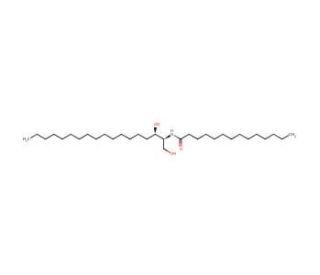

C14 Dihydroceramide (CAS 61389-70-6)
QUICK LINKS
C14 Dihydroceramide, with the CAS number 61389-70-6, is a synthetic analog of naturally occurring ceramides, characterized by a saturated fourteen-carbon fatty acid chain linked to a sphingosine backbone devoid of the usual double bond, resulting in a fully saturated molecule. This structural modification enhances the molecule′s stability and makes it a valuable tool in cellular and molecular biology research, particularly in the study of lipid metabolism and membrane biology. C14 Dihydroceramide is extensively used in research to explore the role of ceramides in the structure and function of cell membranes, including their impact on membrane fluidity, domain formation (such as lipid rafts), and the activity of membrane-bound proteins. The absence of the double bond in the sphingosine moiety allows researchers to isolate the effects of ceramide saturation on these processes, providing clearer insights into how lipid structure influences cellular functions. Moreover, C14 Dihydroceramide is utilized in studies focused on understanding the signaling pathways mediated by sphingolipids, particularly those related to cell stress and apoptosis pathways. By using this synthetic dihydroceramide, researchers can dissect the specific contributions of ceramides to these pathways without the complicating factors introduced by the oxidative susceptibility of unsaturated lipids. This research is crucial for elucidating the fundamental mechanisms by which lipids influence cellular behavior and contribute to the homeostasis and pathology of cells.
C14 Dihydroceramide (CAS 61389-70-6) References
- Improved insulin sensitivity after exercise training is linked to reduced plasma C14:0 ceramide in obesity and type 2 diabetes. | Kasumov, T., et al. 2015. Obesity (Silver Spring). 23: 1414-21. PMID: 25966363
- Exosomes from Human Adipose Tissue-Derived Mesenchymal Stem Cells Promote Epidermal Barrier Repair by Inducing de Novo Synthesis of Ceramides in Atopic Dermatitis. | Shin, KO., et al. 2020. Cells. 9: PMID: 32164386
- Untargeted Lipidomics Highlight the Depletion of Deoxyceramides during Therapy-Induced Senescence. | Millner, A., et al. 2020. Proteomics. 20: e2000013. PMID: 32267073
- Duodenal CD8+ T resident memory cell apoptosis contributes to gut barrier dysfunction and microbial translocation in early alcohol-associated liver disease in humans. | Maccioni, L., et al. 2022. Aliment Pharmacol Ther. 56: 1055-1070. PMID: 35919965
Ordering Information
| Product Name | Catalog # | UNIT | Price | Qty | FAVORITES | |
C14 Dihydroceramide, 5 mg | sc-210984 | 5 mg | $320.00 |