
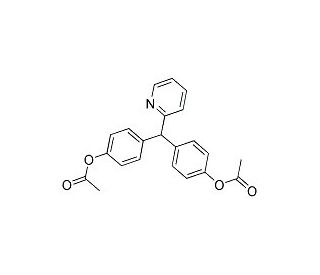

Bisacodyl (CAS 603-50-9)
QUICK LINKS
Bisacodyl, a widely studied compound in biomedical research, primarily acts as a stimulant laxative by directly stimulating the enteric nerves in the colon. Its mechanism of action involves the activation of intramural neurons in the colonic mucosa, leading to increased peristalsis and colonic motility. Bisacodyl is known to exert its effects by acting on the colonic mucosa′s sensory nerve endings, specifically through the activation of the transient receptor potential vanilloid type 1 (TRPV1) channels. Upon activation, TRPV1 channels initiate a cascade of intracellular signaling events that ultimately result in the release of neurotransmitters such as acetylcholine and substance P, which enhance colonic smooth muscle contractions. Beyond its use as a laxative, bisacodyl has been employed as a research tool in various preclinical studies focusing on gastrointestinal physiology, pharmacology, and drug delivery systems. Researchers utilize bisacodyl-induced bowel stimulation models to investigate colonic transit times, drug absorption kinetics, and the effects of pharmaceutical formulations on gastrointestinal motility. Furthermore, bisacodyl is utilized in experimental settings to induce controlled bowel movements for studying drug absorption, drug metabolism, and drug-drug interactions, providing valuable insights into gastrointestinal physiology and pharmacokinetics. Its well-established mechanism of action and ease of administration make bisacodyl a versatile tool for investigating various aspects of gastrointestinal function and drug delivery in preclinical research.
Bisacodyl (CAS 603-50-9) References
- Oral sodium phosphate solution is a superior colonoscopy preparation to polyethylene glycol with bisacodyl. | Young, CJ., et al. 2000. Dis Colon Rectum. 43: 1568-71. PMID: 11089594
- Bisacodyl rectal preparation can decrease infectious complications of transrectal ultrasound-guided prostate biopsy. | Jeon, SS., et al. 2003. Urology. 62: 461-6. PMID: 12946747
- Efficacy and safety of bisacodyl in the acute treatment of constipation: a double-blind, randomized, placebo-controlled study. | Kienzle-Horn, S., et al. 2006. Aliment Pharmacol Ther. 23: 1479-88. PMID: 16669963
- Effect of bisacodyl on postoperative bowel motility in elective colorectal surgery: a prospective, randomized trial. | Zingg, U., et al. 2008. Int J Colorectal Dis. 23: 1175-83. PMID: 18665373
- The laxative effect of bisacodyl is attributable to decreased aquaporin-3 expression in the colon induced by increased PGE2 secretion from macrophages. | Ikarashi, N., et al. 2011. Am J Physiol Gastrointest Liver Physiol. 301: G887-95. PMID: 21868635
- Low-volume polyethylene glycol and bisacodyl for bowel preparation prior to colonoscopy: a meta-analysis. | Clark, RE., et al. 2013. Ann Gastroenterol. 26: 319-324. PMID: 24714413
- 2-Litre polyethylene glycol-citrate-simethicone plus bisacodyl versus 4-litre polyethylene glycol as preparation for colonoscopy in chronic constipation. | Parente, F., et al. 2015. Dig Liver Dis. 47: 857-63. PMID: 26232311
- Comparison of a split-dose bowel preparation with 2 liters of polyethylene glycol plus ascorbic acid and 1 liter of polyethylene glycol plus ascorbic acid and bisacodyl before colonoscopy. | Kang, SH., et al. 2017. Gastrointest Endosc. 86: 343-348. PMID: 27889546
- Long-term Use of Bisacodyl in Pediatric Functional Constipation Refractory to Conventional Therapy. | Bonilla, S., et al. 2020. J Pediatr Gastroenterol Nutr. 71: 288-291. PMID: 32459741
- Pelvic motility and response to intraluminal bisacodyl in slow-transit constipation. | Preston, DM. and Lennard-Jones, JE. 1985. Dig Dis Sci. 30: 289-94. PMID: 3979235
- Effects of bisacodyl on cAMP and prostaglandin E2 contents, (Na + K) ATPase, adenyl cyclase, and phosphodiesterase activities of rat intestine. | Rachmilewitz, D., et al. 1980. Dig Dis Sci. 25: 602-8. PMID: 6249558
- Mechanism of action of diphenolic laxatives: the role of adenylate cyclase and mucosal permeability. | Farack, UM. and Nell, G. 1984. Digestion. 30: 191-4. PMID: 6548720
- Nitric oxide as a mediator of bisacodyl and phenolphthalein laxative action: induction of nitric oxide synthase. | Gaginella, TS., et al. 1994. J Pharmacol Exp Ther. 270: 1239-45. PMID: 7523656
- Prospective, randomized trial comparing a new sodium phosphate-bisacodyl regimen with conventional PEG-ES lavage for outpatient colonoscopy preparation. | Afridi, SA., et al. 1995. Gastrointest Endosc. 41: 485-9. PMID: 7615228
- Effect of lactose, lactulose and bisacodyl on gastrointestinal transit studied by metal detector. | Ewe, K., et al. 1995. Aliment Pharmacol Ther. 9: 69-73. PMID: 7766747
Ordering Information
| Product Name | Catalog # | UNIT | Price | Qty | FAVORITES | |
Bisacodyl, 10 g | sc-204653 | 10 g | $80.00 | |||
Bisacodyl, 25 g | sc-204653A | 25 g | $140.00 |