

QUICK LINKS
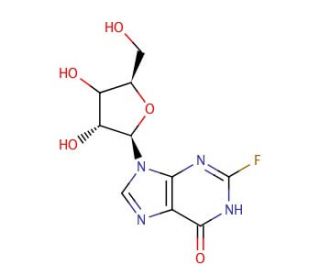
9-β-D-Arabinofuranosyl-2-fluorohypoxanthine is a nucleoside analog that consists of a 2-fluorohypoxanthine base linked to a β-D-arabinofuranosyl sugar moiety. This structure is part of a broader class of compounds known as purine nucleoside analogs, which are designed to mimic the natural nucleosides in nucleic acids but with specific modifications to impart unique properties. In scientific research, 9-β-D-Arabinofuranosyl-2-fluorohypoxanthine has been utilized primarily to study its interactions with viral and cellular enzymes involved in nucleic acid synthesis. One of the key features of this compound is the fluorine atom at the 2 position of the hypoxanthine ring. This fluorine atom significantly alters the electronic structure and hydrogen bonding capabilities of the nucleobase, making this analog a potent inhibitor of certain enzymes. The mechanism of action of 9-β-D-Arabinofuranosyl-2-fluorohypoxanthine involves its incorporation into the nucleic acids by viral or cellular polymerases. Due to the modified structure, once incorporated, it can lead to termination of the elongation of the nucleic acid chain or cause errors in the base pairing during replication and transcription. This property is crucial for studying how nucleoside analogs can halt the proliferation of rapidly dividing cells, including viral replication in infected cells. Researchers have used 9-β-D-Arabinofuranosyl-2-fluorohypoxanthine to investigate the treatment mechanisms against certain viruses, particularly those that rely heavily on their own polymerases for replication. By understanding how this analog interferes with viral nucleic acid synthesis, scientists can develop more effective antiviral strategies.
Ordering Information
| Product Name | Catalog # | UNIT | Price | Qty | FAVORITES | |
9-β-D-Arabinofuranosyl-2-fluorohypoxanthine, 5 mg | sc-207212 | 5 mg | $330.00 |