
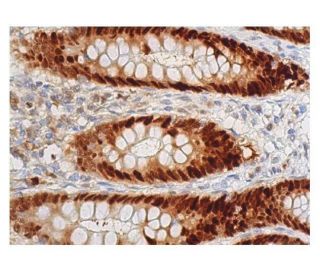
PCNA Antibody (6D645): sc-71858
- PCNA Antibody (6D645) is a mouse monoclonal IgG2a κ, cited in 12 publications, provided at 200 µg/ml
- Raised against rat PCNA made in the protein A expression vector pR1T2T
- recommended for detection of PCNA p36 protein expressed at high levels in proliferating cells of mouse, rat, human, insect and S. pombe origin by WB, IP, IF, IHC(P) and FCM
- See PCNA (PC10): sc-56 for PCNA antibody conjugates, including AC, HRP, FITC, PE, Alexa Fluor® 488, 594, 647, 680 and 790.
- m-IgG Fc BP-HRP is the preferred secondary detection reagent for PCNA Antibody (6D645) for WB and IHC(P) applications. This reagent is now offered in a bundle with PCNA Antibody (6D645) (see ordering information below).

QUICK LINKS
SEE ALSO...
Proliferating Cell Nuclear Antigen (PCNA) is a critical nuclear protein in eukaryotic cells that plays a central role in DNA replication and repair. Structurally, PCNA forms a homotrimeric ring that encircles DNA, functioning as a sliding clamp to enhance the processivity of DNA polymerases delta (δ) and epsilon (ε) during leading and lagging strand synthesis. This ring-shaped architecture allows PCNA to serve as a platform for recruiting various proteins involved in DNA metabolism, including those responsible for DNA repair, chromatin remodeling, and cell cycle regulation. The expression of PCNA is tightly regulated and peaks during the S phase of the cell cycle, making it a reliable marker for cell proliferation in research studies. Studying PCNA is crucial for understanding the fundamental mechanisms of cell proliferation, genome maintenance, and the cellular responses to DNA damage. PCNA is essential for high-fidelity DNA replication by anchoring DNA polymerases to the DNA template, ensuring rapid and accurate DNA synthesis vital for cell proliferation and genome stability. PCNA is also involved in multiple DNA repair pathways, such as nucleotide excision repair, base excision repair, and mismatch repair, by interacting with factors that remove DNA lesions and assist in correcting base-pair mismatches post-replication. PCNA interacts with chromatin assembly factors and histone modifiers, influencing nucleosome assembly during DNA replication and repair. Post-translational modifications like ubiquitination and sumoylation of PCNA regulate its role in DNA damage tolerance pathways, including translesion synthesis and template switching. Dysregulation of PCNA function or expression is implicated in various diseases, notably cancer, where it is often overexpressed due to the high proliferation rate of tumor cells. This makes PCNA not only a significant biomarker for cancer diagnosis and prognosis but also a potential target for therapeutic intervention. PCNA Antibody (6D645) is a mouse monoclonal IgG2a kappa antibody developed against rat PCNA using the protein A expression vector pR1T2T. It is designed for the detection of the PCNA p36 protein, which is abundantly expressed in proliferating cells across a range of species, including mouse, rat, human, insect, and Schizosaccharomyces pombe (fission yeast). PCNA monoclonal antibody (6D645) is highly useful in various applications such as Western Blotting, Immunoprecipitation, Immunofluorescence, Immunohistochemistry on paraffin-embedded sections, and Flow Cytometry. Understanding PCNA′s multifaceted roles, by utilizing PCNA monoclonal antibody (6D645), is essential for comprehending how cells maintain genome integrity and respond to DNA damage, ultimately contributing to the development of therapeutic strategies against proliferative diseases like cancer. Using the PCNA (6D645) monoclonal antibody helps researchers explore these mechanisms, which is important for advancing therapies aimed at treating proliferative diseases like cancer.
Ordering Information
| Product Name | Catalog # | UNIT | Price | Qty | FAVORITES | |
PCNA Antibody (6D645) | sc-71858 | 200 µg/ml | $322.00 | |||
PCNA Antibody (6D645): m-IgG Fc BP-HRP Bundle | sc-539417 | 200 µg Ab; 10 µg BP | $361.00 |