
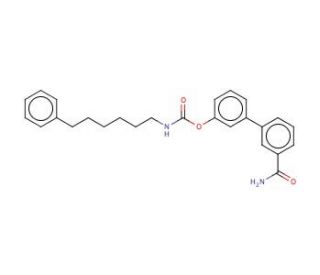

JP83 (CAS 887264-44-0)
QUICK LINKS
JP83, designated by the CAS number 887264-44-0, is a chemical compound of interest in the field of synthetic organic chemistry, primarily used for exploring novel synthetic pathways and reactions. Although specific details about JP83′s molecular structure and properties are not extensively documented in public databases, its classification suggests potential applications in the synthesis of complex organic molecules. In research, compounds like JP83 are often employed as reagents or intermediates that can facilitate or enable the formation of structurally complex products, which are crucial for advancing various scientific studies unrelated to direct human applications. For instance, JP83 might be utilized in the development of new catalytic processes or in the study of reaction mechanisms that could provide deeper insights into how molecular transformations occur. Such research is valuable for refining synthetic techniques and enhancing the efficiency of chemical reactions, which is fundamental in fields like materials science, where these reactions contribute to the development of new materials with desirable properties. Through this kind of research, JP83 plays a role in pushing the boundaries of chemical synthesis, offering broader understanding and application beyond immediate practical uses in medicinal contexts.
JP83 (CAS 887264-44-0) References
- BRUCE, a giant E2/E3 ubiquitin ligase and inhibitor of apoptosis protein of the trans-Golgi network, is required for normal placenta development and mouse survival. | Lotz, K., et al. 2004. Mol Cell Biol. 24: 9339-50. PMID: 15485903
- Mechanism of carbamate inactivation of FAAH: implications for the design of covalent inhibitors and in vivo functional probes for enzymes. | Alexander, JP. and Cravatt, BF. 2005. Chem Biol. 12: 1179-87. PMID: 16298297
- beta-lactam antibiotics induce the SOS response and horizontal transfer of virulence factors in Staphylococcus aureus. | Maiques, E., et al. 2006. J Bacteriol. 188: 2726-9. PMID: 16547063
- Functional genomics of stress response in Pseudomonas putida KT2440. | Reva, ON., et al. 2006. J Bacteriol. 188: 4079-92. PMID: 16707699
- Discovery and development of endocannabinoid-hydrolyzing enzyme inhibitors. | Minkkilä, A., et al. 2010. Curr Top Med Chem. 10: 828-58. PMID: 20370710
- Fatty acid amide hydrolase as a potential therapeutic target for the treatment of pain and CNS disorders. | Ahn, K., et al. 2009. Expert Opin Drug Discov. 4: 763-784. PMID: 20544003
- Identification of a novel arylpiperazine scaffold for fatty acid amide hydrolase inhibition with improved drug disposition properties. | Butini, S., et al. 2013. Bioorg Med Chem Lett. 23: 492-5. PMID: 23237837
- Organic carbamates in drug design and medicinal chemistry. | Ghosh, AK. and Brindisi, M. 2015. J Med Chem. 58: 2895-940. PMID: 25565044
- Molecular Time Sharing through Dynamic Pulsing in Single Cells. | Park, J., et al. 2018. Cell Syst. 6: 216-229.e15. PMID: 29454936
- Characterization of serum amyloid A protein mRNA expression and secondary amyloidosis in the domestic duck. | Guo, JT., et al. 1996. Proc Natl Acad Sci U S A. 93: 14548-53. PMID: 8962089
Ordering Information
| Product Name | Catalog # | UNIT | Price | Qty | FAVORITES | |
JP83, 5 mg | sc-221783 | 5 mg | $48.00 |