
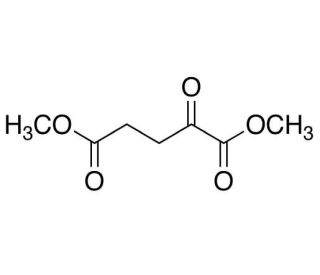

Dimethyl 2-Ketoglutaconate (CAS 13192-04-6)
See product citations (2)
QUICK LINKS
Dimethyl 2-Ketoglutaconate (DKG) is an organic compound widely utilized in laboratory experiments, particularly in the fields of biochemistry and physiology. As an intermediate in the Krebs cycle, Dimethyl 2-Ketoglutaconate serves as useful for studying metabolic pathways and investigating the effects of different drugs and enzymes. Its versatility allows for the examination of various physiological processes, including energy metabolism, signal transduction, and oxidative stress. Moreover, Dimethyl 2-Ketoglutaconate has been extensively employed in numerous studies to explore the influence of different drugs and enzymes on metabolic pathways. Dimethyl 2-Ketoglutaconate, known for its multifaceted applications, finds frequent use in scientific research. It is employed to probe metabolic pathways and assess the impact of various drugs and enzymes on these pathways. The compound also serves as useful in investigating energy metabolism, signal transduction, and oxidative stress. Additionally, Dimethyl 2-Ketoglutaconate has been extensively employed in various studies to explore the effects of different drugs and enzymes on metabolic pathways. Being an intermediate in the Krebs cycle, the primary metabolic pathway within cells, Dimethyl 2-Ketoglutaconate undergoes a series of conversions. It is transformed into succinate, which is further oxidized to form fumarate. Fumarate, in turn, is converted to malate, which is subsequently oxidized to produce oxaloacetate. Oxaloacetate is then converted into citrate, which is further transformed into isocitrate. The subsequent conversion of isocitrate leads to the formation of alpha-ketoglutarate, which is then converted to succinyl CoA. This compound, in turn, undergoes conversion to succinate, followed by oxidation to generate fumarate.
Dimethyl 2-Ketoglutaconate (CAS 13192-04-6) References
- Synthesis and in vitro pharmacology of substituted quinoline-2,4-dicarboxylic acids as inhibitors of vesicular glutamate transport. | Carrigan, CN., et al. 2002. J Med Chem. 45: 2260-76. PMID: 12014964
- Efficient total synthesis of ammosamide B. | Reddy, PV., et al. 2010. Org Lett. 12: 3112-4. PMID: 20515072
Ordering Information
| Product Name | Catalog # | UNIT | Price | Qty | FAVORITES | |
Dimethyl 2-Ketoglutaconate, 1 g | sc-211344 | 1 g | $49.00 |