


GPAM Double Nickaseプラスミド (h): sc-403961-NIC
- 対象生物種: human
- 20 µg のトランスフェクション準備済み、精製したプラスミドDNA、~20回トランスフェクション
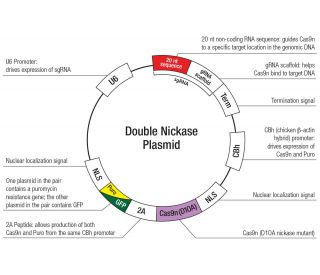
- GPAM Double Nickaseプラスミド (h)はペアのプラスミドを含みます。それぞれのプラスミドはD10A変異したCas9 nuclease、及びCRISPR/Cas9 KOの対応よりも高い特異性で遺伝子発現をノックアウトするように設計された標的特異的な20 ntガイドRNA (gRNA)をコードします。
- ペアリングしたガイドRNAは、約20 bpでずらすことにより、ゲノムDNAの特定Cas9媒介のdouble nickingを可能にし、DSBを模造します。
- ペアの1つのプラスミドは選択用のピューロマイシン耐性遺伝子を含みます;ペアのほかの1つのプラスミドは、視覚的にトランスフェクションを確認するGFPマーカーを含みます。
- GPAMダブルニカースプラスミド(h)およびGPAMダブルニカースプラスミド(h2)は、GPAMを標的とする異なるペアのgRNA設計をコードしています。いずれか一方、あるいは両方のデザインが利用可能である場合があります
- トランスフェクションの後、遺伝子ノックアウト効果は、抗体を用いたWB、IFまたはIHCによって検定されることができます: GPAM 抗体 (D-10): sc-398135

注文情報
| 製品名 | カタログ # | 単位 | 価格 | 数量 | お気に入り | |
GPAM Double Nickaseプラスミド (h) | sc-403961-NIC | 20 µg | $410.00 | |||
GPAM Double Nickaseプラスミド (h2) | sc-403961-NIC-2 | 20 µg | $410.00 |
GPAM(ミトコンドリア型グリセロール-3-リン酸アシルトランスフェラーゼ)は、グリセロール-3-リン酸をリゾホスファチジン酸へ変換することで、de novoグリセロ脂質合成における最初のコミットメント段階(不可逆的に進む初発の律速的段階)を触媒する主要なアシルトランスフェラーゼをコードしています。ホスファチジン酸、トリアシルグリセロール、そして下流のリン脂質プールへのフラックスを制御することにより、GPAMはミトコンドリアの脂質代謝を、細胞のエネルギー貯蔵、膜の新生、脂質シグナル伝達と結び付けています。GPAM活性は、脂肪酸の取り込みとβ酸化のバランス、脂肪滴形成、代謝ストレス応答とも交差します。GPAMの発現や活性の制御異常は、肝臓および脂肪組織における脂質取り扱いの変化と関連しており、インスリン抵抗性、脂肪肝(脂肪蓄積)、さらに広範な心代謝表現型の文脈でしばしば研究されています。
GPAM ダブルニカースプラスミド(h)は、human 細胞株における GPAM 座の高特異性編集のために設計された、対となる2つのプラスミドから構成される。各プラスミドは、Cas9 D10Aニカースと、GPAM内の対向するDNA鎖を標的とする異なるsgRNAを発現する。対向するDNA鎖上の隣接する部位に誘導されると、2つのニカースはオフセットした一本鎖切断を生成し、これらが組み合わさってずれた二本鎖切断を生じさせる。これにより、両方のガイドによる協調的なオンターゲット活性が必要となる。生じたDNA切断は、細胞内の内在性修復経路、特に非相同末端結合(NHEJ)によって修復され、その結果、GPAMの機能を阻害する挿入または欠失が生じる。標的座標における2つのsgRNAの結合を必要とするこの二重ニッキング法は、編集の特異性を高め、標的精度に対するさらなる制御が求められる用途において、CRISPR戦略を補完するものである。
編集された細胞を効率的に同定するために、1つのプラスミドはトランスフェクトされた細胞集団を蛍光可視化するためのGFPをコードし、もう1つのプラスミドは抗生物質選別用のプロマイシン耐性遺伝子を保有しています。これらの機能により、共トランスフェクトされた細胞集団の効率的な濃縮が可能となり、GPAMが破壊されたクローンの検証が簡素化されます。
研究用のみ。診断用または治療用ではありません。