
CD44 Lentiviral Activation Particles (h): sc-400209-LAC
- 対象生物種: human
- 200 µl のトランスフェクション準備済み、 高力価な CRISPR/dCas9 Lentiviral Activation Particles
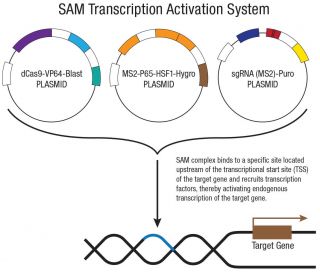
- CD44 Lentiviral Activation Particles (h)は、細胞のレンチウイルストランスダクションを経由して、特異的に遺伝子の発現量を増加させるため、相乗的活性化メディエーター(SAM)転写活性化システムです。
- CD44 Lentiviral Activation Particles (h)は、以下のSAM Activation elementsを含めます:トランス活性化ドメインVP64に溶解する非活性化されたCas9 (dCas9)ヌクレアーゼ(D10A and H840A)をコード化したのプラスミド、MS2-p65-HSF1融合蛋白質をコード化したのプラスミド、目標特異的な20ntガイドRNA(gRNA)をコード化したのプラスミド。ブラストサイジン、ハイグロマイシンおよびピューロマイシン耐性遺伝子も含めます。
- 導入の際に、SAM複合体は、部位特異的な約200-250nt転写開始点の上流の領域に結合し、転写因子の強いリクルートメントを提供し、遺伝子の高い活性化効果が得られます。
- CD44 レンチウイルス活性化プラスミド (h) および CD44 レンチウイルス活性化プラスミド (h2) によってコードされる gRNA は、CD44 プロモーターの異なる調節領域を標的としています。いずれか一方、または両方のデザインが利用可能である可能性があります
- トランスフェクションの後、遺伝子活性化効果は、抗体を用いたWB、IFまたはIHCによって検定されることができます: CD44 抗体 (DF1485): sc-7297

注文情報
| 製品名 | カタログ # | 単位 | 価格 | 数量 | お気に入り | |
CD44 Lentiviral Activation Particles (h) | sc-400209-LAC | 200 µl | $455.00 |
ヒトCD44は、広く発現する膜貫通型糖タンパク質をコードしており、ヒアルロン酸およびその他の細胞外マトリックス(ECM)リガンドに対する主要な受容体として、細胞—細胞間および細胞—マトリックス間相互作用を協調的に制御します。アイソフォーム特異的なシグナル伝達と細胞骨格との連結を介して、CD44は接着、遊走、リンパ球ホーミング、ならびに上皮—間葉系のダイナミクスに影響を及ぼし、Rho GTPaseによる細胞骨格再編成や受容体型チロシンキナーゼとのクロストークなどの細胞内経路と、ECMからの刺激を統合します。CD44の活性は炎症応答や組織リモデリングとしばしば関連し、発現量やスプライシングパターンの変化は、腫瘍浸潤、転移に関連する表現型、がん幹細胞様性質と結び付けられてきました。これらの特徴により、CD44は、微小環境シグナル、白血球トラフィッキング、ならびに細胞外マトリックス駆動性の遺伝子発現制御を研究するうえで有用な結節点となります。
CD44 レンチウイルス活性化粒子(h)は、完全な相乗的活性化メディエーター(SAM)転写活性化システムを、トランスダクション可能な高力価レンチウイルス粒子に封入することでこのニーズに対応し、より広範なヒト細胞タイプにおいて効率的なCD44の発現上昇を可能にします。
CD44 レンチウイルス活性化粒子(h)は、レンチウイルス媒介を介して、シナジー活性化メディエーター(SAM)システムのすべての機能的構成要素を届ける。このシステムは、標的細胞へ共導入される3種類の粒子製剤で構成されています。1つは、VP64転写活性化ドメインとブラスティシジン耐性遺伝子を融合させた、触媒活性のないdCas9(D10AおよびN863A変異)をコードするものです。ヒグロマイシン耐性遺伝子を有するMS2-p65-HSF1融合タンパク質をコードするもの;および、2つのMS2 RNAアプタマーと融合した標的特異的20塩基対sgRNAをコードし、プロマイシン耐性遺伝子を有するもの。レンチウイルスによる導入および発現カセットのゲノムへの組み込み後、SAM構成要素は安定して発現し、CD44転写開始点の上流にある近位プロモーター領域内の標的座に集合する。そこでは、VP64、p65、およびHSF1が協調して作用し、内因性の転写機構を動員して、内因性CD44の発現を持続的に上向きに調節する。ヌクレアーゼ不活性型dCas9を使用することで、二本鎖DNA切断の導入を回避し、天然のCD44ゲノム座および制御機構を維持します。
レンチウイルス形式には、いくつかの実用的な利点があります。安定したゲノム組み込みにより、細胞分裂を経ても遺伝的に継承される活性化がサポートされます。高力価の粒子調製により、施設内でのウイルス生産の必要性がなくなります。また、初代培養細胞、非増殖性細胞、およびトランスフェクション抵抗性細胞との互換性により、実験の適用範囲が広がります。成功したトランスダクションは、プロマイシン、ハイグロマイシン、ブラスティシジンを用いた三重抗生物質選別により確認および選別が可能である。
研究用のみ。診断用または治療用ではありません。