
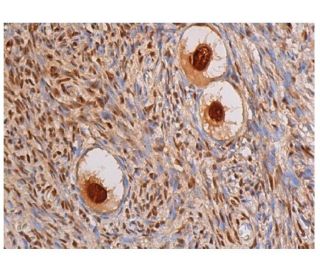
goat polyclonal IgG, 200 µg/ml; also available as rabbit IgG, 200 µg/ml, sc-16323-R
epitope corresponding to a short amino acid sequence containing phosphorylated Ser 87 of Bcl-2 of human origin
recommended for detection of Ser 87 phosphorylated Bcl-2 of mouse, rat and human origin by WB, IF and ELISA; also reactive with additional species, including equine and canine
Bcl-2 Background Information Apoptosis is defined as a set of cascades which, when initiated, programs the cell to undergo lethal changes such as membrane blebbing, mitochondrial break down and DNA fragmentation. Bcl-2 is one among many key regulators of apoptosis, which are essential for proper development, tissue homeostasis, and protection against foreign pathogens. Human Bcl-2 is an anti-apoptotic, membrane-associated oncoprotein that can promote cell survival through protein-protein interactions with other Bcl-2 related family members, such as the death suppressors Bcl-xl, Mcl-1, Bcl-w, and A1 or the death agonists Bax, Bak, Bik, Bad, and Bid. The anti-apoptotic function of Bcl-2 can also be regulated through proteolytic processing and phospho-rylation. Bcl-2 may promote cell survival by interfering with the activation of the cytochrome c/Apaf-1 pathway through stabilization of the mitochondrial membrane. Mutations in the Bcl-2 gene can contribute to cancers where normal physiological cell death mechanisms are compromised by deregulation of the anti-apoptotic influence of Bcl-2.
p-Bcl-2 (Ser 87) Références bibliographiques
Consulter les citations pour ces anticorps p-Bcl-2 (Ser 87): sc-16323 et/ou un anticorps p-Bcl-2 (Ser 87) conjugué.
