
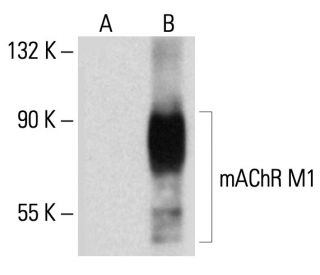

このポリクローナル抗体は販売終了となりました。弊社推奨のmAChR M1 (G-9)モノクローナル抗体をご覧ください(サンプルデータを表示)。
mAChR M1抗体(H-120): sc-9106
- mAChR M1抗体 H-120はウサギポリクローナルIgGです。200 µg/mlで提供
- エピトープはhuman由来のmAChR M1の内部領域に位置するアミノ酸231-350に対応します
- 生産中止となったポリクローナル抗体

注文情報
mAChR M1 (G-9): sc-365966 [ mAChR M1 (H-120) の強くお勧めのモノクローナル抗体の代替品]
| 製品名 | カタログ # | 単位 | 価格 | 数量 | お気に入り | |
mAChR M1 抗体 (G-9) | sc-365966 | 200 µg/ml | $322.00 | |||
mAChR M1 (G-9): m-IgG Fc BP-HRP Bundle | sc-527403 | 200 µg Ab; 10 µg BP | $361.00 | |||
mAChR M1 (G-9): m-IgG1 BP-HRP Bundle | sc-532776 | 200 µg Ab; 20 µg BP | $361.00 | |||
mAChR M1 抗体 (G-9) AC | sc-365966 AC | 500 µg/ml, 25% agarose | $424.00 | |||
mAChR M1 抗体 (G-9) HRP | sc-365966 HRP | 200 µg/ml | $322.00 | |||
mAChR M1 抗体 (G-9) FITC | sc-365966 FITC | 200 µg/ml | $336.00 | |||
mAChR M1 抗体 (G-9) PE | sc-365966 PE | 200 µg/ml | $349.00 | |||
mAChR M1 抗体 (G-9) Alexa Fluor® 488 | sc-365966 AF488 | 200 µg/ml | $364.00 | |||
mAChR M1 抗体 (G-9) Alexa Fluor® 546 | sc-365966 AF546 | 200 µg/ml | $364.00 | |||
mAChR M1 抗体 (G-9) Alexa Fluor® 594 | sc-365966 AF594 | 200 µg/ml | $364.00 | |||
mAChR M1 抗体 (G-9) Alexa Fluor® 647 | sc-365966 AF647 | 200 µg/ml | $364.00 | |||
mAChR M1 抗体 (G-9) Alexa Fluor® 680 | sc-365966 AF680 | 200 µg/ml | $364.00 | |||
mAChR M1 抗体 (G-9) Alexa Fluor® 790 | sc-365966 AF790 | 200 µg/ml | $364.00 |