
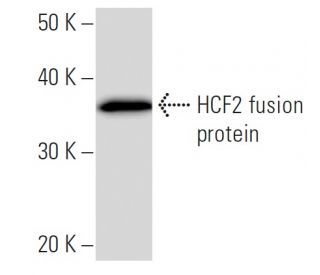

HCF2 Antibody (192D3a): sc-81281
- HCF2 Antibody (192D3a) is a mouse monoclonal IgG1 provided at 100 µg/ml
- raised against a recombinant protein corresponding to an internal region of HCF2 of human origin
- recommended for detection of HCF2 of human origin by WB and IP
- At present, we have not yet completed the identification of the preferred secondary detection reagent(s) for HCF2 Antibody (192D3a). This work is in progress.

QUICK LINKS
HCF2 Antibody (192D3a) is a mouse monoclonal IgG1 antibody that detects HCF2 in human samples through applications such as western blotting (WB) and immunoprecipitation (IP). HCF2, a crucial protein in the herpes simplex virus (HSV) lifecycle, plays a significant role in the assembly of the multiprotein complex with VP16 and Oct-1, which is essential for the transcription of HSV immediate-early genes. This protein is smaller than its homolog HCF1 and shares structural similarities, particularly in the beta-propeller domain, which is vital for its interaction with VP16. Anti-HCF2 antibody (192D3a) recognizes HCF2′s association with VP16, albeit less efficiently than HCF1, highlighting its importance in the regulation of the HSV lytic-latent cycle. Understanding the dynamics of HCF2 and its interactions is critical, as it may provide insights into the mechanisms of HSV pathogenesis and potential therapeutic targets. HCF2 monoclonal antibody (192D3a) serves as an invaluable tool for researchers studying viral transcription factors and their roles in viral infections.
Ordering Information
| Product Name | Catalog # | UNIT | Price | Qty | FAVORITES | |
HCF2 Antibody (192D3a) | sc-81281 | 100 µg/ml | $339.00 |