
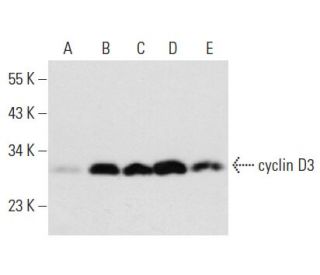
cyclin D3 Antibody (DCS-28): sc-56308
- cyclin D3 Antibody (DCS-28) is a mouse monoclonal IgG1 κ, cited in 6 publications, provided at 200 µg/ml
- raised against full length cyclin D3 of human origin
- recommended for detection of cyclin D3 of mouse, rat and human origin by WB, IP, IF and ELISA; non cross-reactive with other cyclin Ds
- See cyclin D3 (D-7): sc-6283 for cyclin D3 antibody conjugates, including AC, HRP, FITC, PE, Alexa Fluor® 488, 594, 647, 680 and 790.
- m-IgG Fc BP-HRP is the preferred secondary detection reagent for cyclin D3 Antibody (DCS-28) for WB applications. This reagent is now offered in a bundle with cyclin D3 Antibody (DCS-28) (see ordering information below).

QUICK LINKS
Cyclin D3 Antibody (DCS-28) is a mouse monoclonal IgG1 antibody that detects cyclin D3 in mouse, rat, and human samples through applications such as western blotting (WB), immunoprecipitation (IP), immunofluorescence (IF), and enzyme-linked immunosorbent assay (ELISA). Cyclin D3 plays a pivotal role in cell cycle regulation, particularly during the G1 phase, where cyclin D3 is essential for the transition to the S phase. Cyclin D3 is crucial for the phosphorylation of the retinoblastoma protein, which in turn activates E2F transcription factors that drive the expression of genes necessary for DNA synthesis and cell proliferation. Anti-cyclin D3 antibody (DCS-28) provides researchers with a reliable tool for studying the dynamics of cell cycle regulation and the implications of cyclin D3 in oncogenesis, making cyclin D3 monoclonal antibody (DCS-28) an invaluable asset in cancer research and related fields.
Ordering Information
| Product Name | Catalog # | UNIT | Price | Qty | FAVORITES | |
cyclin D3 Antibody (DCS-28) | sc-56308 | 200 µg/ml | $322.00 | |||
cyclin D3 Antibody (DCS-28): m-IgG Fc BP-HRP Bundle | sc-551940 | 200 µg Ab; 10 µg BP | $361.00 |