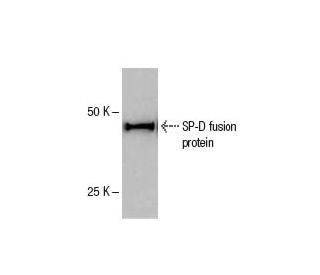
Monoclonal antibodies for mammalian and non-mammalian protein targets represent essentially all targets covered by polyclonal antibodies. Over 8,300 of our antibodies are offered as ImmunoCruz® conjugates which eliminates the need for a secondary antibody.
Santa Cruz Biotechnology antibodies have over 360,000 research citations. Anti-SP-D Antibody (1A10A9) has 0 citations in a variety of scientific publications.
Primary antibodies like Anti-SP-D Antibody (1A10A9) for mammalian target proteins are recommended for the detection of a range of mammalian species, primarily of mouse, rat and human species. Many mammalian antibodies are also ideal for veterinary research and reactive with ovine, porcine, caprine, feline, canine, bovine and equine protein targets. Santa Cruz Biotechnology primary monoclonal antibodies are suitable for laboratory research applications and are not intended for diagnostic or therapeutic use.
SP-D Antibody (1A10A9) Specifications
Alternate Product Name: SP-D
Product Clone Name: 1A10A9
Classification: Primary Antibody
Clonality: Monoclonal Antibody
Antibody Isotype: IgM kappa light chain
Amino Acids:
Epitope Target: SP-D
Epitope Species: mouse
Product Reactivity/Detection: SP-D
Species Reactivity/Detection: mouse, rat, human
Additional Mammalian Reactivity: N/A
Additional Non-Mammalian Reactivity: N/A
Applications: WB, IP
Vialing Information: Each vial contains 200 µg IgM kappa light chain in 1.0 ml of PBS with < 0.1% sodium azide and 0.1% gelatin
Research Citations: 0 citations in various scientific publications
Available Conjugates/Forms for SP-D Antibody (1A10A9): N/A
Primary antibodies for non-mammalian targets are useful in detecting proteins of plant, viral, bacterial, avian, fish, yeast and invertebrates. Some examples include
Drosophila, zebrafish,
Xenopus,
Arabidopsis,
C. elegans,
Clostridium,
Campylobacter,
Heliobacter pylori,
Hepatitis, HIV, HPV, HSV, Influenza,
Klebsiella,
M. tuberculosis,
Plasmodium,
Pseudomonas, RSV,
Saccharomyces cerevisiae,
Salmonella,
Schistosoma,
Shigella and
Staphylococcus.
Santa Cruz Biotechnology monoclonal antibodies can be used in assays including flow cytometry, immunoprecipitation, Western blot analysis, and immunostaining. Anti-SP-D Antibody (1A10A9) is recommended for use in the following applications: WB (Western blotting), IP (Immunoprecipitation).
Mouse secondary antibodies, control sera and control immunoglobulins are also offered to be used in combination with our primary monoclonal antibodies.
Tissue extracts, nuclear extracts and whole cell lysates are used with Santa Cruz Biotechnology monoclonal antibodies for western blotting or immunoprecipitation positive controls. Nuclear extracts are ideal for western blot analysis or gel shift assays positive controls. Phospho-enriched whole cell lysates and tissue extracts are available for phospho-specific antibody positive controls.
Monoclonal secondary antibodies are offered in various conjugated forms, including: Biotin (B), CruzFluor™ 790, 680, 647, 594, 555, and 488, FITC, HRP, PerCP, PerCP-Cy5.5, Texas Red (TR), and TRITC (tetramethyl rhodamine isothiocyanate) (R), for research applications like Flow Cytometry (FCM), Immunofluorescence (IF), Immunohistochemistry (IHC) staining and Western Blotting (WB). Not intended for diagnostic or therapeutic use.
Affinity purified immunoglobulins (IgGs)—conjugated and unconjugated—are available as negative controls for flow cytometry (FCM), immunofluorescence (IF), immunohistochemistry (IHC), immunoprecipitation (IP) and Western Blotting (WB) applications.
Normal sera for immunohistochemistry (IHC) applications are available as neat serum for blocking reagents. The serum which is used should match the species of the secondary antibody.
The preferred SP-D antibody is SP-D Antibody (C-6): sc-25324.