
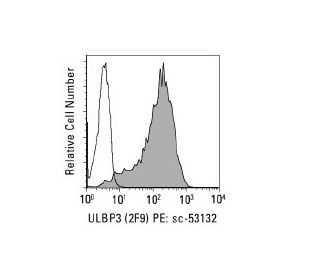

ULBP3 Antibody (2F9): sc-53132
- ULBP3 Antibody (2F9) is a mouse monoclonal IgG2a κ, cited in 9 publications, provided at 200 µg/ml
- raised against purified human ULBP3
- recommended for detection of ULBP3 of human origin by IF and FCM
- also provided azide-free for blocking, sc-53132 L, 200 µg/0.1 ml
- At present, we have not yet completed the identification of the preferred secondary detection reagent(s) for ULBP3 Antibody (2F9). This work is in progress.

ULBP3 Antibody (2F9) is a mouse monoclonal IgG2a antibody that detects ULBP3 in human samples through applications such as immunofluorescence (IF) and flow cytometry (FCM). ULBP3, a member of the UL16 binding protein family, plays a crucial role in the immune response by acting as a ligand for the activating receptor NKG2D/DAP10, which is essential for the activation of natural killer (NK) cells and CD8+ T cells. This interaction triggers the secretion of cytokines, including interferon-gamma, and promotes the lysis of tumor cells, highlighting ULBP3′s importance in tumor surveillance and immune regulation. Additionally, ULBP3 is known to stimulate the production of various cytokines and chemokines from immune cells, thereby enhancing the overall immune response. ULBP3 is primarily located on the surface of stressed or transformed cells, which allows effective signaling to immune cells during times of cellular distress. Understanding the localization and function of ULBP3 is vital for developing therapeutic strategies aimed at enhancing anti-tumor immunity and modulating immune responses in various diseases. Anti-ULBP3 antibody (2F9) serves as an invaluable tool for researchers investigating the mechanisms of immune activation and the role of ULBPs in cancer immunology.
Ordering Information
| Product Name | Catalog # | UNIT | Price | Qty | FAVORITES | |
ULBP3 Antibody (2F9) | sc-53132 | 200 µg/ml | $322.00 | |||
ULBP3 Antibody (2F9) L | sc-53132 L | 200 µg/0.1 ml | $322.00 |