
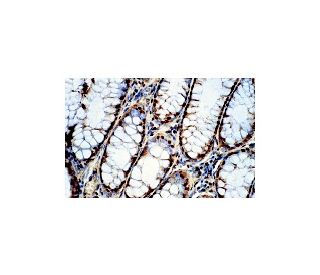
Myc Antibody (9E10): sc-40
- Myc Antibody (9E10) is a mouse monoclonal IgG1 κ Myc antibody, cited in 9,825 publications, provided at 200 µg/ml
- raised against an epitope corresponding to amino acids 408-439 within the C-terminal domain of c-Myc of human origin
- This Myc antibody is recommended for detection of c-Myc p67 and c-Myc tagged fusion proteins of mouse, rat, human, monkey, feline and canine origin by WB, IP, IF, IHC(P), FCM and ELISA; non cross-reactive with N-Myc or L-Myc proteins. Widely used in combination with eukaryotic expression vectors encoding proteins with c-Myc (amino acids 408-439) epitope tag
- available conjugated to agarose for IP; HRP for WB, IHC(P) and ELISA; and to either phycoerythrin or FITC for IF, IHC(P) and FCM
- also available conjugated to Alexa Fluor® 488, Alexa Fluor® 546, Alexa Fluor® 594 or Alexa Fluor® 647 for WB (RGB), IF, IHC(P) and FCM, and for use with RGB fluorescent imaging systems, such as iBright™ FL1000, FluorChem™, Typhoon, Azure and other comparable systems
- also available conjugated to Alexa Fluor® 680 or Alexa Fluor® 790 for WB (NIR), IF and FCM; for use with Near-Infrared (NIR) detection systems, such as LI-COR®Odyssey®, iBright™ FL1000, FluorChem™, Typhoon, Azure and other comparable systems
- also available conjugated to biotin for WB, IHC(P) and ELISA; and to either TRITC, PerCP or Alexa Fluor® 405 for IF, IHC(P) and FCM
- TransCruz reagent for ChIP application (sc-40 X, 200 µg/0.1 ml)
- m-IgGκ BP-HRP is the preferred secondary detection reagent for Myc Antibody (9E10) for WB and IHC(P) applications. This reagent is now offered in a bundle with Myc Antibody (9E10) (see ordering information below). For additional m-IgGκ BP conjugates see our complete list of Mouse IgG Binding Proteins.

QUICK LINKS
c-Myc Antibody (9E10) is a mouse monoclonal IgG1 kappa light chain antibody raised against human c-Myc protein. c-Myc monoclonal antibody (9E10) specifically detects the c-Myc protein across multiple species, including mouse, rat, human, monkey, feline, and canine. Anti-c-Myc monoclonal antibody (9E10) is recommended for use in various applications such as Western blot (WB), immunoprecipitation (IP), immunofluorescence (IF), immunohistochemistry on paraffin-embedded sections (IHC-P), flow cytometry (FCM), and ELISA. c-Myc (9E10) antibody recognizes the epitope located within amino acids 408-439 of the human c-Myc protein, encompassing the EQKLISEEDL sequence commonly used as an epitope tag in recombinant protein expression. Available in both non-conjugated and multiple conjugated forms, including agarose, HRP, PE, FITC, and various Alexa Fluor® conjugates, c-Myc (9E10) monoclonal antibody is versatile for detecting c-Myc and c-Myc-tagged proteins. The c-Myc family of proteins, which includes c-Myc, N-Myc, and L-Myc, plays crucial roles in cell proliferation, differentiation, and neoplastic transformation. Amplification and overexpression of the c-Myc gene are implicated in various human cancers such as lung, breast, and colon carcinomas, making c-Myc (9E10) antibody an essential reagent in cancer research. The c-Myc protein contains key motifs in its C-terminal region, including a leucine zipper, helix-loop-helix, and basic region, which facilitate sequence-specific DNA binding and protein-protein interactions. c-Myc forms heterodimers with Max, a bHLH-Zip protein, to regulate gene transcription. Max can also interact with other proteins like Mad1 and Mxi1 to repress transcription, highlighting the complex regulatory network involving c-Myc. c-Myc mouse monoclonal antibody (9E10) thus serves as a valuable asset for studying these critical molecular pathways.
Alexa Fluor® is a trademark of Molecular Probes Inc., OR., USA
LI-COR® and Odyssey® are registered trademarks of LI-COR Biosciences
Myc Antibody (9E10) References:
- Transcriptional activation by the human c-Myc oncoprotein in yeast requires interaction with Max. | Amati, B., et al. 1992. Nature. 359: 423-6. PMID: 1406955
- Myc family oncoproteins function through a common pathway to transform normal cells in culture: cross-interference by Max and trans-acting dominant mutants. | Mukherjee, B., et al. 1992. Genes Dev. 6: 1480-92. PMID: 1644290
- Apoptosis and differentiation of human embryonic stem cells induced by sustained activation of c-Myc. | Sumi, T., et al. 2007. Oncogene. 26: 5564-76. PMID: 17369859
- Myc deletion rescues Apc deficiency in the small intestine. | Sansom, OJ., et al. 2007. Nature. 446: 676-9. PMID: 17377531
- Max: a helix-loop-helix zipper protein that forms a sequence-specific DNA-binding complex with Myc. | Blackwood, EM. and Eisenman, RN. 1991. Science. 251: 1211-7. PMID: 2006410
- Enhanced expression of the N-myc gene in Wilms' tumors. | Nisen, PD., et al. 1986. Cancer Res. 46: 6217-22. PMID: 2430692
- L-myc, a new myc-related gene amplified and expressed in human small cell lung cancer. | Nau, MM., et al. Nature. 318: 69-73. PMID: 2997622
- c-Myc-driven Hepatocarcinogenesis. | Moon, H., et al. 2021. Anticancer Res. 41: 4937-4946. PMID: 34593441
- Target c-Myc to treat pancreatic cancer. | Ala, M. 2022. Cancer Biol Ther. 23: 34-50. PMID: 34978469
- Homogeneously staining chromosomal regions contain amplified copies of an abundantly expressed cellular oncogene (c-myc) in malignant neuroendocrine cells from a human colon carcinoma. | Alitalo, K., et al. 1983. Proc Natl Acad Sci U S A. 80: 1707-11. PMID: 6300869
- Mad-Max transcriptional repression is mediated by ternary complex formation with mammalian homologs of yeast repressor Sin3. | Ayer, DE., et al. 1995. Cell. 80: 767-76. PMID: 7889570
- The many roles of c-Myc in apoptosis. | Thompson, EB. 1998. Annu Rev Physiol. 60: 575-600. PMID: 9558477
Ordering Information
| Product Name | Catalog # | UNIT | Price | Qty | FAVORITES | |
Myc Antibody (9E10) | sc-40 | 200 µg/ml | $322.00 | |||
Myc Antibody (9E10): m-IgGκ BP-HRP Bundle | sc-551062 | 200 µg Ab; 40 µg BP | $361.00 | |||
Myc Antibody (9E10) X | sc-40 X | 200 µg/0.1 ml | $322.00 | |||
Myc Antibody (9E10) AC | sc-40 AC | 500 µg/ml, 25% agarose | $424.00 | |||
Myc Antibody (9E10) HRP | sc-40 HRP | 200 µg/ml | $322.00 | |||
Myc Antibody (9E10) FITC | sc-40 FITC | 200 µg/ml | $336.00 | |||
Myc Antibody (9E10) PE | sc-40 PE | 200 µg/ml | $349.00 | |||
Myc Antibody (9E10) Alexa Fluor® 488 | sc-40 AF488 | 200 µg/ml | $364.00 | |||
Myc Antibody (9E10) Alexa Fluor® 546 | sc-40 AF546 | 200 µg/ml | $364.00 | |||
Myc Antibody (9E10) Alexa Fluor® 594 | sc-40 AF594 | 200 µg/ml | $364.00 | |||
Myc Antibody (9E10) Alexa Fluor® 647 | sc-40 AF647 | 200 µg/ml | $364.00 | |||
Myc Antibody (9E10) Alexa Fluor® 680 | sc-40 AF680 | 200 µg/ml | $364.00 | |||
Myc Antibody (9E10) Alexa Fluor® 790 | sc-40 AF790 | 200 µg/ml | $364.00 | |||
Myc Antibody (9E10) B | sc-40 B | 200 µg/ml | $326.00 | |||
Myc Antibody (9E10) TRITC | sc-40 TRITC | 200 µg/ml | $326.00 | |||
Myc Antibody (9E10) Alexa Fluor® 405 | sc-40 AF405 | 200 µg/ml | $364.00 | |||
Myc Antibody (9E10) PerCP | sc-40 PerCP | 100 tests in 2 ml | $358.00 |